








 Dr Kiran Deep
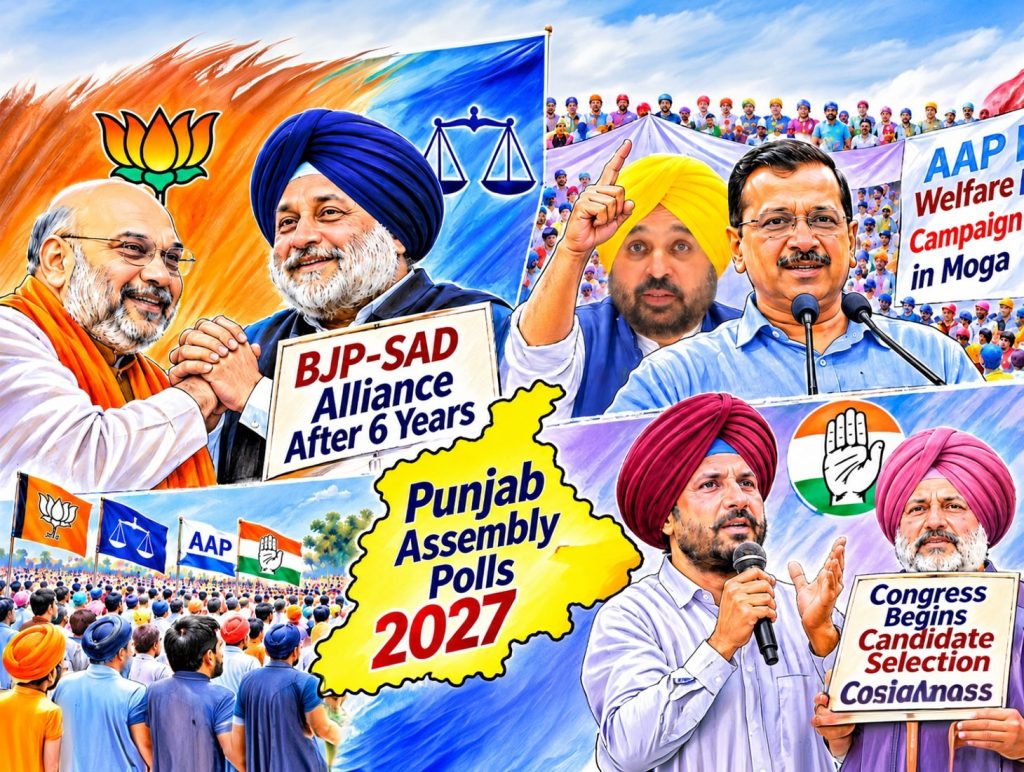

Punjab’s political landscape witnessed a significant shift this week with electoral activity gathering momentum after months of political deliberations. The reunion of the BJP and Shiromani Akali Dal (SAD) after six years, the launch of the Aam Aadmi Party’s (AAP) campaign in Moga and the Congress beginning its exercise to select candidates have collectively signalled that the countdown to the 2027 Assembly elections has effectively begun.
What had largely remained a battle of political statements, speculation and organisational preparations has now started taking the shape of a direct electoral contest. The three principal political formations are beginning to define their strategies, identify their strengths and position themselves against their rivals. So far, the Punjab 2027 election landscape appears to be shaping up as a three-way contest involving the AAP, BJP-SAD alliance and Congress.
The biggest development was the announcement of the BJP-SAD alliance on November 25, ending a six-year separation following their differences over the three farm laws. Union Home Minister Amit Shah announced the reunion in the presence of SAD president Sukhbir Singh Badal and BJP president Nitin Nabin. The announcement also established the broad political hierarchy within the alliance, with SAD retaining the role of senior partner and Sukhbir Badal being projected as its chief ministerial candidate.
However, the announcement has settled only the question of political reunion, not the more complicated issue of seat-sharing. The two parties still have to negotiate the distribution of the 117 Assembly constituencies, an exercise that could test the strength of their renewed relationship.
The BJP, which contested only 23 seats in the 2022 Assembly elections, is now looking at securing around 45 to 50 constituencies, according to party insiders. Its ambitions extend beyond increasing its numerical share in the alliance. It wants to expand its footprint in urban and semi urban Punjab and is also eyeing constituencies that have traditionally been contested by the SAD.
Among the constituencies being discussed are Dera Bassi, Kharar, Mohali, Jalandhar Cantonment, Kartarpur, Garhshankar, Balachaur, Bathinda Urban, Mansa, Barnala, Khanna, Sahnewal and Patiala Rural. The BJP’s claim is based largely on its assessment of electoral performance and vote share in the 2024 Lok Sabha elections.
If the BJP manages to secure 45 to 50 seats, the SAD could be left with around 67 to 72 constituencies although the final arrangement will depend on negotiations between the two parties. The demand is significant because several constituencies on the BJP’s wish list have historically been part of the Akali Dal’s political territory.
The negotiations have already begun to acquire importance. A meeting between senior BJP and SAD leaders was held at Sukhbir Badal’s residence in Chandigarh on November 28. The discussions focused on preparations for the joint mega rally scheduled to be held in Moga on December 8, coordination between the two parties at the grassroots level and the political issues that should form the basis of their campaign for Mission 2027.
The two parties are also looking at how to target the AAP and Congress on issues such as drugs, corruption, unemployment, employees’ demands and farmers’ concerns. Discussions reportedly included constituencies where both parties may have competing claims.
The BJP-SAD reunion has also forced the AAP to sharpen its political messaging. The party’s Khushhaal Punjab Rally in Moga on November 26 offered a clear indication of the campaign strategy it intends to pursue. Chief Minister Bhagwant Mann and AAP national convener Arvind Kejriwal sought to make the government’s welfare initiatives the central theme of the 2027 election campaign.
Rather than allowing the opposition to dominate the political conversation around governance failures, the AAP wants voters to assess its five years in power through the delivery of welfare schemes. Free electricity, the proposed Mawan Dhiyan Satkar Yojana, health insurance coverage of Rs 10 lakh, pilgrimage facilities and government employment featured prominently in the speeches.
Kejriwal reminded voters of the guarantees made during the 2022 elections and credited the Mann government with fulfilling them. He cited the recruitment of more than 70,000 people into government jobs claiming that appointments had been made on merit without bribes. His appeal to women to persuade their families to vote for the AAP also reflected the importance the party attaches to welfare politics.
The Moga rally was significant not merely because it marked the beginning of an intensified election campaign but also because it showed how the AAP intends to counter the political challenge posed by the reunited BJP-SAD alliance.
The party is seeking another mandate on the strength of its welfare record, while the opposition is likely to focus on issues where the government remains vulnerable. One notable aspect of the AAP’s campaign was the relatively limited prominence given to the drug problem, despite narcotics remaining one of Punjab’s most politically sensitive issues. The BJP and SAD, meanwhile, are preparing to make drugs a major part of their campaign narrative.
The Congress, for its part, has also begun moving towards the electoral process, although its preparations are currently focused on candidate selection rather than a full-fledged campaign.
Punjab Congress president Pargat Singh said the process of selecting candidates had started three days earlier. A party committee will meet applicants seeking tickets before taking a decision. However, the party has not set any timeline for announcing its candidates.
The issue of giving greater representation to younger leaders has also entered the discussion. Former Punjab Congress president Amarinder Singh Raja Warring has suggested that 70 per cent of the tickets should go to young candidates. Pargat Singh said individual leaders were entitled to express their views, but maintained that the party would follow its established selection procedure.
Meanwhile, Warring’s Insaf Yatra in Ludhiana on Friday demonstrated that Congress leaders have also begun taking their political message to the ground. His praise for former MLA Simarjit Singh Bains and his brother, and their contribution to the party, was also significant in the context of the Congress’s efforts to strengthen its organisational position.
The developments of the week suggest that Punjab’s political contest is entering a new phase, with all three parties beginning to prepare for a battle that will extend well beyond the announcement of alliances and candidates.
The BJP-SAD combine will have to demonstrate that its reunion can translate into a workable seat-sharing arrangement and common political agenda. The AAP will attempt to defend its record through welfare politics while the Congress faces the challenge of converting its organisational preparations and political outreach into a credible alternative.
Yet, the most important question is whether the emerging electoral battle will remain confined to political calculations or force parties to confront Punjab’s deeper problems. Drugs, unemployment, agricultural distress, corruption, the state’s financial position and the future of its young population remain central concerns.
The coming weeks will reveal whether these issues will shape the political discourse or be pushed aside by the contest over alliances, candidates and electoral arithmetic.
“Saag te makki di roti… naal thoda jeha makhan!” If you grew up in Punjab,…
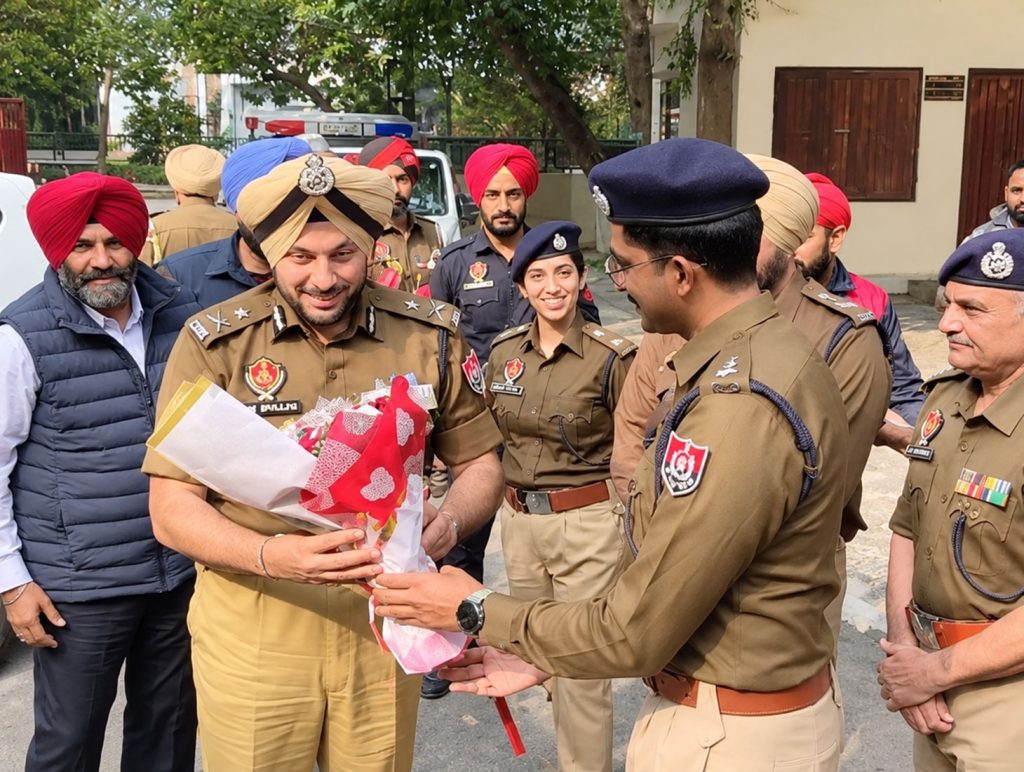
2004-batch IPS officer Gurpreet Singh Bhullar on Saturday took charge as the new Police Commissioner…
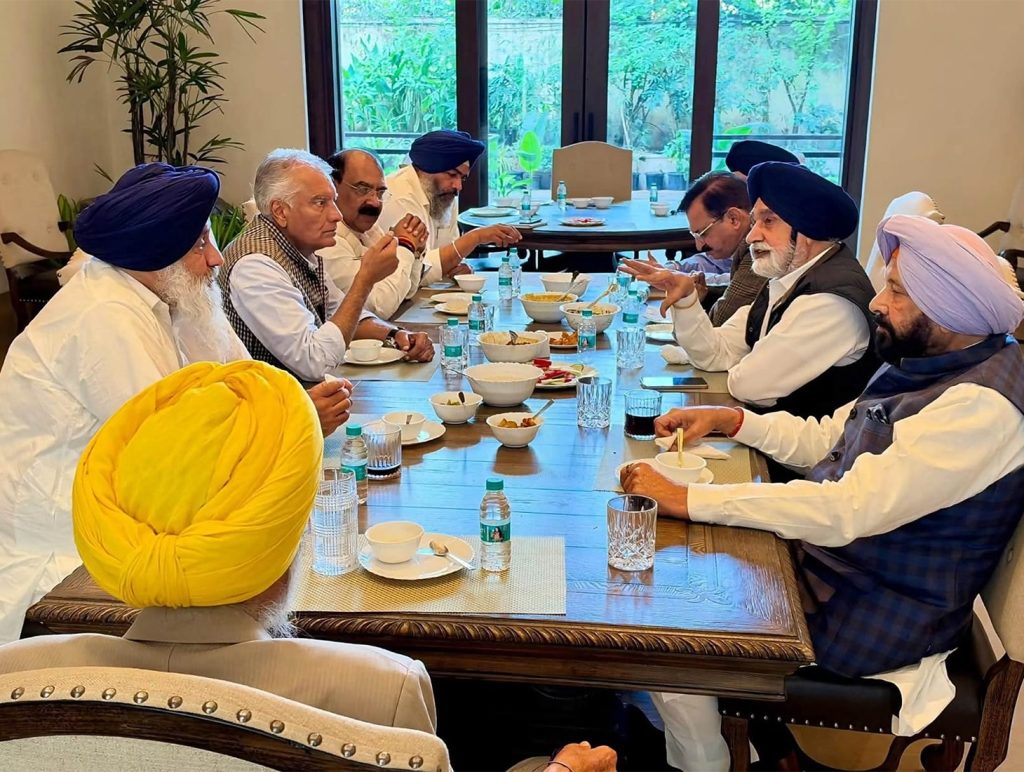
Lunch diplomacy marked the first meeting between Shiromani Akali Dal (SAD) and BJP leaders since…
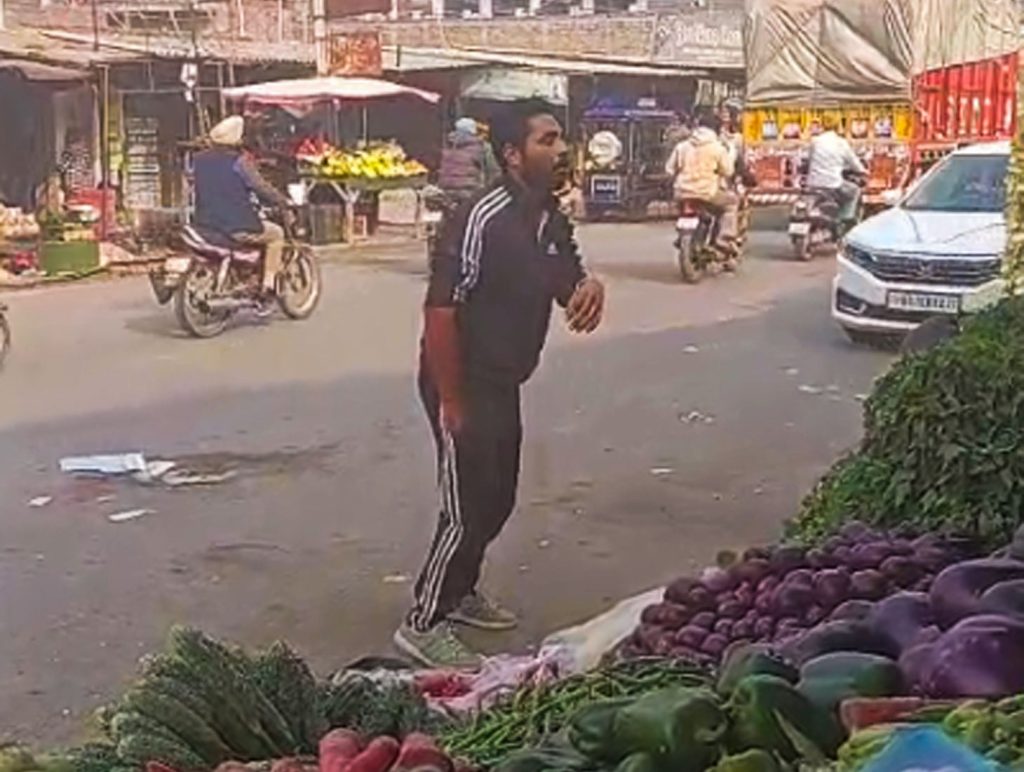
A viral video purportedly showing a youth allegedly under the influence of drugs staggering along…