







 The North News
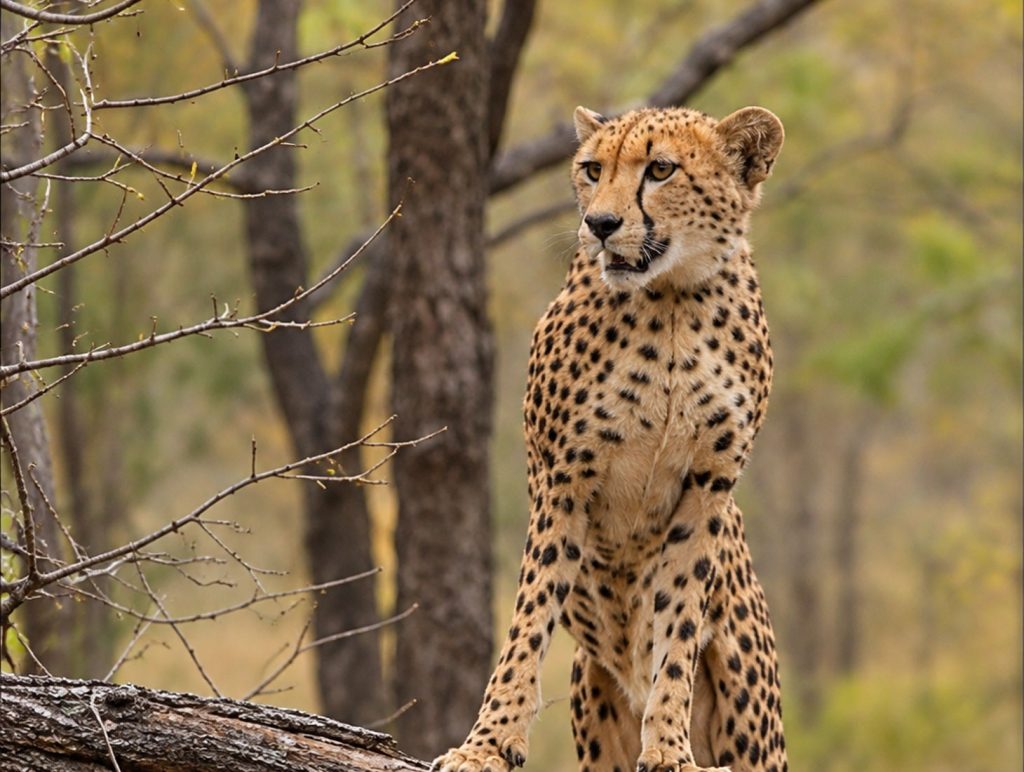
India’s cheetah population has risen to 62, with 43 animals, or nearly 70 per cent, born in the country, marking progress in efforts to re-establish the species in the wild seven decades after its extinction in India.
The latest increase follows the birth of nine cubs in two litters at Madhya Pradesh’s Kuno National Park in October and November. The births highlight the growing contribution of locally born cheetahs to the country’s reintroduction programme, known as Project Cheetah.
The first litter arrived on October 5, 2026 when KJP21, a 32-month-old India-born female, gave birth to five cubs. She became the third India-born female to reproduce under the programme, after Mukhi and KGP12. The cubs’ father is a male cheetah brought from Botswana.
The development is significant because successful breeding by the first India-born generation is among the milestones identified in the National Action Plan for Cheetah Introduction in India.
A second litter of four cubs was born on November 20 to KOMG 3, a 30-month-old female brought from Botswana. She became the first female cheetah from Botswana to give birth in India.
The birth took place in free-ranging conditions after the female had spent more than four months in the wild. It was also the second recorded instance of a cheetah giving birth in the wild outside a Closed Natural Area since the reintroduction programme began in 2022.
Successful reproduction in open conditions is another important milestone for the programme, which aims to establish a viable cheetah population in India.
India-born cheetahs drive population growth
The growing number of India-born cheetahs reflects a shift from dependence on animals brought from Africa towards reproduction within the country.
The trend began in November 2025, when Mukhi became the first India-born female under Project Cheetah to give birth, producing five cubs. KGP12 and KJP21 subsequently reproduced at Kuno.
Their births demonstrate that cheetahs born in India can mature and reproduce locally, an important step towards establishing a self-sustaining population.
The introduction of cheetahs from Namibia, South Africa and Botswana has also helped widen the genetic base of the population. A broader gene pool is important for fertility, disease resistance and the long-term resilience of future generations.
Cheetahs return to India after seven decades
The cheetah was officially declared extinct in India in 1952. The last confirmed sighting of wild cheetahs was recorded in 1947 in the Sal forests of present-day Koriya district in Chhattisgarh.
The species once ranged across large parts of the country, from Punjab in the north to Tirunelveli in the south. Excessive hunting, poaching, habitat loss, declining prey populations and other ecological pressures contributed to its disappearance.
India efforts to bring back the species began on September 17, 2022 when eight cheetahs from Namibia were released into quarantine enclosures at Kuno National Park. Another 12 arrived from South Africa in February 2023.
The programme expanded further on February 28, 2026, when nine cheetahs from Botswana, including six females and three males, arrived in India.
Project Cheetah is implemented by the Ministry of Environment, Forest and Climate Change through the National Tiger Conservation Authority, with scientific support from the Wildlife Institute of India and the Madhya Pradesh Forest Department.
It is the world’s first intercontinental translocation of a large wild carnivore for reintroduction.
Kuno’s habitat and community support
Kuno National Park in Sheopur district was selected after assessments of habitat suitability, prey availability and human disturbance.
The relocation of 24 villages involving 1,545 families made nearly 6,258 hectares available for wildlife conservation. Habitat management, grassland restoration, prey augmentation and water management have also supported the programme. Monitoring combines satellite radio collars, camera traps, field observations and veterinary assessments. Cheetahs are initially kept in Closed Natural Areas before being moved into the wider landscape to help them adapt to local conditions.
Local communities are also involved in conservation efforts. More than 450 Cheetah Mitras work as ambassadors across 80 villages around the park. The programme has generated about 380 direct jobs, while villages receive a five per cent share of eco-tourism revenue.
Expansion beyond Kuno
The programme is gradually expanding to additional habitats in Madhya Pradesh.
Gandhi Sagar Wildlife Sanctuary became the second site under the programme. Two cheetahs, Prabash and Paavak, were moved there from Kuno in April 2025, followed by two females.
In October 2026, Veerangana Durgavati Tiger Reserve in Sagar district became the state’s third cheetah habitat, with two animals relocated from Kuno.
India’s long-term objective is to establish a self-sustaining metapopulation of 60 to 70 cheetahs by 2032 across approximately 17,000 square kilometres in the Kuno-Gandhi Sagar landscape.
The current population of 62 has reached the lower end of that target range. However, the survival of the nine newly born cubs remains crucial. The National Action Plan identifies survival beyond one year as an important measure of conservation progress.
Their survival and eventual reproduction will determine how close India comes to restoring a viable cheetah population in the wild.
The Union Cabinet approval of the proposed Delimitation Bill could significantly reshape the poitics of…

With 69,191 POCSO cases registered in 2024, over 2.45 lakh cases pending before fast-track courts…

There is something deeply unsettling about having to question the safety of the one thing…
Some flavours belong to the tongue. Others find a permanent home in the heart. Gold…