








 Jasriman Kaur
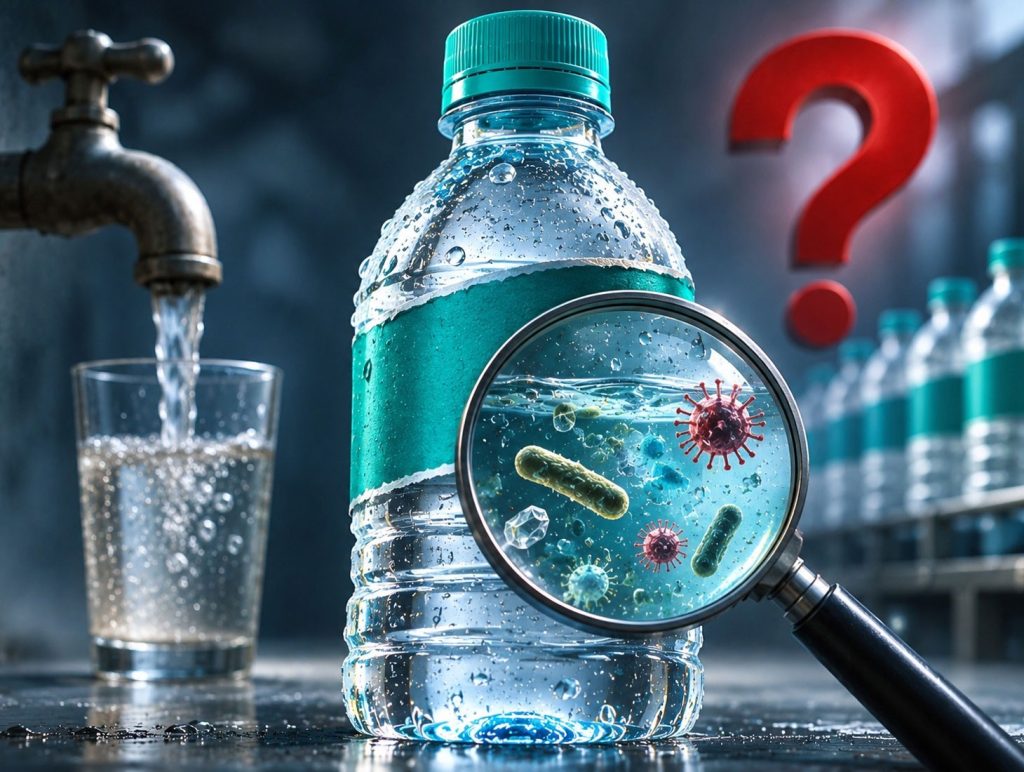

There is something deeply unsettling about having to question the safety of the one thing every human being needs to survive. We check expiry dates on food, read labels on medicines and compare ingredients in packaged products. But water? Surely, that is one thing we should not have to second-guess.
Yet here we are.
The latest controversy involving Bisleri is far more concerning than a dispute over one brand or one batch. It brings into focus a larger failure to ensure that something as basic as drinking water is beyond doubt.
The company’s full-page newspaper advertisement defending its position has now brought the issue into the public domain, but a brand’s defence is only one part of the story. The more pressing question is whether consumers can be certain about the safety of the water they are paying for and who is answerable when that trust is shaken.
A history of warnings, but have we learnt anything?
This is hardly India’s first packaged water scare. In 2003, the Centre for Science and Environment reported pesticide residues in samples from 17 packaged water brands sold in the Delhi region. In 2015, a Bhabha Atomic Research Centre study found bromate levels above the WHO guideline in 27 per cent of samples tested across 18 commercial brands. Government data subsequently revealed that 496 of 1,123 packaged water samples analysed in 2017-18 did not conform to prescribed standards.
These are not insignificant numbers. They raise an uncomfortable question as to how many warnings does it take before safe drinking water becomes a serious, sustained public priority?
The price of water, the cost of broken trust
The Food Safety and Standards Authority of India (FSSAI) has sanctioned prosecution against Bisleri International after a regulatory sample from its Goa facility was declared unsafe. The company disputes the findings, maintaining that the matter concerns a single sample and that its independent tests found the water safe.
One sample cannot be used to declare an entire brand unsafe. But equally, a company’s assurance cannot replace independent scrutiny.
What troubles me more is the position of the consumer. We pay for filtered water at home, buy packaged bottles outside and routinely factor drinking water into our monthly expenses. In restaurants, offices, hospitals and railway stations, even a bottle of water comes with a price tag.
I understand that filtration, treatment, packaging and distribution cost money. But why should access to safe drinking water become a privilege? It should be a basic public provision, not an expensive necessity. And if we are already paying a premium for it, should we not at least be confident about its safety?
Regulation can’t be a reaction to controversy
The FSSAI’s latest directive to the state authorities for stronger inspections and risk-based sampling of packaged drinking and mineral water is welcome. But issuing directions is one thing, while ensuring they translate into action is quite another.
Every manufacturer, big or small, must face the same scrutiny. Regular independent testing, transparent publication of results and clear communication about non-compliant batches should be non-negotiable. Consumers deserve to know what they are buying, not discover potential safety concerns through news headlines.
I do not believe people should have to become investigators, decode laboratory reports or wonder whether the next bottle they purchase is safe. That responsibility belongs to manufacturers and regulators.
A basic right, not a premium product
Water is not a luxury. It is not a lifestyle choice or a premium feature. Safe drinking water should never depend on how much one can afford to spend.
My question is simple that if we cannot trust the water flowing through our taps and now have reasons to question the water we pay for, where exactly are we supposed to turn?
We have had warnings before. We have had studies, inspections and regulatory action. What we need now is not another round of outrage followed by silence, but accountability that lasts beyond the headlines.
Because if water isn’t safe, then what is?
After six years of political separation, the BJP and Shiromani Akali Dal have found their…
As the 2027 Assembly elections draw closer, Punjab’s Dalit community is becoming an important focus…

There is something special about falling in love. It can turn ordinary moments into memories…
The BJP and the Shiromani Akali Dal (SAD) are close to reaching an agreement on…