








 Dr Kiran Deep
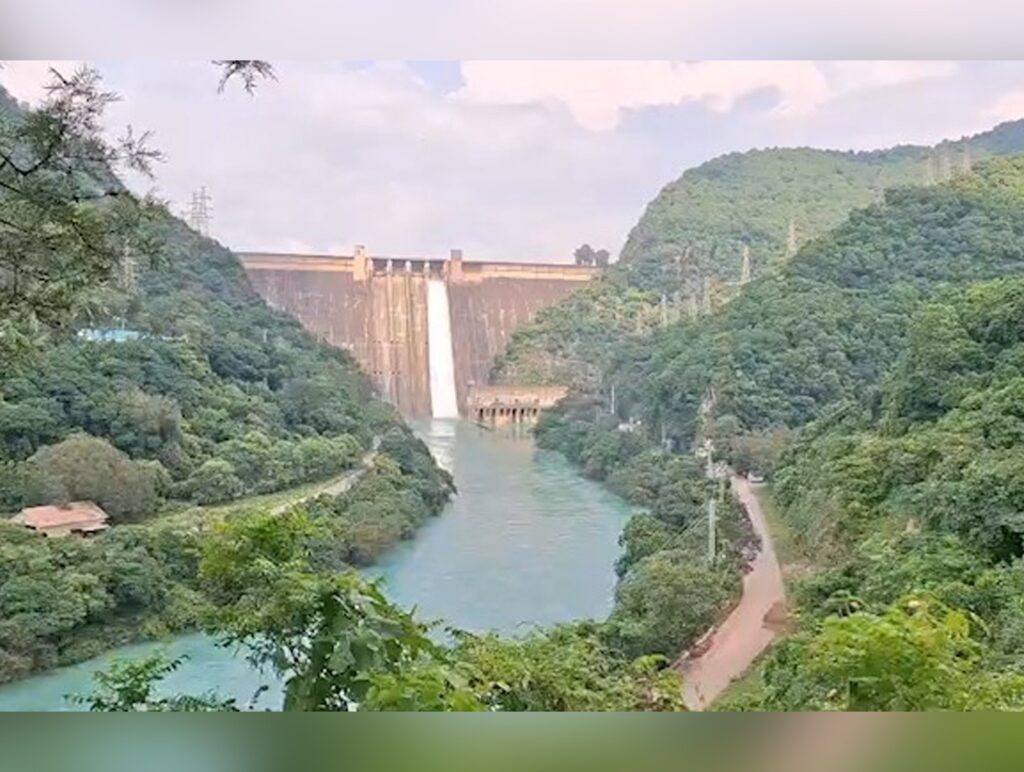

The Bhakra Beas Management Board’s decision to ask Punjab and Haryana to withdraw more water from the Bhakra Dam may look like a routine administrative order. But the decision is far from routine. Behind the technical language of reservoir management lies a deeper concern, the fear of repeating the devastation that Punjab witnessed last year and the need to manage a reservoir that is carrying unusually high water levels even before the monsoon has fully arrived.
On 9 June, the Bhakra reservoir stood at 1,578.07 feet. That is 21.47 feet higher than the 1,556.60 feet recorded on the same date in 2025. More strikingly, it is well above the historical average of 1,543.72 feet for this period.
These are not just numbers on a monitoring chart. They represent a reservoir entering the monsoon season with significantly less room to absorb sudden inflows from heavy rainfall.
And Punjab knows better than most what can happen when nature and water management collide.
The floods of 2025 left deep scars across the state. According to official figures, more than 20 lakh people were affected and around seven lakh displaced. Floodwaters swept through 2,614 villages. Nearly 4.8 lakh acres of crops were damaged. More than 17,000 homes suffered destruction, while around 2.5 lakh livestock were affected. Roads, bridges and local markets were left battered, disrupting daily life long after the waters receded. At least 60 people lost their lives in last year’s floods.
For many villagers, the memory of those floods is inseparable from the emergency water releases from the Bhakra and Pong dams. Residents in several districts argued that dam releases worsened the situation.
The BBMB has consistently rejected that accusation. So has the Union government.
Their argument is straightforward. The floods, they say, were driven by extraordinary rainfall and record inflows into the reservoirs. During the peak monsoon period, Pong Dam received inflows of 3.49 lakh cusecs while Bhakra received 1.91 lakh cusecs. The Centre has maintained that water releases were not mismanaged and that rivers such as the Sutlej and Beas, along with seasonal rivulets, overflowed because of unprecedented rainfall across the catchment areas.
The debate over responsibility may never be fully settled. But what is beyond dispute is that last year’s crisis exposed the risks of entering a heavy monsoon with reservoirs already carrying substantial water volumes.
That reality alone may explain the BBMB’s latest caution.
There is, however, another reason why reservoir managers appear unwilling to take chances this year.
In November 2025, Bhakra Dam recorded a maximum deflection of 1.177 inches, exceeding its non seismic design limit of 1.03 inches. By March this year, the figure had reduced to around 0.962 inches, suggesting that structural movement may be influenced by changes in reservoir pressure.
No engineer is suggesting that the dam is unsafe. BBMB Chairman Manoj Tripathi has repeatedly said there is “no immediate threat” to the structure. Yet the board has still commissioned a detailed study by IIT Roorkee, supported by international consultants, to better understand the issue.
That decision itself reflects caution.
When a dam is under technical review and water levels are substantially higher than normal, reducing pressure where possible becomes a logical course of action. It is not necessarily a response to an emergency but it is an attempt to prevent one.
What makes the situation particularly interesting is that current inflows into Bhakra are actually lower than both last year’s levels and the long-term average. Under ordinary circumstances, that might reduce concerns. But reservoir management is not only about what is flowing in today. It is also about how much water is already stored and how much capacity remains available if intense rainfall arrives tomorrow.
Viewed through that lens, the BBMB’s request to Punjab and Haryana appears less about meeting immediate irrigation demand and more about creating a safety margin before the most unpredictable weeks of the monsoon begin.
After all, Punjab is still counting the costs of the last flood disaster. The reservoir is carrying significantly more water than it did a year ago. The dam itself is undergoing a detailed technical assessment. And weather patterns have become increasingly difficult to predict.
Taken together, these factors suggest that the board’s message is not one of alarm but of prudence.
The lesson of 2025 may be simple, when the stakes are this high, it is better to create space in the reservoir today than to be forced into difficult decisions when the next spell of extreme rainfall arrives.

Salian’s family asks the CBI to summon the former NCB Zonal Director as a key…

What is it that stays with us after a cricket match is over? Sometimes,…
New Delhi, September 14 Improving political, diplomatic and military engagement between India and China…

Imagine this: It’s 12:01 am, you open Instagram and instead of reels, you get…