








 Disney Brar
Chandigarh, August 4
One phone call. A crying daughter on the other side desperately seeking help. A life hanging precariously on the threshold of death, desperately clinging on to the side of life but eventually slipping onto the side of darkness. A piercing long silence, and the call gets disconnected. A promising life forcibly snuffed out by brazen force, torture, and abuse pelted onto the daughter in focus here by her greedy in-laws waiting to peck on her dead body lying cold like a hawk eyeing its prey.
Dowry is not merely an amount of money or property which a woman’s family gives to the man she marries. It is a pervasive social evil that has long plagued our society. The effects of which can be seen from the top-most rung of the social ladder trickling down to the grassroots levels. Asking for dowry and succumbing to the demand, or in most cases gifting dowry to flaunt one’s economic status, is a practice which has led to devastating consequences for many innocent women whose lives have been squished and brutally so in the name of ‘Dowry’. Often it is not the immediate demand for dowry but the harassment that pre- and post-follows the demand that leads to fatal consequences. A material contribution of harassment towards the circumstances surrounding the death is sufficient to trigger a violation.
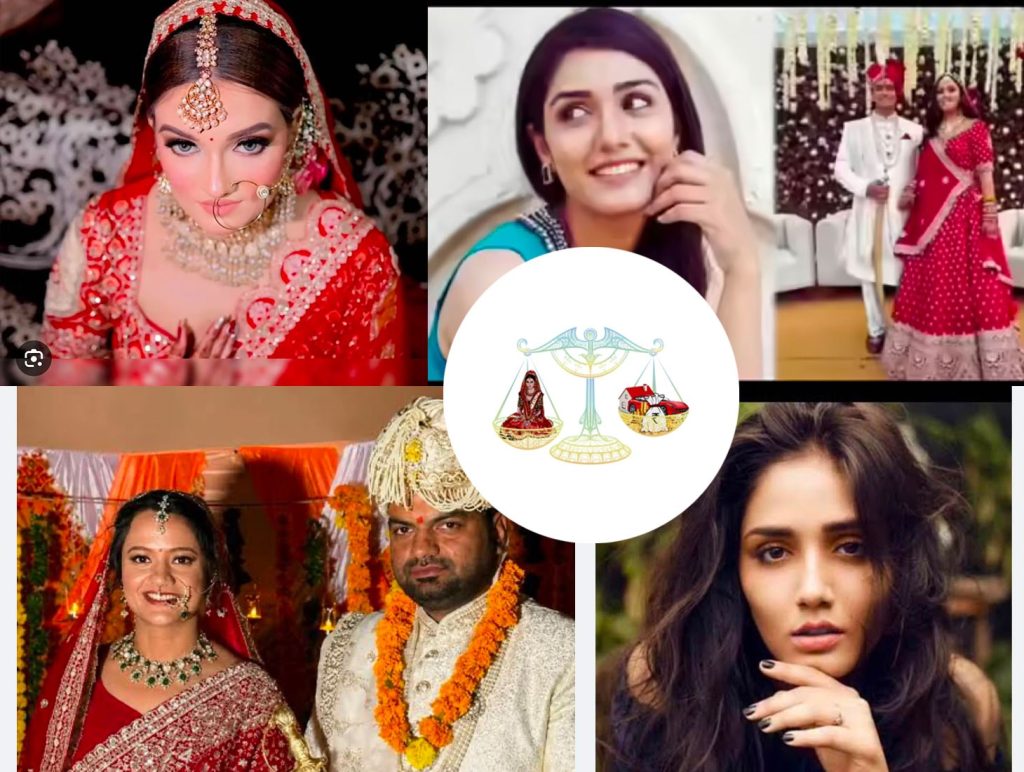
Ex-Miss Pune, actor and model, Twisha Sharma was found dead at her matrimonial residence in Bhopal, Madhya Pradesh, just five months after her marriage in May this year. This case received national attention following allegations from members of Sharma’s family and the subsequent suo moto proceedings initiated by the Supreme Court of India. In another shocking case, Deepika Nagar, a 24-year old woman, died under tragic circumstances, following a fall from the third-floor terrace of her in-laws’ house in Greater Noida, just 17 months after her marriage. Her postmortem report showed severe internal injuries, including a ruptured spleen and brain hematoma. Her case also sparked widespread public outrage and media attention.
Not even a year into marriage, another government school teacher took her life over dowry harassment in Dehradun. “I have been enduring this for six months; I can’t take it anymore,” said a distraught 29-year old Shristi Bhandari, in a video message she allegedly sent her mother shortly before taking her life. She was repeatedly humiliated and called “inauspicious”. She alleged that her husband, Saurabh Khatri, physically and mentally abused her over dowry demands. The incident came to light after Bhandari’s mother, unable to reach her for two days, asked her local relatives to check on her. Bhandari died before her mother reached Dehradun. Police booked her husband, mother-in-law and sister-in-law under charges related to dowry death.
The National Commission for Women received over 4031 complaints of dowry harassment from all over India in 2025. Around 11 women complain of dowry harassment every day and one recorded roughly every two hours. Around seven cases of dowry harassment were reported from Chandigarh, while Punjab reported around 84 cases and Haryana recorded 163 cases. Even though the number of incidents has decreased from 7634 in 2015, the numbers still remain critically high. The laws of the land in place against dowry stand paralysed.
Advocate and judicial coach, Gurleen Kaur Batra who has practiced at the Fazilka District Courts for 14 years and also runs WMK Law Academy, a nationwide online platform, blames the negligent punishment as the reason for the rise in the dowry deaths, Talking to, The North News, she says, “the punishment for a heinous and such a serious crime is just seven years, which is nothing. This is the reason dowry deaths are continuing for decades and are not showing any signs of decreasing. There was a dowry death that happened in Fazilka where a goverment school teacher and his mother had burned the daughter-in-law alive; she later succumbed to her injuries. This teacher is now remarried and is happily living with his family. Where is the justice? When we have a death penalty for rape when the victim dies, why is there no death penalty for the accused in dowry deaths?
“I demand death as punishment in the dowry cases as well. It will just take one or two landmark judgments to convey to society that the law will come down heavily on offenders. The death sentence will serve as a deterrent in these cases. Think of the long, long trauma to the victim’s family who lose their daughter as well as the money which they spend appeasing the greedy in-laws.”
Adding more on this, Dr Aditi Goyal, Associate Professor, University of Liberal Arts and Humanities (English), Chandigarh University, analyses, “Despite having robust legal provisions, dowry deaths continue to occur in India due to various legal, social, and institutional failures. Laws like the Dowry Prohibition Act (1961), Section 304B (dowry death) and Section 498A (cruelty) of the IPC are in place, but police do not register complaints on time, the investigations are inadequate, and the evidence gathering is weak as dowry harassment takes place inside the four walls of the house with very few witnesses being there. Since dowry deaths are often masqueraded as suicides, accidents, or kitchen fires, it becomes difficult to prove the direct causal link beyond reasonable doubt in court, enabling many of the accused to escape punishment.”
She cites social stigma related to reporting such deaths as one of the main reasons as well, “families of victims are often pressured to compromise or drop their cases due to social stigma, family honour or for financial reasons, especially in cases involving young children. Dowry, though illegal, is socially normalized as a gift or tradition, rather than a crime, making the givers and takers complicit and unwilling to report or testify,” she adds.
Also, the cases can languish for years in overworked courts, turning witnesses against the victims, evidence against the victims, and the victims’ families away from justice. Many women in patriarchal homes are financially dependent on their husbands and cannot escape abusive marriages even when they are being harassed to the point of danger. Goyal further adds, “In effect, the gap between law and its enforcement, coupled with entrenched social attitudes, enables dowry-related crimes to flourish, even under a strong legal framework,”.
One of the reasons most of these deaths go unreported is because they indict an evidence-generation system that routinely fails before it actually starts. Much evidence, such as communication trails, medical history, and monetary transfers, is either not collected or collected too late, after the accused has already obtained anticipatory bail.
Giving another perspective on this, Sejal Joshi, a social worker cum activist from Delhi, quips, “I have seen many gruesome dowry deaths happening in my area of work, but many go unreported because of fears of being harassed by the authorities themselves. Most of the perpetrators of this horrible crime are families with good connections and are able to arm-twist the victims’ families to give in to their demands of either withdrawing cases or accepting monetary compensation in return for letting them go scot-free, which is a huge mistake on the part of the families. The steady graph of dowry deaths in India is a direct outcome of the same.”
How many more deaths will it still take for us as a society to wake up to this monster called the ‘Dowry’? If you or anyone you know is facing this harassment, stop brushing it under the carpet. Stop turning a blind eye to what you have seen and stop ignoring what you have heard. It is time to take some action. Let the words you are reading here be a wake-up call for us, as a society, to put a stop to this social evil that has been plaguing us for ages now. Enough is enough.

What is it that stays with us after a cricket match is over? Sometimes,…

Imagine this: It’s 12:01 am, you open Instagram and instead of reels, you get…
Punjab has heard promises to end its drug menace for years. The governments have announced…
The Congress has turned to Sachin Pilot in the hope of bringing its deeply divided…