








 The North News
Chandigarh, May 1
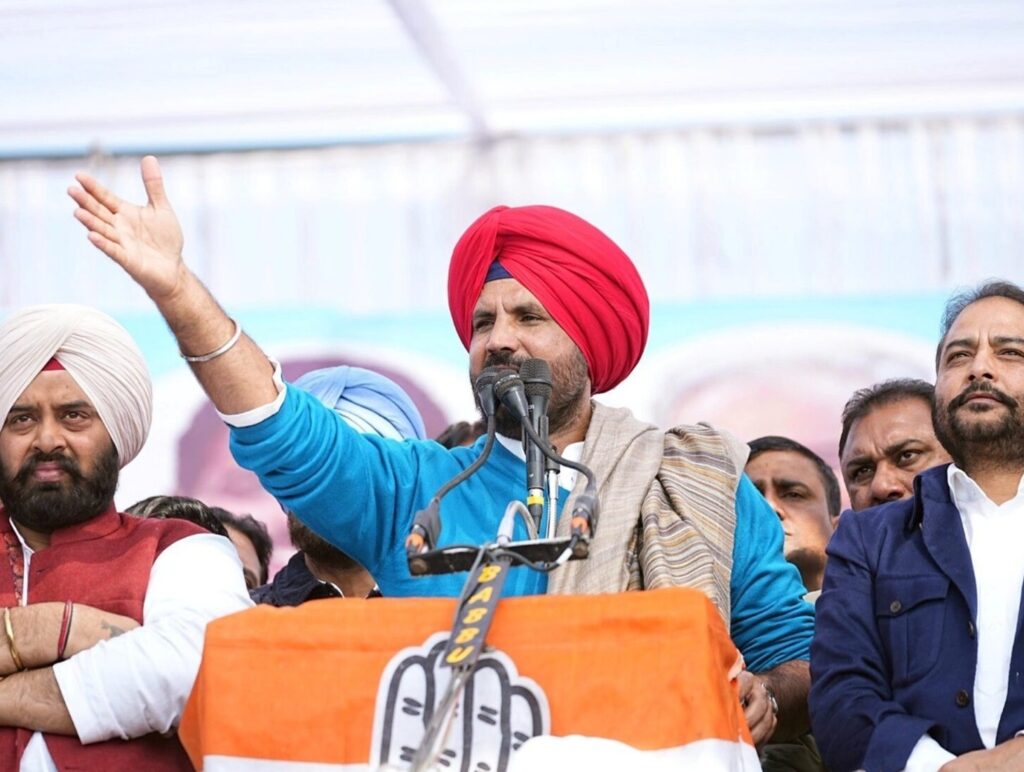
Punjab Congress president Amrinder Singh Raja Warring on Thursday criticised the AAP government, terming its proposed one-day special Assembly session on Labour Day a diversionary move amid political uncertainty following the defection of seven Rajya Sabha MPs.
Warring questioned the relevance of the session and said a government facing doubts over its own stability cannot effectively address labour concerns. He described the initiative as delayed and lacking substance, alleging that repeated special sessions were being used to deflect attention rather than deliver governance outcomes.
“The session is too little and too late,” Warring said, adding that such exercises have lost significance due to their frequent use.
He also raised concerns about the state’s performance under MGNREGA, claiming that fewer than half of registered labourers had benefited in recent years, and that only a small fraction had received the mandated 100 days of work. He alleged that the session was not aimed at meaningful deliberation or legislation for labour welfare, but rather to shift the focus away from the ongoing political developments.
Referring to recent defections, Warring said the exit of seven AAP Rajya Sabha MPs, most of them from Punjab, pointed to increasing instability within the party. He added that the session was likely to remain symbolic without any concrete roadmap for labour welfare.
Congress leader Sukhjinder Singh Randhawa also targeted the government, alleging that it was attempting to secure its position amid growing internal challenges. He claimed divisions within the party were becoming more visible and raised concerns about its stability.
Meanwhile, the BJP said it would organise a parallel ‘Janta di Vidhan Sabha’ to highlight public issues and concerns. The party said the initiative aims to provide a platform for public voices and ensure accountability in the current political environment.
The developments reflect intensifying political contestation in Punjab, with parties positioning themselves ahead of upcoming challenges while raising questions over governance priorities.
Patiala, September 14 The Punjab government has transferred Punjab State Power Corporation Limited (PSPCL) Administrative…
Industrial feeders to face power cuts from 8 pm to 6 am, PSPCL says Patiala,…

Chandigarh, September 12 The Punjab Police have secured the extradition of an alleged key operative…

Police recover two .30 bore pistols and 10 live cartridges from suspects Chandigarh/Pathankot, September 11…