








 Dr Kiran Deep

Nobody warns you that love arrives in fragments. Not in one clean moment you can point to later and say — there, that’s when it happened — but in pieces, scattered across years, showing up in unexpected places. A half-remembered film. A line of dialogue that means nothing the first time and everything the fifth.
I collected mine slowly, without realising I was collecting anything.
One of the earliest moments that stayed with me came from Sorry Bhai. I wasn’t watching it with much attention—more in the background, like so many films you half-follow while doing something else. Then a scene made me pause. Chitrangada Singh, playing a calm, self-assured schoolteacher, responds to a student dismissing love as overrated. She references Casablanca and says, almost lightly but with conviction, that love can’t be overrated—you’ve either never felt it, or you’re so deep in it that it clouds your thinking.
I smiled. Moved on. Forgot about it.
Except I didn’t, really. That’s the thing about certain lines — they don’t demand your attention immediately. They just wait. And then, when your life has given you enough material to understand what they were actually saying, they come back.
Finding Casablanca properly — not clipped, not compressed, not a version someone had uploaded in three parts with mismatched audio — turned out to be harder than it should have been. I ended up buying an original VCD for 750 rupees, which my friends treated as evidence of mild eccentricity. Maybe it was. But I think there’s something to be said for the act of actually seeking something out, of choosing not to wait for the algorithm to deliver it to you.
I wanted to sit with the film. And I did.
What I hadn’t expected, going in, was how little of it is actually about romance in the conventional sense. The love in Casablanca is almost entirely defined by what it costs. Rick doesn’t get the ending he wants. He makes a choice that is quietly heroic and privately devastating, and the film doesn’t soften that for you. It stands there and lets you feel it.
I found that more moving than any grand declaration could have been. Because it felt true. Love, in my experience, has rarely arrived as a gift. It has more often arrived as a question: what are you willing to do with this? What are you willing to give up?
Indian cinema has its own version of this question, and it answers it at a scale that takes your breath away. Mughal-e-Azam — a film K. Asif spent over a decade making, pouring everything into its sets and its silences and its monumental sense of consequence — puts love at the centre of an empire and watches what happens when the two collide. It is not a subtle film. It was never trying to be. It is a film that believes love is worth the kind of attention usually reserved for wars and kingdoms, and makes you believe it too.
The prince loses. The dancer loses. The love doesn’t. That’s the thing the film keeps insisting on, quietly, underneath all the grandeur.
Dilip Kumar, who played that prince and gave the film its aching, interior quality, wrote his autobiography late in life. The Substance and the Shadow is not the book many people expected — triumphant, anecdotal, full of golden-era gossip. It is something more considered than that. More difficult.
He opens with an Urdu couplet that circles a question rather than answering it: where does a love story begin? Where does it end? It is the question of someone who has spent a long time with love in various forms and arrived at the honest conclusion that it doesn’t behave like a story. It doesn’t have a proper structure. It begins before you notice and continues long after you thought it was over.
He was born Yusuf Khan in Peshawar, one of many children in a family that traded in fruit and navigated, like most families of that era, the upheaval of the war years. As a young man he moved to Pune, looking for work, and ended up selling sandwiches outside an army club to keep himself going. There is something in that detail that I find genuinely touching — not because it’s a rags-to-riches setup, but because of what it suggests about temperament. He didn’t wait. He adjusted. He found what was available and he did it.
His entry into films was accidental, as the most important things often are. A meeting at Churchgate station. An introduction, through a psychologist he had gone to consult, to Devika Rani, who ran Bombay Talkies. A new name, offered over a conversation, accepted. Yusuf Khan became Dilip Kumar on an ordinary afternoon, and the rest followed.
The relationship that the press never tired of examining was the one with Madhubala — the luminously beautiful actor who appeared alongside him in some of Hindi cinema’s most celebrated films, including Mughal-e-Azam itself. Their pairing on screen was electric. Their relationship off it became, in the retelling, a kind of myth — one of those stories that gets polished with each retelling until the real people inside it are barely visible.
Kumar writes about it without drama. He speaks of incompatibility, of pressures from family, of circumstances that pushed things in a direction neither of them had entirely chosen. There is no villain in his account. There is no one to blame. There is just the ordinary tragedy of two people who couldn’t make it work, filtered through the extraordinary pressure of being watched constantly while they tried.
What I noticed, reading it, was the absence of bitterness. Not performed absence — not the careful neutrality of someone who has rehearsed how not to sound angry — but something that seemed genuinely to have moved past it. He regrets the inaccuracies written about them both. He regrets certain professional consequences she suffered. And then he puts it down. He doesn’t pick it back up.
The love story that actually runs through the book — the one you feel rather than read — is the one with Saira Banu.
She had admired him since she was a child. He was 44 when he proposed, during a walk by the sea, in plain language without decoration. She was 22. They married in October 1966 and were together for the rest of his life.
The age gap drew exactly the scrutiny you would expect, then and now. I’m not going to pretend those concerns are never legitimate — they often are. But I watched footage of them together in his final years, when he was visibly frail, and she was beside him with a steadiness that seemed to come from somewhere very settled, and what I saw didn’t look like an imbalance. It looked like someone who had decided, decades ago, to be present for another person and had kept that decision through everything that followed.
That, I think, is what love looks like when it has had long enough to become something more than feeling. It looks like showing up on the hard days, not just the romantic ones. It looks ordinary, from the outside. It is not ordinary at all.
Dilip Kumar, in the autobiography, talks about instinct in the context of acting — about how the rational mind resists what it cannot explain, and how a performer has to learn to trust something below logic. The mind says: this is artificial, this isn’t real. The instinct says: be here anyway.
I think love works something like that. It doesn’t always arrive with a justification. It doesn’t submit to reason. You can build a very convincing argument against it and find, at the end, that it hasn’t moved. The argument was beside the point.
This is what the student in Sorry Bhai! got wrong. He came at love as a critic — stood outside it, assessed it, found it wanting. But love, as the teacher understood, is not a film you can review from a safe distance. You are always already inside it, or you are missing what it actually is.
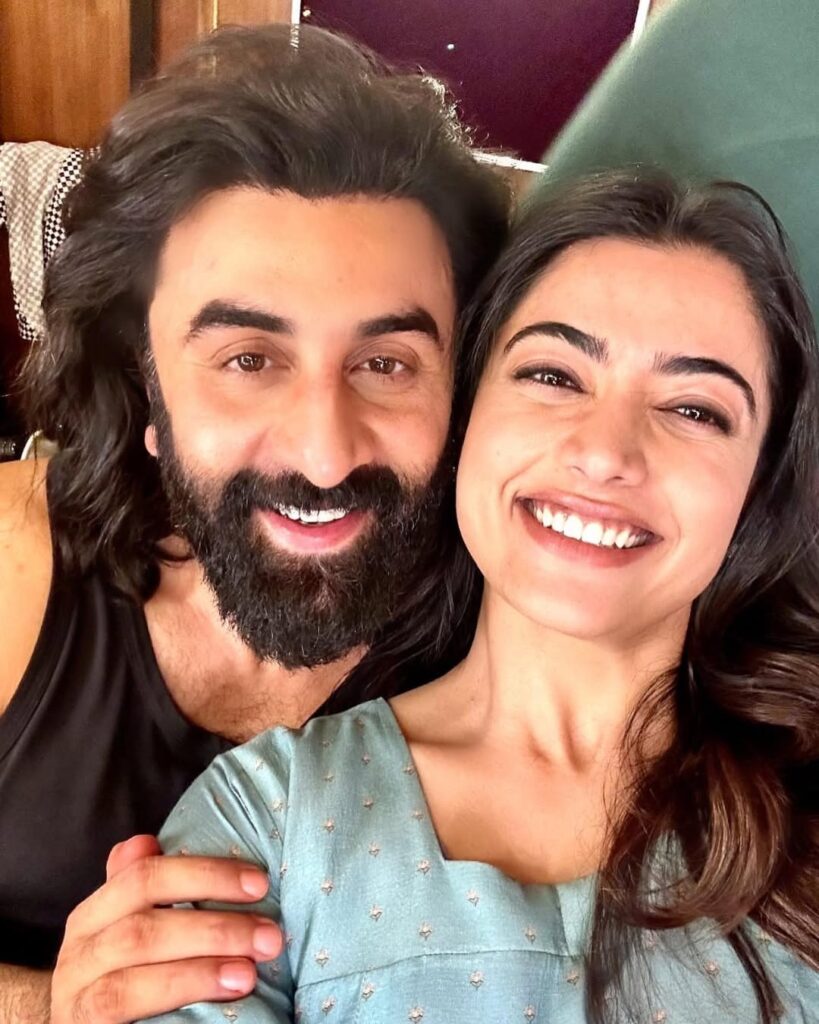
Recent Hindi cinema has been trying to show what it actually is, and the results have been uncomfortable in interesting ways. Animal — loud, excessive, morally unresolved — presents love as something that can damage the people it involves, that can coexist with behaviour that is difficult to defend. It is not a film that reassures you. It doesn’t offer love as a solution. It offers it as a condition — something that complicates everything it touches.
I find that more honest than the alternative. Love has never, in my observation, made things simpler. It has made them matter more, which is a different thing entirely.
I paid 750 rupees for a VCD because I needed to see something properly. That need to seek out the full version of something rather than accepting whatever fragment was available feels, to me, like the right metaphor for what love actually requires.
It asks for your full attention. It asks you to sit with discomfort and not reach for a distraction. It asks you to stay in the room when the disc skips, when the picture wavers, when the story gets harder before it gets clearer.
It is not overrated. It is, if anything, the thing we have most consistently underestimated in how much it shapes us, how long it stays, how quietly it continues to matter long after we assumed it had finished.
You think you’ve moved on. And then a line from a throwaway film comes back to you, years later, and you realise you haven’t moved on at all. You’ve just been carrying it differently.

Salian’s family asks the CBI to summon the former NCB Zonal Director as a key…
What is it that stays with us after a cricket match is over? Sometimes, it…

New Delhi, September 14 Improving political, diplomatic and military engagement between India and China…

Imagine this: It’s 12:01 am, you open Instagram and instead of reels, you get a…