








 Yog Raj Sharma
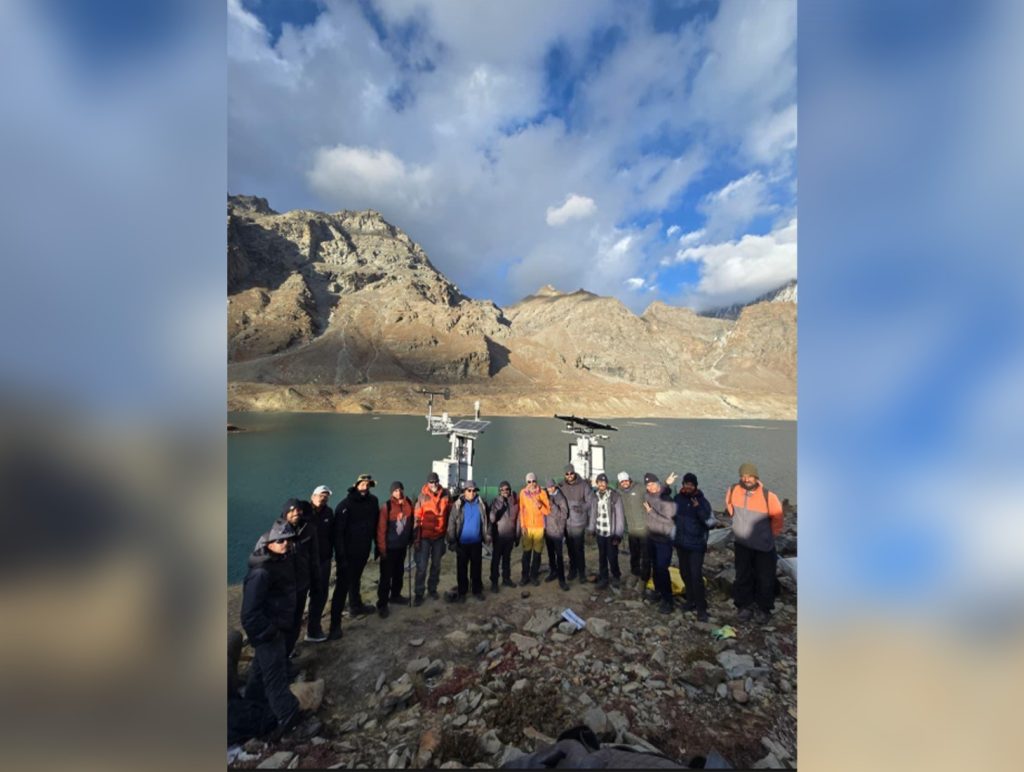
Three-unit system to monitor lake conditions and alert officials to potential flood risks
Shimla: The Himachal Pradesh government has installed an advanced early warning system at Ghepan Lake in Lahaul-Spiti to monitor potential flood risks from glacial lakes and alert authorities to possible dangers. At an altitude of around 13,450 feet, the lake is being monitored through a system developed with assistance from the Center for Development of Advanced Computing (C-DAC), Pune.
Dr Pushpendra Rana, Director and Special Secretary of the Revenue and Disaster Management Department, described the installation as the country’s first advanced integrated system featuring three independent units and supercomputer-based data analysis.
Rana said the system would continuously monitor changes in the lake and alert officials if it detected signs of a potential threat. The three interconnected units can also operate independently, ensuring that the remaining two continue functioning if one is damaged. Their battery capacity allows them to operate for 15 to 20 days during cloudy conditions.
Sensors and GPS trackers installed inside the lake will monitor water movement, providing data every 10 to 15 minutes under normal conditions and within seconds during emergencies.
Automated weather stations along the lake will record around 14 environmental parameters. The system can also record major avalanches and unusually loud sounds that could indicate potential danger. Two cameras in the third unit will continuously monitor the lake and its surroundings.
Data collected by all three units will be analyzed using C-DAC’s supercomputer. If potential threats are detected, alerts will be sent to the mobile phones of relevant officials, allowing authorities to activate disaster response measures in time.
According to Rana, the state and central governments are monitoring glacial lakes identified by them using high-resolution remote sensing data. He said similar systems had been tested in Sikkim, while an indigenous system had been installed in Uttarakhand. The government is also planning to install similar systems at three other identified glacial lakes in Himachal Pradesh, using available technology and lessons from the Ghepan Lake project.
Meanwhile, Rana said the estimated disaster damage to various departments in Himachal Pradesh this year stood at around Rs 3,525 crore. A report on the losses has been submitted to the central government.
He said rural roads, bridges, power lines and pathways accounted for a significant share of the damage. Central government officials have inspected disaster-affected areas in five to six districts.
The state government expects the Union Ministry of Home Affairs and the National Disaster Management Authority to decide on providing funds to repair and rebuild damaged infrastructure.

Keshav Chauhan questions action against four party leaders booked over effigy-burning protest outside Congress office…

Dharamshala hosts National IAS Conference, Boosting Himachal’s Profile as Event Destination Dharamshala: Himachal Pradesh is…
Himachal Pradesh to decide on new districts after commission report Himachal: Himachal Pradesh Chief Minister’s…

Women artisans preserve Himachal’s textile heritage Manali: Filmmaker and producer Kiran Rao visited the Kullvi…