







 Dr Kiran Deep
New Delhi, March 17
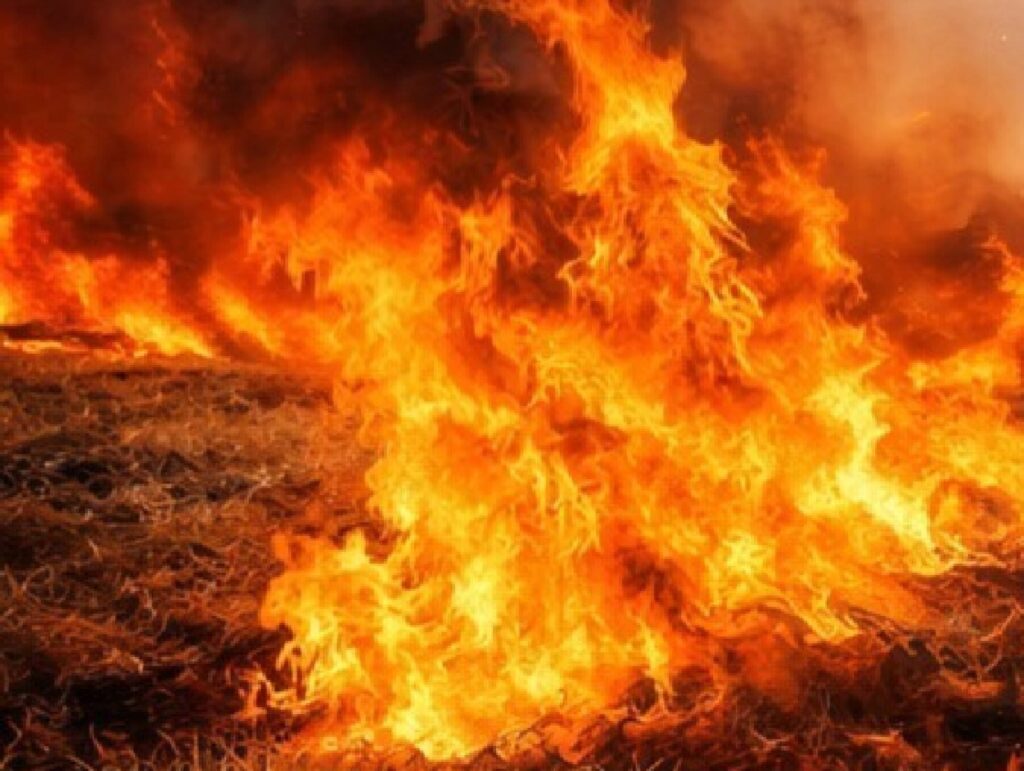
Punjab and Haryana have collectively recorded a reduction of more than 90 per cent in the number of fire incidences during the paddy-harvesting season in 2025, compared to the same period in 2022, the government informed Parliament on Monday.
The information was shared by Union Minister of State for Environment Kirti Vardhan Singh in a written response to a question in the Lok Sabha.
“Crop residue burning has been identified as one of the significant factors in north India which aggravates the Air Quality Index in the region during winter season after harvest of the preceding crop for sowing the next crop,” Singh said.
He informed the House that active fire events due to crop-residue burning are monitored using satellite remote sensing, following the “Standard Protocol for Estimation of Crop Residue Burning Fire Events using Satellite Data by Consortium for Research on Agroecosystem Monitoring and Modelling from Space (CREAMS) Laboratory, Division of Agricultural Physics, Indian Council of Agricultural Research (ICAR) — Indian Agricultural Research Institute, New Delhi”.
“The government has regularly reviewed and monitored the actions taken to address air pollution including stubble burning related issues in Delhi-NCR and adjoining areas. With coordinated efforts, the states of Punjab and Haryana have collectively recorded more than 90 per cent reduction in fire incidences during paddy harvesting season in the year 2025 in comparison to the same period in the year 2022,” the minister said.
“Farmers are facilitated with alternative measures like in-situ crop residue management, ex-situ utilisation of paddy straw in various applications. The in-situ crop residue management includes in-situ mulching, incorporation of the paddy residue in the field itself through efficient and affordable mechanised means or crop residue management machinery,” he added.
PTI
Akal Takht acting Jathedar says 11-member panel will hold fresh talks with Centre Patiala, September…
BJP National General Secretary speaks during Nasha Mukt Yatra in Patiala Patiala, September 29 BJP…
Punjab’s 2027 Assembly election is already beginning to look like a political spectacle, with the…

Two universities in Punjab. Two student protests. Two outbreaks of violence within days of each…