








 The North News
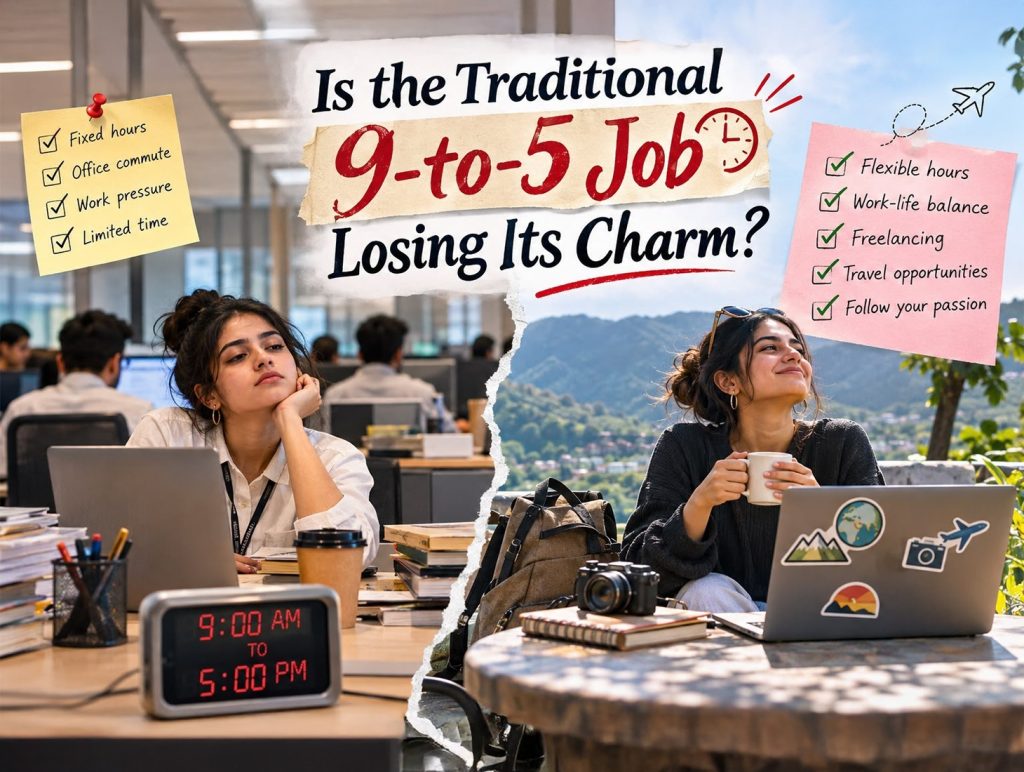
For generations, a 9-to-5 job was seen as the ultimate marker of professional success. A permanent desk, a monthly salary, weekends off and the promise of financial security represented the ideal working life. But as a younger workforce enters the professional world, the appeal of this once-coveted routine is being questioned.
From fixed office hours and conventional career paths to remote working, freelancing and flexible schedules, changing workplace expectations are reshaping how young Indians view employment.For today’s younger workforce, particularly Gen Z and young millennials, a job is increasingly expected to offer more than a designation, a regular pay cheque and the prospect of a promotion. Personal freedom, flexibility, meaningful work and the ability to maintain a life outside the workplace are becoming equally important.
The question is no longer simply where one works or how much one earns, but whether a career leaves enough room to live.
The changing idea of a dream job. The modern workforce is witnessing a shift in priorities. While previous generations often placed job security, long-term employment and steady career progression at the forefront, many young professionals are exploring opportunities that offer greater control over their time and professional choices.
Remote working, freelancing, entrepreneurship, content creation and gig-based employment have opened doors to career paths that were once considered unconventional.For some, working from home means avoiding exhausting daily commutes and spending more time with family. For others, freelancing offers the freedom to choose projects, clients and working hours. The growing reach of digital platforms has also encouraged young people to turn their interests into professions, whether through photography, social media, blogging, travel content or independent businesses.
The idea of a dream job, therefore, is gradually moving beyond the conventional corporate ladder. Is flexibility becoming more valuable than stability?
One of the biggest factors driving this shift is the growing importance of work-life balance. Long working hours, workplace pressure, rigid schedules and limited personal time have prompted employees to reconsider what they expect from their professional lives. A job that pays well but leaves little room for personal interests, relationships or simply unwinding may no longer be an attractive proposition.
For many young professionals, success is not defined entirely by the designation printed on a visiting card. Having time to pursue hobbies, travel, learn new skills and spend time with loved ones is becoming just as important.
However, flexibility does not necessarily translate into an easier working life. Freelancers and independent professionals often grapple with irregular incomes, uncertain projects, demanding clients and the absence of traditional employment benefits. The freedom to choose when to work can also mean working beyond conventional office hours.
The trade-off between flexibility and financial stability remains a real one. The other side of freedom
Despite the growing appeal of alternative careers, the traditional 9-to-5 structure has not lost all its relevance.
A fixed salary, paid leave, employee benefits, professional mentorship and opportunities for career growth continue to attract those who value financial security and predictability.
For young professionals at the beginning of their careers, an organised workplace can also provide valuable exposure, discipline, networking opportunities and practical experience. Working alongside experienced colleagues can offer lessons that are difficult to acquire independently.
Not everyone wants to become an entrepreneur or work on their own. Many continue to find satisfaction in the structure, stability and sense of belonging that a regular workplace provides. The real question, therefore, is not whether the 9-to-5 job has become irrelevant, but whether employers are willing to adapt to the changing expectations of their workforce.
What do young professionals really want?
Today’s workforce is not necessarily rejecting traditional employment; it is questioning the conditions attached to it.
Employees increasingly want workplaces where their contributions are recognised, personal time is respected and professional growth does not come at the cost of their well-being.
Hybrid working arrangements, flexible timings, supportive management and opportunities for continuous learning could help organisations attract and retain younger talent. The future of work may not belong exclusively to corporate offices or freelance platforms. Instead, it could emerge as a combination of both, where professional stability and personal freedom coexist.
A career should fit into life, not the other way around
The traditional 9-to-5 job is unlikely to disappear anytime soon, but its once unquestioned appeal is clearly being challenged.
For the younger generation, a successful career is increasingly about having choices rather than following a predetermined path. Some may find fulfillment in a corporate office, while others may discover it behind a camera, running a small business or working independently.
Perhaps the biggest shift is not in how people work, but in how they define a fulfilling life.
The aspiration is no longer merely to secure a job that pays the bills or climb the corporate ladder. It is to build a career that offers financial independence without demanding every waking hour in return. Because the ultimate measure of success may not be how much of life one spends working, but how much life one gets to live beyond work.
The eighth International Conference of Humility, Kindness and Love (HKL) Global Movement will be held…

An ode to slow mornings, fading memories and the little things that once made life…

A peacock with a hundred eyes, a dream translated into an etching and an artist…

At the International Lavi Fair, traditional woollen craft shares space with an unusual range of…