Spread the news
New Delhi, August 14
The Narcotics Control Bureau (NCB) has brought back wanted fugitive Virender Singh Basoya from the United Arab Emirates, where he was arrested in June following an INTERPOL Red Notice. He was taken into custody after arriving at Indira Gandhi International Airport in New Delhi on Friday.
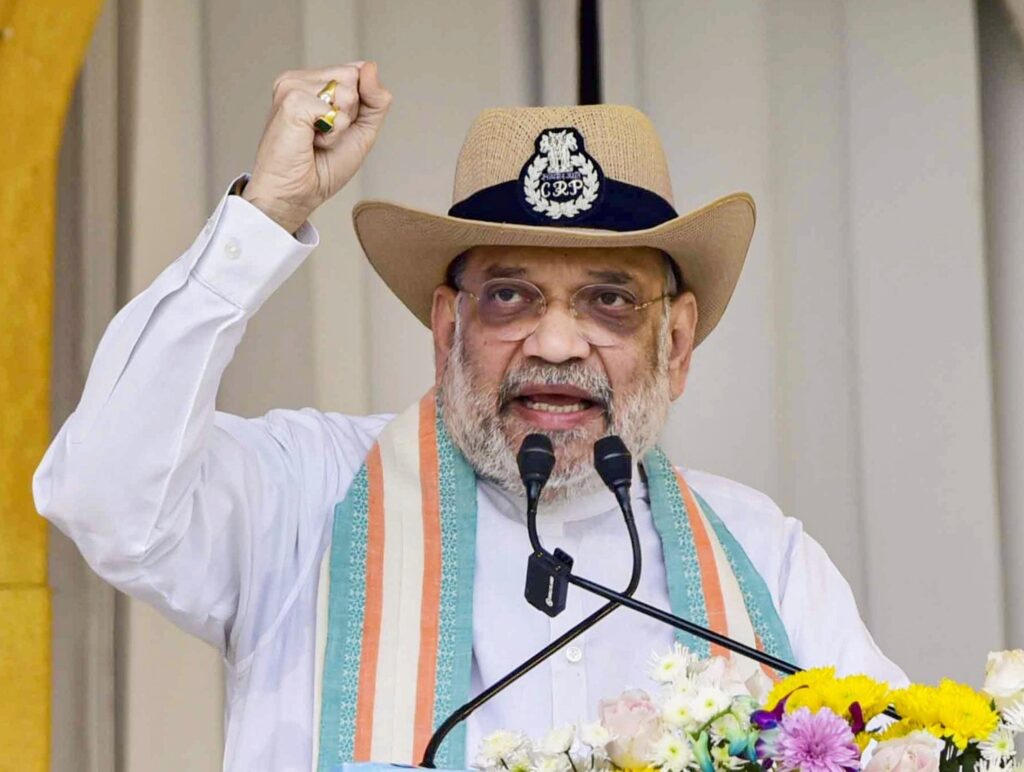
Indian agencies worked with UAE authorities to secure his return, the NCB said. In his post on X, Union Home Minister Amit Shah said the government was pursuing drug traffickers operating from abroad and working to dismantle their networks.The case dates back to February 2024, when Pune Police seized 500 grams of Mephedrone. Investigators later expanded the probe to trace the wider trafficking network.
According to the NCB, subsequent operations led to the seizure of about 867 kg of Mephedrone in Pune and another 970 kg in Delhi, taking the total recovery to nearly 1,837 kg. The case was later transferred to the NCB’s Mumbai Zonal Unit. Investigators identified Basoya as an alleged overseas coordinator of the network. The NCB said he helped organise the movement of Mephedrone consignments from India to other countries.
A separate investigation by the Delhi Police Special Cell also allegedly linked Basoya to an international cocaine trafficking network. In October 2024, the police seized more than 1,300 kg of cocaine, Mephedrone and hydroponic weed during raids in Delhi, Hapur, Ghaziabad and Ankleshwar in Gujarat.
The NCB said the investigation indicated Basoya’s alleged involvement in procuring, transporting, storing and distributing cocaine and other drugs.His return is part of Operation GLOBAL-HUNT, an NCB initiative targeting major drug traffickers and fugitives believed to be operating from outside India. The operation uses international mechanisms, including INTERPOL Red Notices, to locate and bring suspects back to India.
The agency said the return of other wanted traffickers, including Mohammad Salim Dola from Türkiye and Navin Chichkar from Malaysia, were also part of the initiative.
The NCB said bringing fugitives back to India was a key part of the government’s Vision Document on Drug Control (2026–2029).
The agency said it would continue working with Indian and international law-enforcement agencies to track drug traffickers, financiers and handlers operating both within India and overseas.








 The North News