



 Dr Kiran Deep
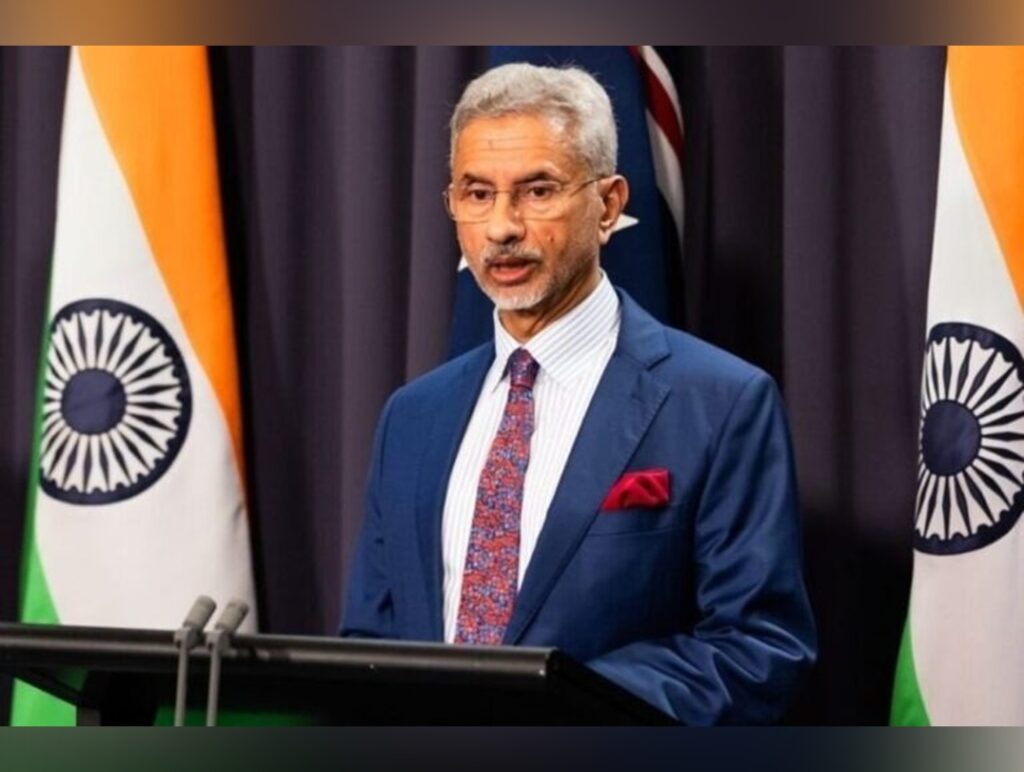
Raipur, April 4
External Affairs Minister Dr. S. Jaishankar stated on Saturday that India has demonstrated resilience in overcoming a series of global shocks. Addressing students at IIM Raipur, he noted that the country has managed both domestic and external challenges “fairly successfully” over a turbulent decade.At the 15th Annual Convocation Ceremony of the Indian Institute of Management Raipur, Jaishankar acknowledged that the world has faced multiple crises in recent years. He emphasized that India has remained steady and emerged stronger.
Addressing the graduating class, Jaishankar noted they are entering a world of “unprecedented change,” shaped primarily by three major disruptions of the decade include the Covid-19 pandemic, global conflicts, and climate change.
He explained that the pandemic transformed daily life and work, while wars and geopolitical tensions have impacted societies worldwide, highlighting global interconnection. Regarding climate change, he warned that more frequent extreme weather events and the gradual loss of natural habitats pose serious risks in both the short and long term.
Jaishankar stated that current global turbulence reflects a deeper structural shift rather than a temporary phase. He highlighted changes in the balance of power and noted that advancements in technology, energy, military capability, connectivity, and resources have increased competition and risk-taking.
He observed that in this environment, countries and businesses are increasingly choosing to “hedge, de-risk, and diversify,” making the balance between opportunity and exposure more complex than before.
Despite global uncertainties, Jaishankar said today’s graduates in India have brighter prospects than previous generations. He noted a confidence and optimism in Indian society, driven by the belief that the next decade can build on recent progress.
Highlighting India’s status among the world’s top five economies, he attributed recent progress to inclusive growth, broader political participation, and decisive leadership, which have strengthened the platform for national ambition.
Jaishankar also emphasized India’s embrace of the digital revolution, noting that the country has not only adopted new technology enthusiastically but has also integrated it purposefully into daily life, surpassing the effectiveness of several developed nations.
He stated that India’s growing self-confidence is shaped by a strong “can-do” spirit among youth, demographic advantages, and renewed appreciation for heritage and culture. He described this as a time when “technology and traditions” reinforce each other.
Regarding economic resilience, Jaishankar said building national capability is now essential as older assumptions about globalization shift toward greater self-reliance.
He identified Atmanirbhar Bharat as India’s response to this shift, emphasizing the importance of strengthening domestic capacity in food, healthcare, energy, and national security. Where full self-sufficiency is not feasible, he advocated for trusted partnerships and diversified supply chains.
Jaishankar stated that building robust national capacity is central to India’s long-term goal of becoming a Viksit Bharat, or developed nation, and that graduating students have a special responsibility in this national journey.
He linked nation-building to the strength of Indian business, noting that a more supportive environment is improving the ease of doing business. He cited large-scale investments in infrastructure such as highways, railways, ports, airports, and waterways as essential for building a competitive economy.
He added that good governance is equally important, with digital tools and effective leadership improving both the business climate and quality of life.
Jaishankar noted that access to opportunity has expanded significantly for small businesses, entrepreneurs, and start-ups, while skills, education, and innovation are being promoted nationwide. He said India’s scale and diversity can become powerful strengths when combined with entrepreneurship and technological ambition.
Addressing the graduates directly, Jaishankar urged them to develop a strong understanding of global affairs, emphasizing that business leaders can no longer focus solely on domestic issues.
He explained that even companies focused on the Indian market are increasingly exposed to international products, partners, and services, making it essential to understand the behaviors, priorities, and cultures of other nations.
“This is an era of a global marketplace and a global workforce,” he said, adding that students should prepare themselves for both.
Jaishankar also noted that the relationship between diplomacy and business is stronger than ever. He said India’s foreign policy now focuses on expanding market access for Indian producers, securing resources and technology, protecting Indians overseas during crises, and promoting “Brand India” as a reliable and trusted partner abroad. between diplomacy and management, he said, both required preparation, judgment, negotiation, and the ability to make difficult choices under pressure. When faced with competing options, he said, the guiding principle must remain rooted in core national interest.
“If ‘India First’ is your compass, the direction will always be clear,” he said.
In his closing remarks, Jaishankar offered broader advice on leadership and life, encouraging graduates to stay competitive, pursue continuous improvement, take initiative, and value relationships.
He stated that those who volunteer, address gaps, and go the extra mile will always stay ahead. He added that professional success should be balanced with consideration, values, and ethics.
Congratulating the IIM Raipur Class of 2026, Jaishankar expressed confidence that they will advance with ambition, commitment, and a strong sense of responsibility.
Devastating floods along the Nepal-Tibet border, reportedly killed 270 people so far, have once again…
Jabalpur, June 26 The Madhya Pradesh High Court on Thursday dismissed a defamation case against…
New Delhi, June 25 Prime Minister Narendra Modi on Thursday described the Emergency imposed in…
The Centre government has said that a passport has never been considered conclusive proof of…