








 Disney Brar
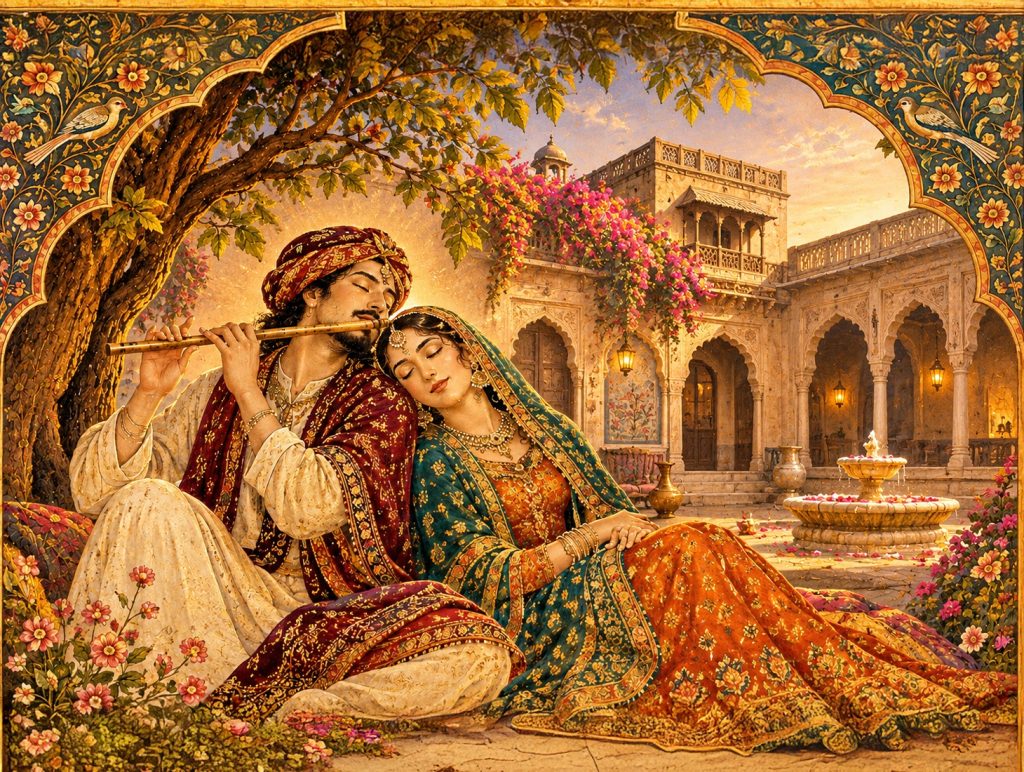
Somewhere between longing and surrender, between the ache of separation and the hope of union, lies the true meaning of Ishq. Perhaps Heer and Ranjha were never just searching for each other; they were searching for something eternal.
There is a certain magic in the way Punjab tells the story of Heer and Ranjha. It is not merely a tale of two lovers who challenged social conventions; it is a journey into the deepest chambers of the human heart, where love slowly sheds its worldly meaning and begins to resemble devotion.
In the immortal poetic world of Waris Shah, Heer is more than Ranjha’s beloved, and Ranjha is more than a man consumed by love. They become symbols of a longing that transcends the physical, a yearning that seeks something beyond the boundaries of human existence.
Beyond Romance: The Sufi wisdom hidden in Heer-Ranjha
Perhaps the spiritual beauty of their story lies in the journey of Ranjha. A man who leaves behind the comforts of home in search of his beloved eventually becomes a jogi. His transformation is symbolic of an inner awakening — when the desire to find someone becomes a journey to discover oneself. His flute, his wandering and his solitude become expressions of a heart that has surrendered to love.
Heer, meanwhile, represents a love that refuses to bow before worldly expectations. Her heart recognises a truth that social conventions cannot silence. In her unwavering devotion lies a profound lesson: love must have the freedom to exist, and a soul must never be forced to deny its deepest truth.
This is where their story finds an echo in Sufi philosophy. The distinction between Ishq-e-Majazi, or earthly love, and Ishq-e-Haqiqi, or divine love, offers a beautiful way of understanding their journey. In the Sufi imagination, the beloved can become a reflection of divine beauty. Loving someone deeply can awaken compassion, humility and a longing for the eternal.
When Ishq becomes Ibadat
Separation, too, acquires a different meaning. Hijr is not simply the absence of the beloved; it is the experience of carrying their presence within oneself. It is the ache that turns silence into remembrance and longing into prayer. Perhaps Ranjha’s greatest transformation happens not when he finds Heer, but when his love begins to exist beyond the need for physical togetherness.
And therein lies the timeless wisdom of Heer-Ranjha: love is not ownership, nor is it an arrangement dictated by the world. It is freedom, faith, courage and surrender. It teaches us to look beyond appearances, to love without diminishing another’s individuality and to recognise that the purest connections transform us rather than bind us.
Their tragic ending may have denied them an earthly union, but their love found another kind of immortality. It travelled through the verses of Waris Shah, the folk songs of Punjab and the memories of generations, becoming a spiritual metaphor for every heart that has ever longed for something beyond itself.
A Thousand Years of Ishq: Why Heer-Ranjha still speaks to the soul
Perhaps Heer was the face through which Ranjha discovered love, and Ranjha was the longing through which Heer discovered her strength. Perhaps their story was never only about two people finding each other, but about two souls revealing the extraordinary power of love.
For the deepest form of Ishq does not end at the beloved. It takes us beyond the self, beyond ego and beyond the desire to possess. It brings us closer to compassion, truth and the divine.
And perhaps that is the greatest spiritual lesson Heer and Ranjha leave behind: sometimes, the journey begins with the search for a beloved, but ends with the discovery of god within the soul.
Ishq jad rooh nu chhoo lave, taan milan di khwahish vi ibadat ban jaandi hai.
(When love touches the soul, even the longing for union becomes an act of devotion.)

Punjab Governor Gulab Chand Kataria on Sunday called for peace, dialogue and mutual respect amid…
Richard Bach’s Illusions invites us to question the ideas of success, happiness and freedom in…

As screens compete for our attention and busy schedules leave little room for leisure, readers…

For generations, a 9-to-5 job was seen as the ultimate marker of professional success. A…