








 PTI
PTI
Bangkok, May 28
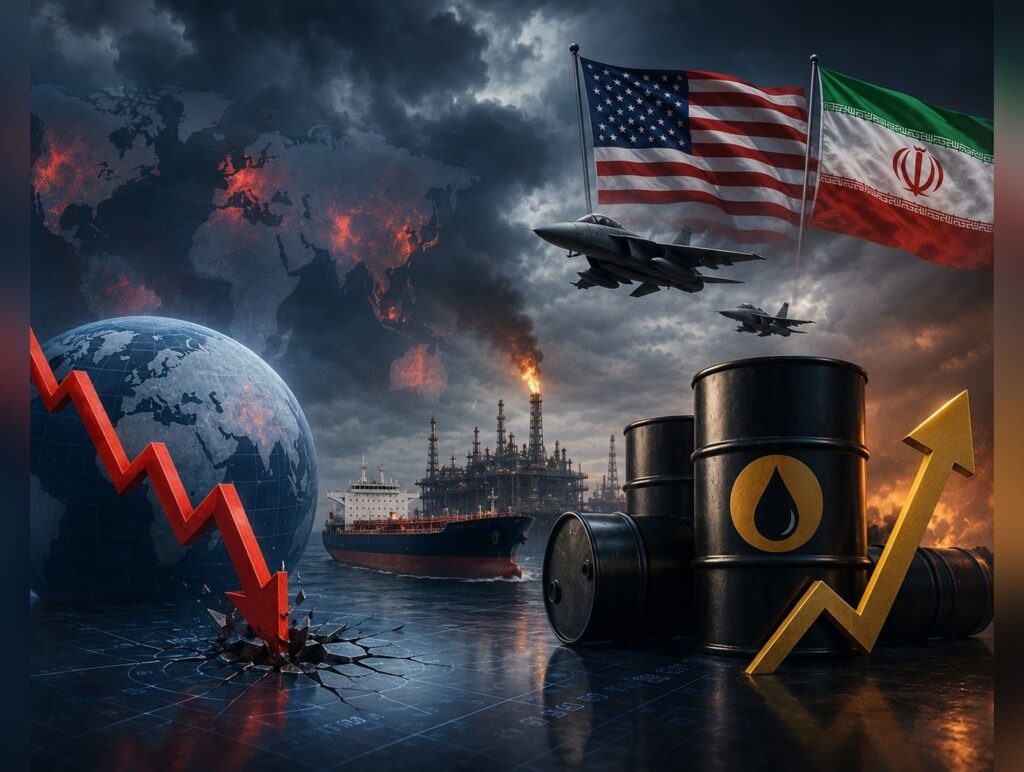
Global stock markets declined on Thursday after fresh US military action against Iranian drone threats near the Strait of Hormuz triggered concerns over rising geopolitical tensions in the Middle East. Oil prices also rebounded by more than USD 2 per barrel after witnessing sharp losses in the previous trading session.
European markets traded lower in early trading hours. Britain’s FTSE 100, France’s CAC 40 and Germany’s DAX registered declines, while Asian markets including Japan’s Nikkei, South Korea’s Kospi, Hong Kong’s Hang Seng and Australia’s ASX 200 also ended lower amid cautious investor sentiment.
According to US officials, American Central Command forces intercepted four Iranian attack drones near the Strait of Hormuz and targeted a drone control station in Bandar Abbas that was reportedly preparing another launch. The latest strikes followed similar military action carried out earlier this week.
US President Donald Trump said Iran was “negotiating on fumes” and asserted that the upcoming midterm elections in the United States would not pressure Washington into rushing an agreement to end the nearly three-month-old conflict.
Market analysts said uncertainty surrounding a possible US-Iran understanding continued to weigh on investor confidence. Analysts noted that while both countries appeared interested in maintaining the ceasefire and the indirect communication channels, concerns remained about whether a compromise on key issues could be reached.
Meanwhile, US stock markets touched fresh record highs on Wednesday after crude oil prices fell sharply, easing inflation concerns and boosting investor sentiment. Airline and cruise company stocks recorded gains on expectations of lower fuel costs.
Brent crude oil, which had fallen more than 4 percent in the previous session, rebounded above USD 94 per barrel during early Thursday trading. US benchmark crude also moved higher after recovering from recent declines. Analysts said hopes surrounding the reopening of the Strait of Hormuz for oil shipments had earlier helped stabilize global energy prices.
Despite continued geopolitical uncertainty and inflation concerns, global equity markets have remained resilient, driven by strong corporate earnings and expectations of sustained profit growth in 2026.

More than a decade after the brutal 2012 Delhi gang rape triggered nationwide protests and…

BJP launches anti-drug yatra in Punjab Pathankot, September 18 BJP national president Nitin Nabin on…
New Delhi, September 17 India’s semiconductor ecosystem is expanding rapidly, opening new opportunities for innovation,…

New Delhi, September 17 Prime Minister Narendra Modi on Thursday thanked people across the country…