Spread the news
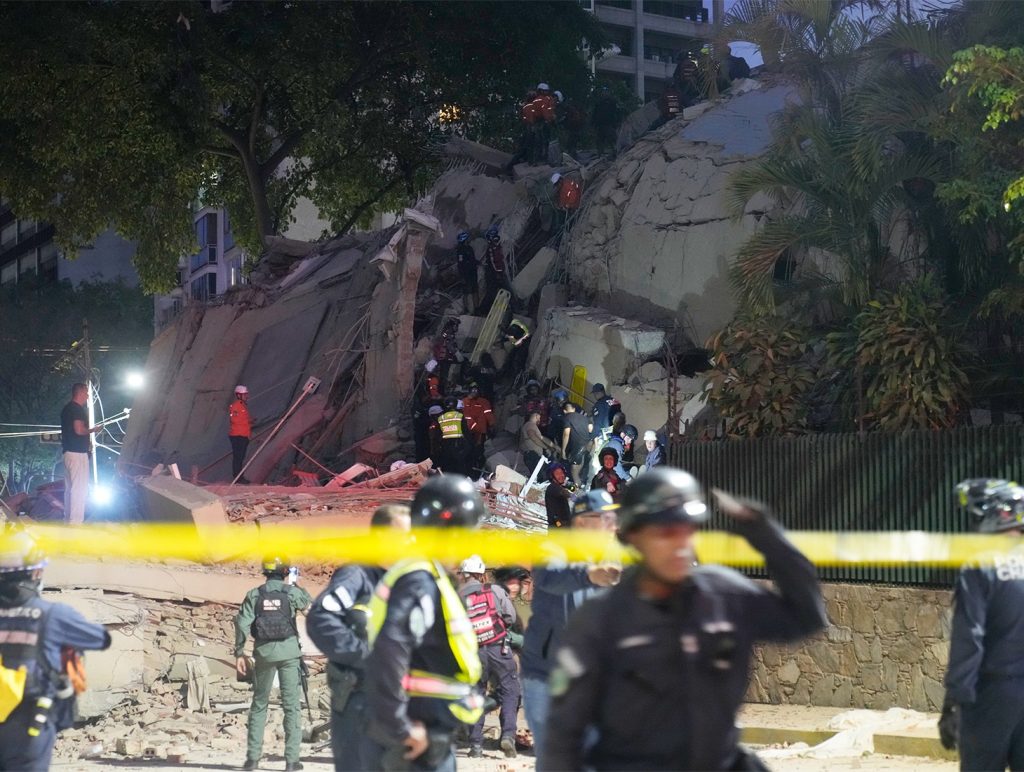
Devastating floods along the Nepal-Tibet border, reportedly killed 270 people so far, have once again highlighted the urgent need for more effective early-warning systems across the Himalayan region. Against this backdrop, an Artificial Intelligence and satellite data-based model developed by Himachal Pradesh University (HPU), Shimla, could help strengthen early warnings for cloudburst-induced flash floods and improve disaster preparedness in vulnerable mountain communities.The university developed the model as extreme weather events increasingly threaten communities across the Himalayas.
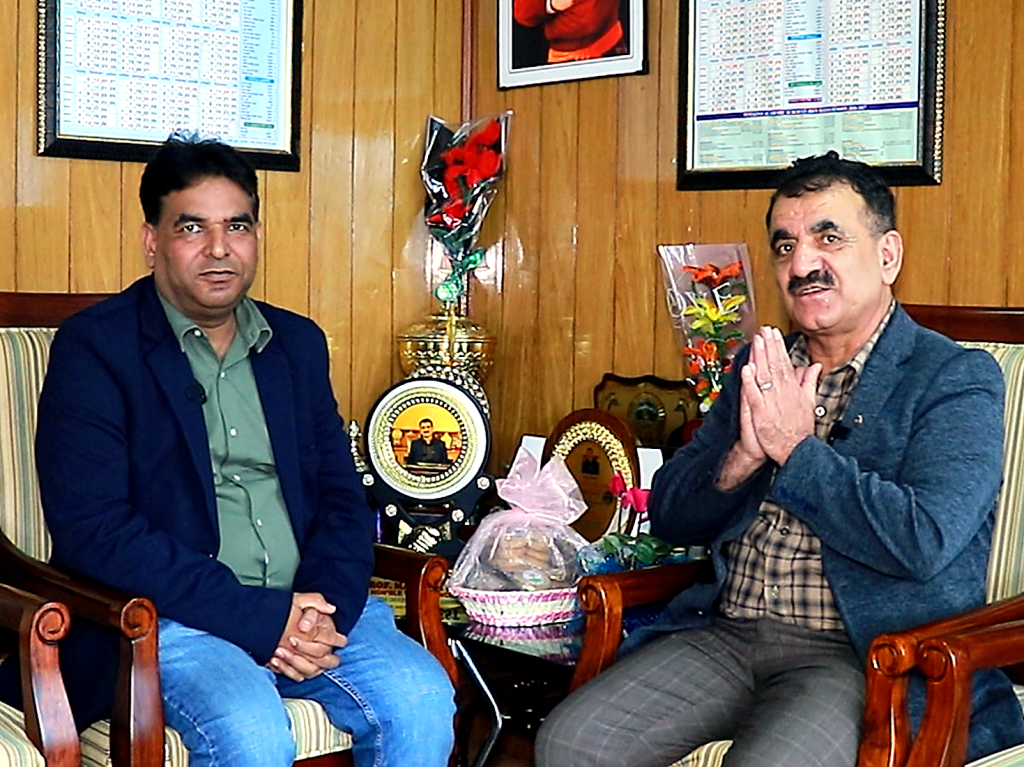
In an Exclusive Interview with The North News Editor-in-Chief Dr. Kiran Deep, HPU Vice-Chancellor Prof. Mahavir Singh said the system could support early-warning efforts, disaster preparedness and evidence-based decision-making.
“Cloudbursts have emerged as a major challenge for Himachal and other hill states,” Prof. Mahavir Singh said. “The model developed at HPU can provide support for early warnings, disaster preparedness and evidence-based decision-making, which can ultimately help save lives. Cloudbursts and flash floods have caused widespread destruction in Himachal Pradesh in recent years, particularly in districts such as Mandi and Kullu, damaging homes, roads and other infrastructure and claiming lives,” Prof. Mahavir Singh further said. He added that the Himalayan region had become increasingly vulnerable to extreme weather events underlining the importance of using technology and scientific data to strengthen disaster preparedness. The effectiveness of such systems, however, ultimately depends on the availability of reliable local data and the ability to translate scientific forecasts into timely warnings for communities at risk, he added.
Satellite and AI data
Sharing details, the Vice-Chancellor said the university had established a disaster centre to bring together researchers from different disciplines and focus on Himalayan-specific risks. According to Prof. Singh, the centre is recognised by the governments of India and Himachal Pradesh and has developed collaborations with institutions in India and abroad. He said HPU researchers had engaged with experts from IIT Roorkee and other institutions, while the university had also signed agreements with organisations in France, Norway and Italy.
The model uses Artificial Intelligence techniques alongside high-resolution data from satellite and research sources, he said.“We have high-end data from NASA, DRDO and other institutions,” Prof. Singh said, adding that collaborations with international and Indian research institutions had strengthened access to scientific information. The Researchers have also gathered data from vulnerable Himalayan areas, including Kinnaur and Kullu, he added.
“The university’s work includes the use of SAR-based data, a satellite imaging technology that can help researchers observe the Earth’s surface even during darkness or cloudy weather.
The technique could help scientists better understand conditions associated with cloudbursts and improve early-warning capabilities. “It is a specific technique to understand cloudbursts and provide early-warning support. We are moving forward in this direction,” Prof. Mahavir Singh said.
More data, greater accuracy
Talking about the latest model, Prof. Mahavir Singh said the model was designed around AI-based analysis, meaning its performance could improve as more reliable local data became available. The approach could potentially be adapted for other mountainous regions, including Uttarakhand, the North East and remote parts of Himachal Pradesh, he said.
“Wherever you collect the data, modelling can be carried out for that region,” he said. However, he stressed that the quality and quantity of data were crucial.
“The more data available to AI, the greater the potential accuracy. Accuracy depends on the volume and quality of the data,” he said. The Vice-Chancellor said the university’s current research was focused particularly on Himachal Pradesh and its unique geographical conditions.
Landslides and disasters
HPU is also planning to expand its research into other natural hazards, including landslides.
Prof. Mahavir Singh said the university set-up a dedicated research and development centre and laboratory for studying landslides and other disasters in the future. He said disaster management could not be viewed purely as an engineering or scientific challenge.
“Psychology is involved. Journalism is also involved,” he said, highlighting the importance of public awareness and communicating warnings effectively during emergencies.
HPU’s disaster centre brings together researchers from psychology, journalism, economics, social sciences, sociology, political science, science and engineering, he said.
The multidisciplinary approach, he added, was intended to improve both scientific understanding and the communication of disaster risks to communities.
Expanding research into energy and technology
Prof. Mahavir Singh also outlined HPU’s wider plans to strengthen research in emerging areas of science and technology.
The university has established centres focused on green energy, nanotechnology and cybersecurity, he said.
Research in the green energy sector is currently concentrated on three areas including solar technology, hydrogen and electric vehicles.
Prof. Singh, whose academic background is in magnetism, said the university was also studying materials used in electric vehicle motors. Electric motors rely on specialised materials, including rare-earth elements, and India is seeking alternatives and greater domestic capability in this area.
“We are working in that direction,” he said.
HPU has also entered into collaborations with industry and is conducting research into electric motors, batteries, solar panels and hydrogen technologies. The university has introduced industry-linked PhD programmes and is working with researchers and companies involved in areas including hydrogen and electric vehicles, Prof. Singh said.He added that collaborations were also being developed in the power and solar energy sectors.
Focus on future jobs
Prof. Mahavir Singh further said the energy sector was likely to become one of the biggest sources of employment in the coming years. “Energy is a necessity for every country,” he said. “Solar, electric vehicles and hydrogen are three areas where I see enormous possibilities.”With around 55 departments and centres, HPU is attempting to encourage collaboration across academic disciplines to improve research output and strengthen the university’s scientific profile.
Prof. Singh said the university had also submitted several research projects to government agencies and organisations, including the Government of India and the Defence Research and Development Organisation, seeking funding for advanced research.The cloudburst model is part of a wider effort by the university to combine satellite technology, Artificial Intelligence and multidisciplinary research to address challenges facing the Himalayan region.









 Dr Kiran Deep