








 Dr Kiran Deep
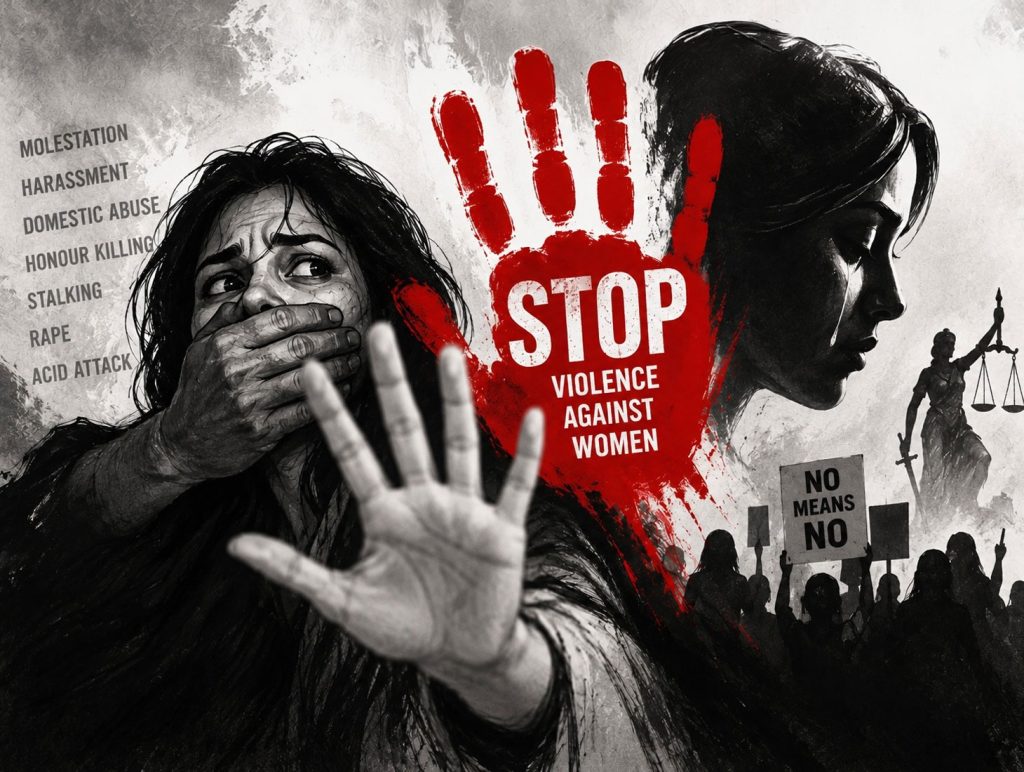

More than a decade after the brutal 2012 Delhi gang rape triggered nationwide protests and led to major changes in India’s laws, a disturbing incident in Bihar’s Jamui raises a difficult question, have we changed the mindset that allows women and girls to be treated without dignity and respect?
A viral video from Jamui shows a teenage boy and a minor girl being stopped, surrounded and allegedly harassed and assaulted by a group of youths on September 19. The two were returning after attending coaching classes when they were intercepted. The police have registered a case under the Protection of Children from Sexual Offences Act and other relevant provisions, arrested three people and launched an investigation to identify and arrest the remaining suspects. An SIT has also been formed.
The video is disturbing not merely because of what happened to the girl and the boy, but because of the apparent confidence with which a group of young men believed they could stop two young people on a public road, question them, intimidate them and allegedly subject the girl to sexual harassment.It forces us to ask a basic question, where do young people learn how to treat women?
The laws can punish an offender after a crime has been committed. The police can register an FIR. The courts can deliver judgments. The governments can amend laws and introduce stricter penalties. But none of these measures can by themselves teach a child the difference between right and wrong. That education begins at home.
The parents have a responsibility to teach their children, particularly their sons, that a girl or woman is not someone to be controlled, humiliated, intimidated or judged. Respect cannot be taught only through lectures about good behaviour. The children learn from what they see around them, how men speak about women, how women are treated within families and how disagreements between men and women are handled.
The schools and colleges also have an important role. The education cannot be restricted to examinations, degrees and employment and young people need to understand consent, personal boundaries, dignity, equality and responsible behaviour. They need to know that being attracted to someone does not give anyone the right to harass, threaten or force themselves upon that person.The Jamui incident also raises questions about the role of society. Why should anyone feel entitled to stop a young girl and a boy travelling together and demand an explanation from them? What gives a group of people the authority to decide whom young adults or teenagers should meet or where they should go?
This is where another recent development in Haryana becomes relevant.
A social panchayat in Hisar district has reportedly passed a resolution opposing love marriages and proposed social action against couples who marry against prevailing community norms. The two incidents are different and should not be equated. But both raise questions about social attitudes towards the choices and freedoms of young people, particularly women.
India has already demonstrated that laws can change.Following the 2012 Delhi gang rape and murder, the country introduced significant legal reforms to strengthen provisions dealing with sexual violence. Yet the laws can only go so far if attitudes remain unchanged.
The latest crime statistics released by the Home Ministry in May this year underline the continuing challenge. India has registered 4,41,534 cases of crimes against women compared with 4,48,211 in 2023, according to the NCRB data for 2024. The country also recorded 29,536 registered rape cases in 2024.
The numbers represent registered cases, not necessarily the full scale of violence. The reporting itself can be affected by social stigma, fear, family pressure and access to the justice system. At the same time, a decline in registered cases should not automatically be interpreted as proof that violence has declined by the same measure.
The nature of the problem is also wider than sexual violence. The NCRB data shows that cruelty by husbands or their relatives remained one of the largest categories of crimes against women in 2024, with 1,20,227 cases registered.The Haryana provides another indication of the scale of the problem. Official data from the state’s Women and Child Development Department shows that 7,494 domestic violence complaints were registered between April 2025 and March 2026, an average of more than 20 complaints a day. These figures should make us look beyond the question of whether another law is needed.
The more difficult question is whether we are teaching the next generation how to live with one another with dignity. The parents and teachers have a role. The religious and community leaders and social institutions have a role. And the police and justice system have an equally important responsibility to ensure that victims can report crimes without intimidation, humiliation or unnecessary delay.
A woman who approaches the police should not have to fight another battle simply to have her complaint registered. The investigations must be prompt and professional. The victims and witnesses need protection. The judicial process must provide justice without unnecessary delay.
And society must stop turning the behaviour of the perpetrator into a question about the victim.
The responsibility for harassment lies with the person who harasses. The responsibility for sexual violence lies with the person who commits it. A girl does not become responsible for the behaviour of a man simply because she was travelling with a male friend, wearing a particular dress, returning home late or choosing whom to meet.The Jamui video should therefore not become another cycle of outrage that disappears from public memory after a few days.The real test is what happens after the headlines disappear.
If we want safer streets, we must teach boys that masculinity is not domination. If we want safer schools and colleges, we must teach students that consent and personal boundaries matter. If we want safer homes, we must challenge the normalisation of domestic violence. And if we want a society where women can live freely, we must stop treating their choices as something that requires permission from the community.
India changed its laws after Nirbhaya.
The larger challenge now is changing the mindset that makes those laws necessary in the first place.
BJP launches anti-drug yatra in Punjab Pathankot, September 18 BJP national president Nitin Nabin on…
New Delhi, September 17 India’s semiconductor ecosystem is expanding rapidly, opening new opportunities for innovation,…
New Delhi, September 17 Prime Minister Narendra Modi on Thursday thanked people across the country…
New Delhi, September 17 Reacting on passage of the sanctioning Russia and Iran Act in…