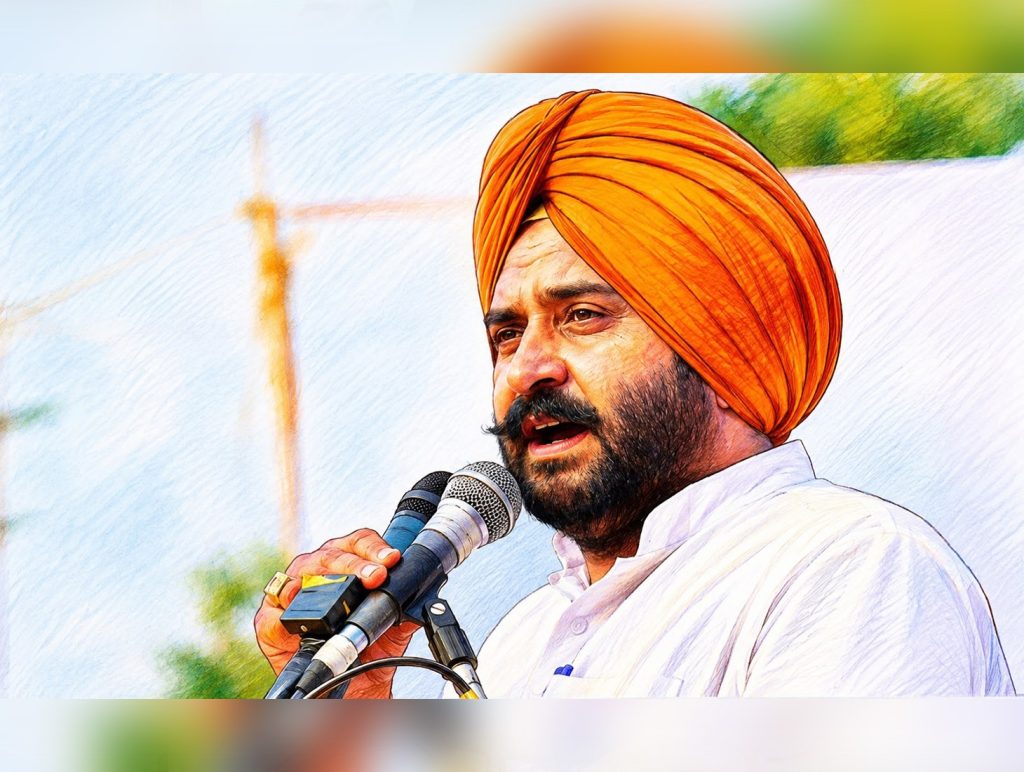
The exit of three Aam Aadmi Party (AAP) legislators and their move to the Bharatiya Janata Party (BJP) has added new twist to Punjab politics as the state heads towards the 2027 Assembly elections. The departures have also put the spotlight on AAP’s ability to keep its legislators together and manage differences within the party.
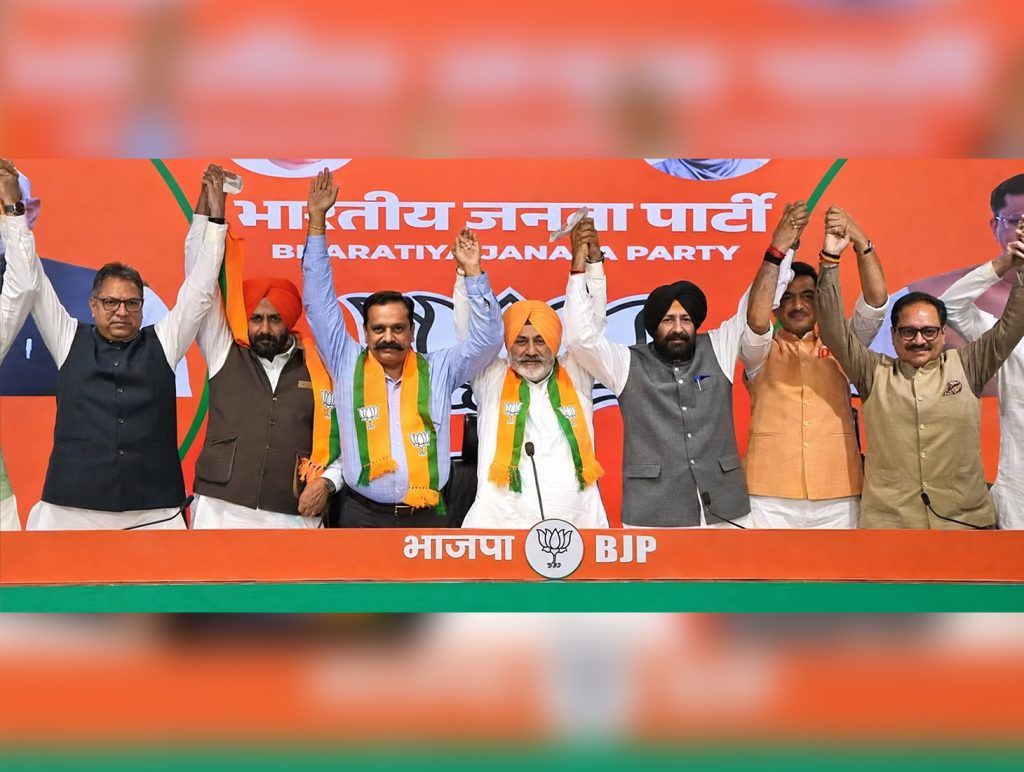
Former Cabinet minister Chetan Singh Jouramajra, Harmeet Singh Pathanmajra and former IPS officer Kunwar Vijay Pratap Singh joined the BJP in New Delhi on Monday in the presence of Punjab BJP president Kewal Singh Dhillon.
Although all three have left the same party, their political journeys and reasons for the move are quite different. Their exits also reflect the different challenges AAP faces as it prepares for another Assembly election.
For the BJP, their entry offers an opportunity to strengthen its presence in Punjab by bringing in leaders with political experience, local support and, in Kunwar Vijay Pratap Singh’s case, a prominent background in the police service. For AAP, the departures are a reminder that keeping a party united can become difficult when leaders have different expectations and political ambitions.
Three leaders, three different reasons
Kunwar Vijay Pratap Singh, who represented Amritsar North in the Assembly, announced his resignation as an MLA on Monday morning. He submitted his resignation to the Speaker with effect from November 1 before joining the BJP.
In a social media post, he thanked the people of his constituency for the affection and support they had shown him.
“I will remain grateful to you till my last breath for the love and respect you have given me,” he said.
Explaining his approach to politics, the former IPS officer said he had entered public life to work for Punjab’s development and had no personal interests. He called for clean politics and transparent administration, saying the state needed to look beyond what he described as the politics of streets, drainage and ribbon-cutting.
He also claimed to have completed nearly 90 per cent of the work expected of him as an MLA. He argued that the responsibilities of an elected legislator should not be confused with those of councillors, mayors and MPs.
Before entering politics, Kunwar Vijay Pratap Singh had a long career in the Punjab Police. He served as SSP in Amritsar, Ferozepur and Gurdaspur, Police Commissioner of Jalandhar and Ludhiana, and DIG in the Border Range and other units.
One of his most prominent assignments was heading the Special Investigation Team (SIT) probing the 2015 Kotkapura and Behbal Kalan police firing cases. The cases followed protests over incidents of sacrilege involving the Guru Granth Sahib. He also served in the Punjab Police’s Special Task Force.
Jouramajra’s exit and the Samana equation
Chetan Singh Jouramajra’s departure has a different political backdrop, with questions over his prospects of getting the AAP ticket for the 2027 elections emerging well before his exit.
Jouramajra joined the Punjab Cabinet in July 2022 and was given the Health and Family Welfare, Medical Education and Research, and Elections portfolios. In a Cabinet reshuffle in January 2023, he lost the Health portfolio and was assigned Horticulture, Food Processing, Freedom Fighters and Defence Services Welfare.
He was dropped from the Council of Ministers in September 2024 but continued as the MLA from Samana.
The first clear signs of trouble emerged in September 2026, when the AAP leadership appointed former Akali Dal leader Surjit Singh Rakhra as political supervisor (halqa in-charge) for Samana.
The appointment was widely seen as an indication that Jouramajra might not get the party ticket in 2027. His absence from AAP’s initial list of 40 candidates added to the speculation.
For a sitting MLA, uncertainty over the next election ticket can have serious political implications. The appointment of another leader to oversee the constituency was bound to raise questions about Jouramajra’s political future within AAP.
His departure also brings into focus a familiar challenge for political parties: how to balance the ambitions of sitting legislators with those of leaders brought in from other parties.
Pathanmajra’s differences with government
Harmeet Singh Pathanmajra has had a rather eventful political journey, moving between different political formations before finding electoral success with AAP.
He began his political career with the Shiromani Akali Dal (SAD) and was associated with its youth wing. He later became active in local politics and served as Block Samiti chairman, building his support base in the region.
After spending time with the People’s Party of Punjab and returning to the Akali Dal, he contested the 2017 Assembly election as an Independent candidate after failing to secure a Congress ticket. He lost the election.
His fortunes changed in 2022 when he contested on an AAP ticket and won the Sanaur seat. He defeated SAD candidate Harinder Pal Singh Chandumajra by a margin of 49,112 votes.
Pathanmajra came into the spotlight again in 2025 when he openly questioned the state government’s handling of floods. He raised concerns over the administration’s preparedness, particularly the desilting of drains, maintenance of embankments and alleged shortcomings in flood management.
His public criticism of the government raised questions about the relationship between the MLA and the party leadership. His departure now adds another chapter to his changing political affiliations.
What the exits mean for AAP and BJP
The departure of three legislators is unlikely, by itself, to decide the outcome of the 2027 elections. But it gives opposition parties an opportunity to question AAP’s ability to hold its elected representatives together.
The three MLAs exits also tell different political stories. Jouramajra’s departure came amid speculation over ticket allocation, Pathanmajra had openly criticised the government’s handling of floods, while Kunwar Vijay Pratap Singh spoke about his vision for Punjab’s development and the need for cleaner politics.
The BJP meanwhile will have to ensure that the induction of these leaders translates into support on the ground. A leader joining new party does not automatically mean that voters in his constituency will follow. Much will depend on their local influence, political networks and ability to connect with people under their new party banner.
For AAP, the immediate concern will be whether these are isolated departures or a sign of wider discontent within its ranks. The party will also have to deal with questions about its candidate-selection process, the role of sitting MLAs and how much space elected representatives have to express disagreement.
With the 2027 elections approaching, these developments have added new dimension to Punjab’s political contest. Whether the BJP can turn the new entrants into an electoral advantage and whether AAP can prevent further exits, will become clearer in the months ahead.









 Dr Kiran Deep