






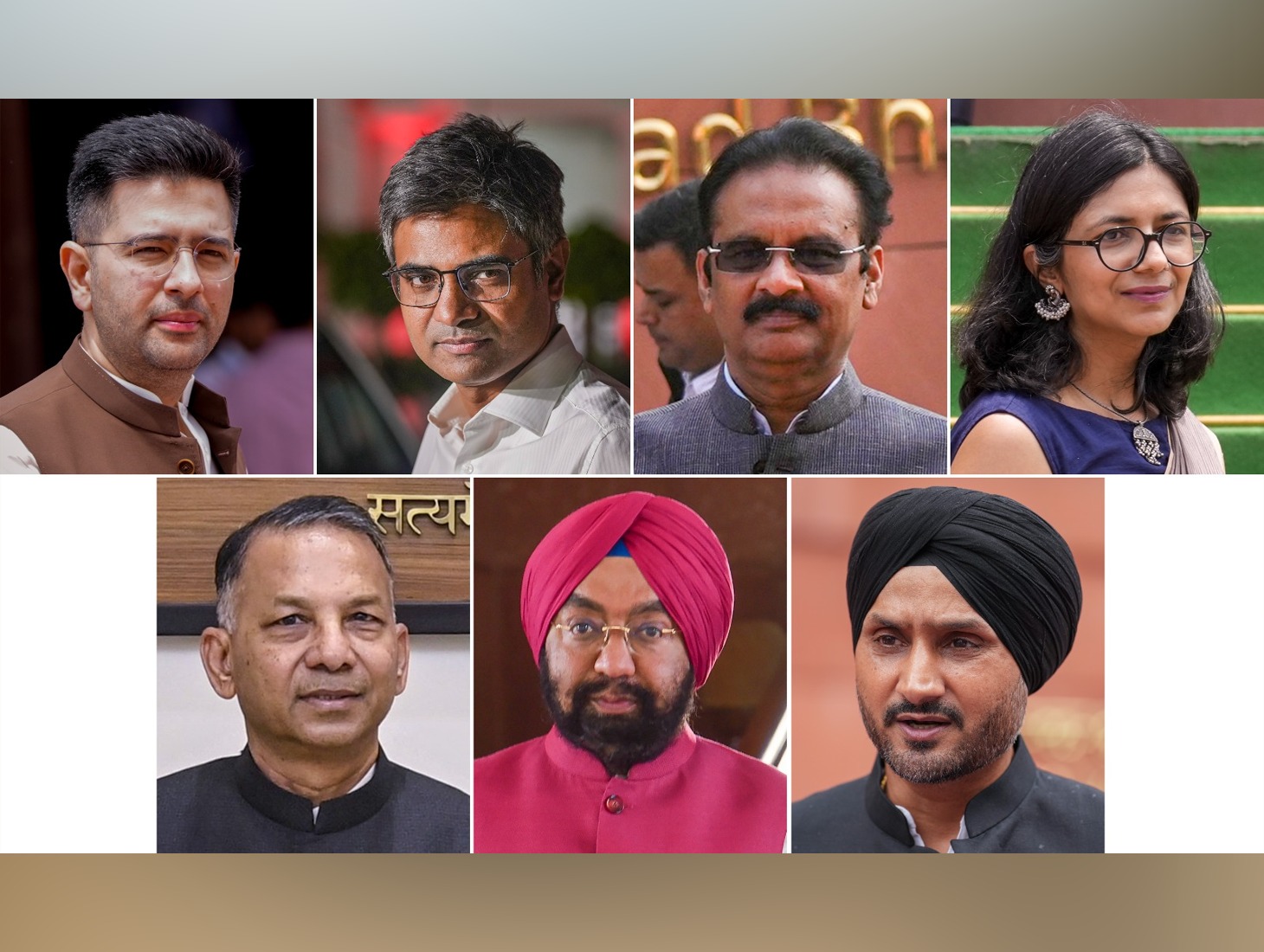
Seven Rajya Sabha MPs leaving the Aam Aadmi Party (AAP) has intensified uncertainty within the party ahead of Punjab’s assembly elections, while giving the Bharatiya Janata Party (BJP) a clear political advantage in a state where contest lines are already shifting.
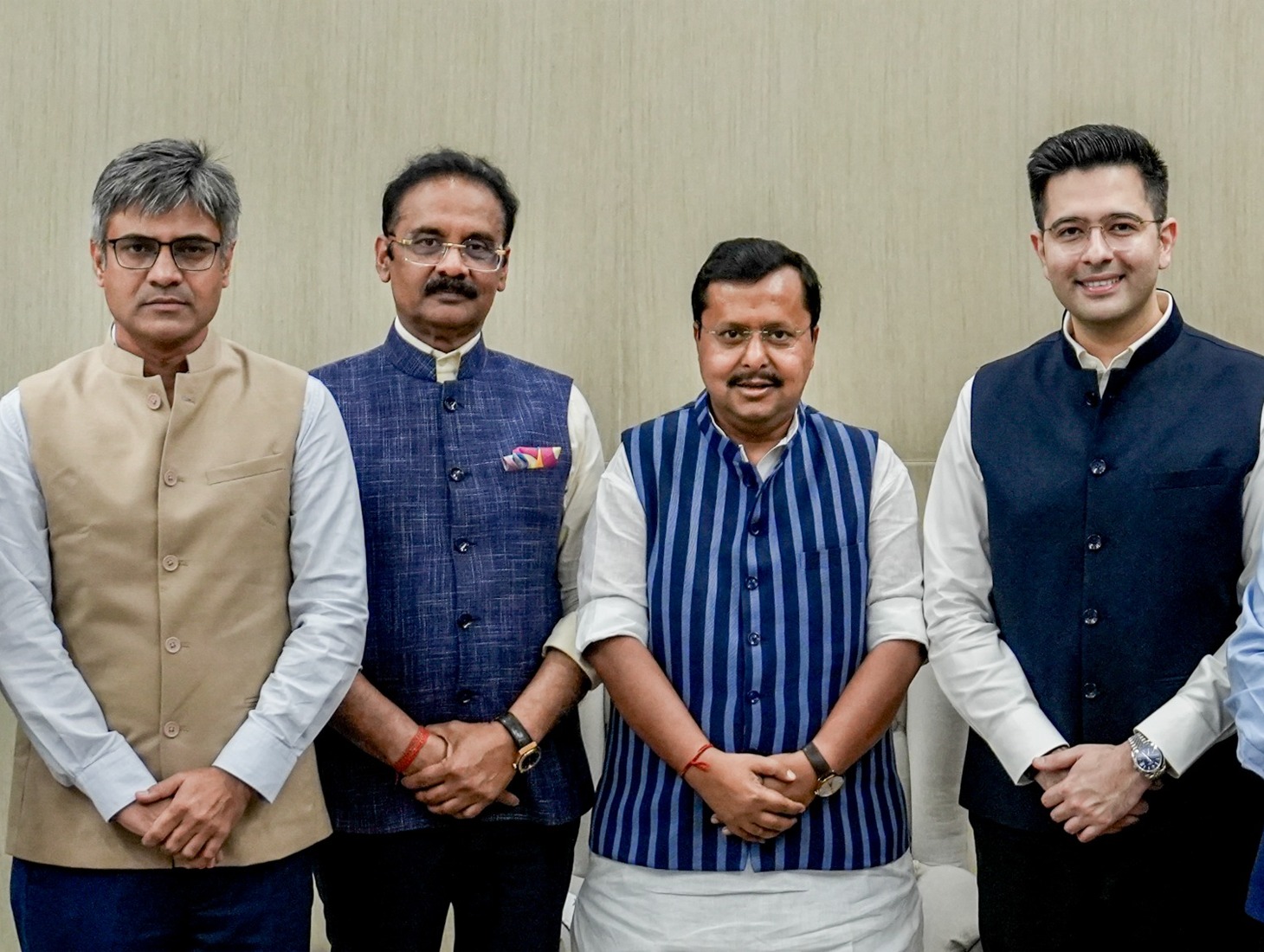
The exits announced in stages began with Raghav Chadha, Ashok Mittal and Sandeep Pathak joining the BJP in Delhi on Friday in the presence of party leader Nitin Nabin. The remaining four MPs, former cricketer Harbhajan Singh, Swati Maliwal, industrialist Rajinder Gupta and entrepreneur Vikram Sahney, are expected to follow.
At the BJP office in Delhi, the incoming MPs were received by senior leaders, a carefully staged display that underlined the political symbolism of the moment.
Among the most significant departures is Chadha, long viewed as a close associate of AAP leader Arvind Kejriwal and a key figure in the party’s organisational and financial architecture in Punjab. At times, he was seen as exercising influence beyond that of the state leadership. That standing, however, became more contested following Kejriwal’s arrest in the liquor policy case, a case in which he and other leaders were later acquitted, though legal proceedings remain unresolved.
Sandeep Pathak brings another layer of significance to the exits. Widely credited with helping shape AAP’s 2022 Punjab election strategy, which delivered a sweeping 92-seat majority out of 117, he represents the party’s early organisational strength. His academic background, spanning Cambridge, Oxford and MIT, and his earlier career at IIT, had helped project AAP as a technocratic as well as populist force. His move to the BJP underscores the extent of the current political reconfiguration.
Other defectors carry their own weight of symbolism. Harbhajan Singh, once a prominent figure in Indian cricket, joined AAP in 2022. Mittal, founder of Lovely Professional University, and Sahney, a Padma Shri awardee with international recognition, were both part of AAP’s effort to broaden its non-political leadership base. Gupta, a prominent industrialist and Padma Shri recipient, further added to that profile.
AAP’s rise in Punjab was rapid and emphatic. In 2022, it swept the state, pushing the Congress to 18 seats, the Shiromani Akali Dal to three, the BSP to one, while the BJP secured just two. That mandate once positioned AAP as a disruptive force in northern India’s political order.
Yet its momentum has since slowed. The party’s defeat in Delhi in 2025, where the BJP secured 48 of 70 seats, marked a clear reversal and raised broader questions about its organisational coherence beyond Punjab.
Despite the current turbulence, AAP continues to rely heavily on its welfare-driven governance model in Punjab, including subsidised electricity, health insurance schemes, and social welfare programmes, as it prepares for another electoral test.
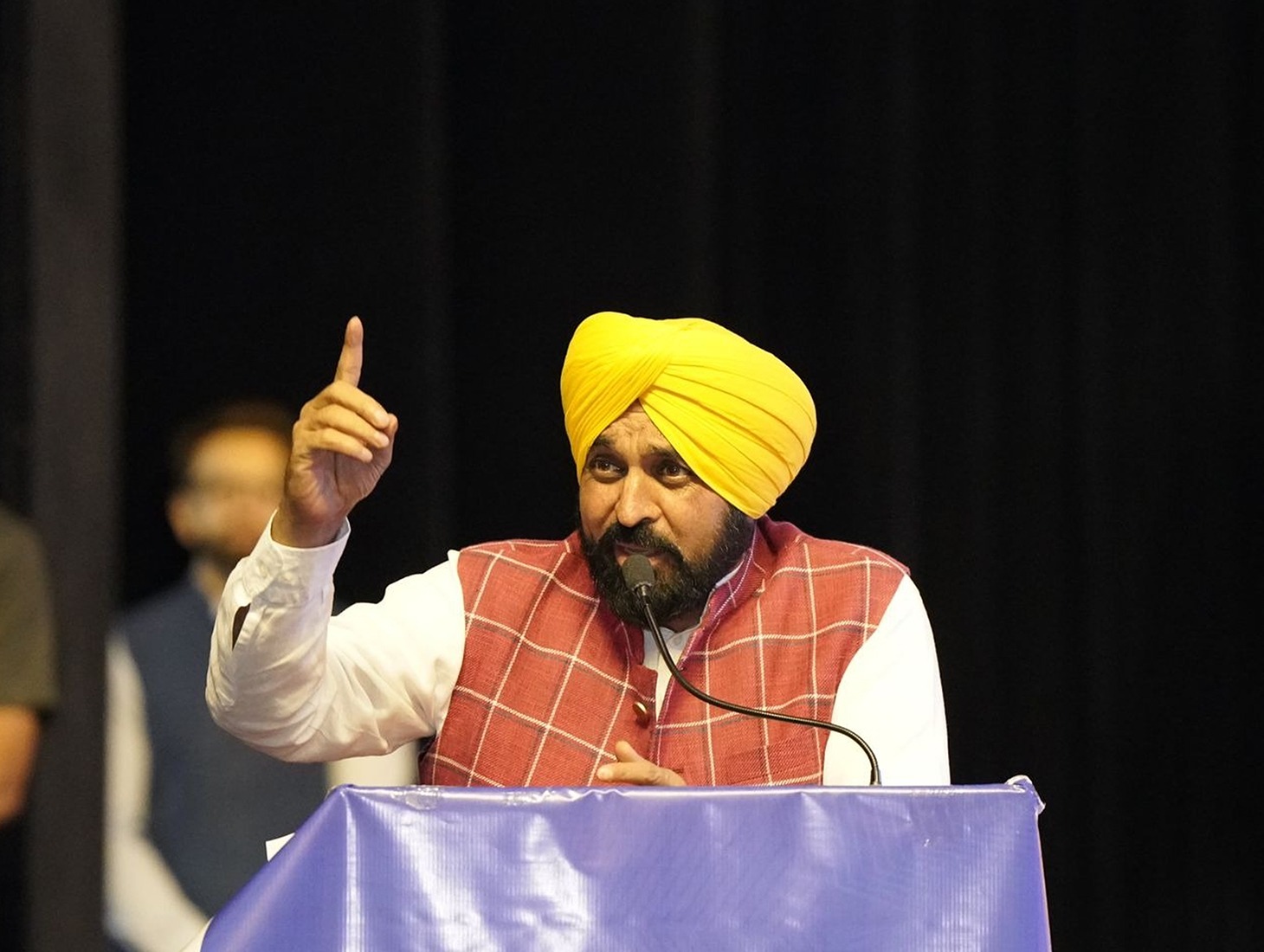
Chief Minister Bhagwant Mann remains the party’s principal public face in the state, but questions persist over the balance of authority between Chandigarh and the party’s central leadership, particularly Kejriwal and former deputy chief minister Manish Sisodia.
Chadha, explaining his decision, said the party had drifted from its founding principles and values, prompting the collective move to the BJP.
The response from Punjab’s leadership was swift. Mann accused the BJP of attempting to destabilise his government and of engineering defections to weaken what he described as a corruption-free administration. He dismissed the political weight of the departing MPs and questioned their grassroots relevance.
He also alleged that the BJP’s discomfort with his government stemmed from its stance on sacrilege-related legislation, and framed the defections as part of a broader attempt to undermine Punjab’s governance. Mann has now sought an appointment with President Droupadi Murmu, along with party MLAs, to discuss the issue.
With elections approaching, the developments have redrawn the contours of Punjab’s political contest, exposing fractures within AAP, while strengthening the BJP’s positioning in a state that remains central to both parties’ ambitions.