








 Madhav Aggarwal

By Dr. Jaspal Singh Sandhu (Vice Chancellor, Lovely Professional University)
Indian universities need to prepare students for a rapidly changing future. Artificial intelligence is taking industries by storm, careers are unpredictable, and the world of work is changing at a breakneck speed. Freshers might enter university thinking about how the world works, only to find it has changed by the time they start working. How can universities equip students to be ready for such an environment?
From knowing answers to solving problems
Simply knowing answers will not help students navigate an unpredictable future. Many roadblocks they will face in their careers are complex and have no textbook solution. A business must adapt to a fickle environment; an engineer must craft solutions that consider cost, safety, and the environment; a healthcare professional must make decisions that utilise technology for patients. Each requires judgement and critical thinking.
Universities must give students more opportunities to grapple with real problems, to engage in research, to create projects, to discuss and debate ideas, and to learn from failure. Testing has an important role to play in the educational system, but it cannot measure a student’s ability to apply knowledge in a rapidly changing world, nor can it measure the value of critical thinking in finding solutions.
Learning cannot stay confined within disciplines
Engineering schools must encourage communication and management, management schools must understand technology and data, and students of the humanities must learn to think critically about technology as well as the arts. It is not that students need to learn more, but that they need to see these connections.
AI should augment human judgement
Artificial intelligence presents an interesting dilemma in higher education today: Should universities keep AI out of the syllabus, or should they prepare students to grow with AI? The latter makes far more sense. Students are encountering AI tools whether universities are ready for them or not, and telling students not to use AI will not prepare them for the workplaces they are about to enter.
The mission of universities must be to teach students to understand when AI can aid human judgement and when it is likely to undermine it. Students should learn to use AI tools to solve problems, but an equally important lesson is to teach students how to evaluate AI-generated answers and then to make independent decisions.
The real world must become part of education
A massive gap exists between understanding something and knowing how to use it. Students may know how marketing works but have never had to approach people in the real world. They may understand engineering principles but have not faced pressure to work within a budget or accommodate a project constraint. They may know how to write academic content but have never had to explain a project to someone outside their field. All of this becomes clear only after students have encountered the real world.
Universities can ensure this happens by encouraging students to participate in internships, research projects, entrepreneurship incubators, industry projects, apprenticeships and community outreach. Industry needs to play a larger role, as well. Not merely in terms of recruitment, but in understanding what goes on in the real world. Faculty members can advise students on how theory underpins practice, but professionals can prepare students for the realities of the workplace and what employers are looking for. Institutions such as Lovely Professional University offer students an integrated learning experience with an emphasis on entrepreneurship and the opportunity to take their education beyond their primary field of study. But this needs to be the goal of Indian higher education as a whole, rather than a select group of universities offering such opportunities.
We need to educate people for adaptability
The easiest response to change is to adapt the curriculum to reflect it. But what students need today, tomorrow, the next year or the next decade can change dramatically. Simply adding new skills to an already overcrowded curriculum will leave students with new skills that, eventually, will no longer be needed.
Higher education needs to focus instead on building competencies and aptitudes that will remain relevant within changing fields of endeavour. Curiosity, communication, critical thinking, collaboration, adaptability and the ability to learn something new are all much more important skills that any university can impart.
The university of the future must prepare for uncertainty
The university of the future should not set out to prepare students for a career that does not exist. It should set out to prepare students to adapt to whatever career they choose. It should prepare students to be flexible and innovative within their chosen field and perhaps, to be prepared to make a new choice altogether. This is the standard Indian higher education must set for itself in the years ahead.
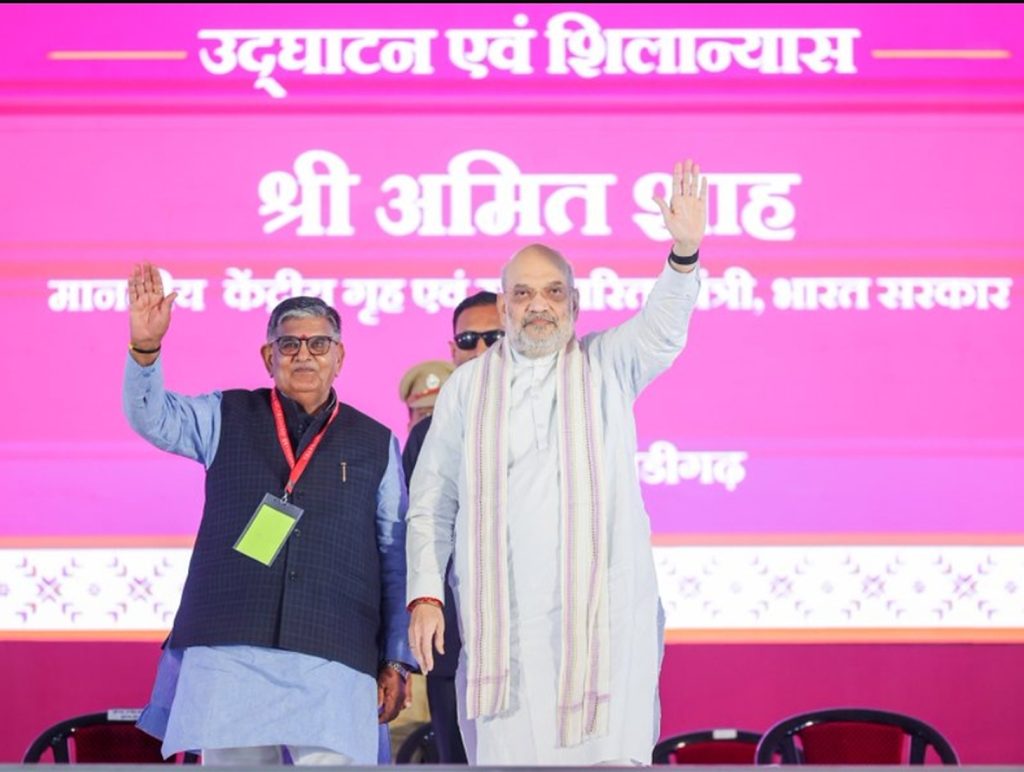
Union Home Minister Amit Shah has assured Chandigarh residents that three long-pending issues concerning the…

The six-lane Ambala-Chandigarh Greenfield Highway is expected to become operational on January 1, potentially reducing…

The Blackline Drift Experience, presented by ENICILION with Motul as title sponsor, took place in…

The Chandigarh Traffic Police have announced traffic diversions and restrictions on several major roads on…