








 Manjari Verma
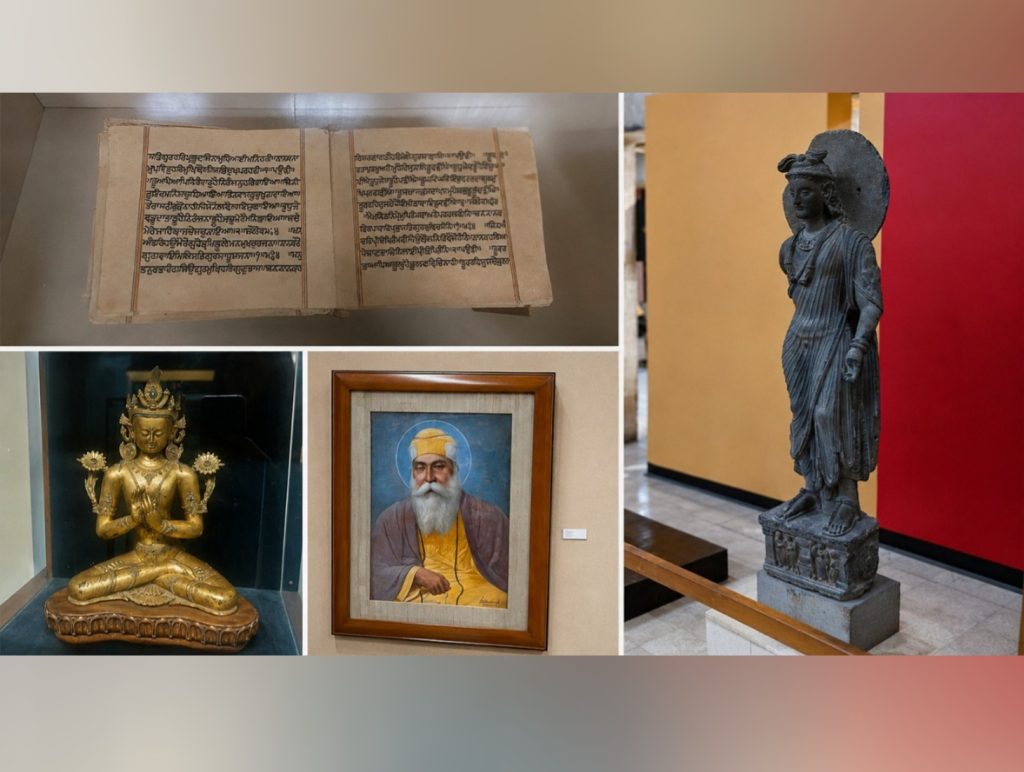
What if a city you have never lived in still feels like home?
Chandigarh, August 25
For many Punjabis, Lahore is not simply a city across the border. It is a name heard often in family conversations, a place remembered through old photographs, food, stories of grandparents, and memories of a Punjab that existed before the Partition.
Some remember the streets. Some remember a house their family once lived in and owned. Some only know Lahore through stories passed down from one generation to another. The city may have been left behind, but the memory never really left.
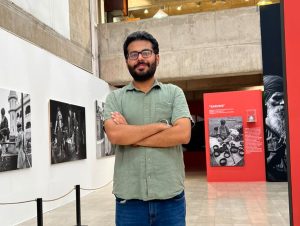
This feeling is at the heart of A Tale of Two Capitals, a heritage walk curated by Harmilan Singh of Tawarikh-e-Punjab. The walk brings Lahore and Chandigarh into one story and explores how the loss of Lahore shaped the birth of Chandigarh, while also asking a larger question: what happened to Punjab after Partition, and what part of that history do we still carry today?
Harmilan, who studied biotechnology, never planned to make history his field. But his interest in historical episodes, old buildings and heritage gradually took him in a different direction. For the past one and a half years, he has been organising heritage walks across Punjab.
The idea for this walk began with something he noticed while exploring historical places. Punjabis have a deep emotional connection with Lahore, yet many people do not visit museums or heritage spaces on their own side of Punjab. That made him look at Chandigarh differently.
When the loss of one capital created another
Before Partition, Lahore was one of the major cultural and political centres of Punjab. It had centuries of history behind it. Chandigarh, in comparison, is a young city, planned and built after Independence. But the two cities are connected by one of the biggest turning points in Punjab’s history. If Lahore had not been lost during Partition, Chandigarh may never have become Punjab’s new capital.
Talking to The North News, Harmilan says, “When Lahore became part of Pakistan in 1947, East Punjab needed a new administrative and political centre. Chandigarh emerged from that need. But I believe the connection goes much deeper than the question of mere capitals. Partition divided institutions, families, villages, memories and entire ways of life. The Punjab Assembly in Lahore was divided. Administrative systems were divided. Families were divided. And ordinary people had to live through the consequences.”
The history that lives inside families
One of the most powerful parts of the walk is that history does not remain limited to buildings and dates. People bring their own stories. Harmilan says, “During my walks, participants have shared family connections with places such as Lahore, Rawalpindi, Gujranwala, and Gujrat. Some families lived in Lahore before Partition and later settled in Chandigarh or other parts of Punjab. These stories show something that official history often fails to capture. Partition was not only a political event. It was a personal loss.”
History is often written around leaders, politicians, and important institutions. But what about the ordinary family that had to leave its home? What about the person who travelled without knowing where they would finally settle? What about the family that left behind a house, a neighbourhood and a lifetime of memories?
Talking about the painful time of the partition, Harmilan says, “Not everyone had the comfort of cars or aeroplanes during migration. For many ordinary Punjabi families, the journey was frightening, uncertain and deeply painful. These are the stories that I want people to remember.”
Chandigarh is not another Lahore
There is a natural temptation to compare Chandigarh with Lahore. Nods Harmilan, “Both are connected to Punjab, but they represent very different eras. Lahore represents an older Punjab, with centuries of cultural and historical development, while Chandigarh represents a new Punjab that emerged after Partition. I do not see Chandigarh as a copy of Lahore. I would rather call it an alternative to Lahore. The city developed its own culture, identity, and character. Its connection with Lahore is important, but it does not need to become Lahore to be meaningful.”
Even food carries traces of the connection. Lahori-style food and culinary traditions continue to find space in Chandigarh. The internet has also made it easier for people to discover recipes, places, and stories connected with the other side.
But nostalgia, Harmilan believes, should not make us blind to what we still have. We did not lose everything. There is a common feeling among Punjabis that everything important was left behind in Lahore. But that is not the complete story. We lost a lot, but we also inherited a lot. Punjab on this side has its own historic buildings, monuments, and stories. Many carry memories of Sikh history and other important periods of Punjab’s past. Yet several of these places remain neglected.
Harmilan stresses that reconnecting with one’s heritage should therefore work in both directions: “It is good to remember Lahore. It is good to understand the shared past. It is good to build people-to-people connections. But we also need to look at our own side of Punjab and protect what is still standing,” quips Harmilan.
From nostalgia to understanding
The walking format makes this history more personal. Participants are not simply listening to a lecture. They are standing inside historical spaces, asking questions and sharing memories. Someone may arrive with a story told by their grandparents. Someone else may have an old family connection with Lahore. Another person may simply be curious about why Chandigarh exists. The conversation grows naturally. And perhaps that is what makes the walk different.
When people come together, conversations grow, and one’s knowledge and history stops feeling distant, nods Harmilan, “ It becomes something you can see, discuss, and sometimes even feel. For me, remembering Partition should also carry a message of peace. The violence of 1947 affected ordinary people on both sides. Millions were displaced, and countless lives were lost. The purpose of remembering that pain is not to keep hatred alive. It is to understand what happened so that it does not happen again.
What does modern Punjab mean today to Harmilan, the man behind organising this walk and many such more walks elsewhere, “The walk also looks beyond Partition and asks how modern Punjab was shaped. The British period brought major changes to the region, connecting Punjab more closely with the wider world. Partition then completely changed its direction. Indian Punjab experienced periods of growth and success, including a time when it was considered one of India’s leading states. But later, new problems emerged,” says Harmilan.
Today, Punjab faces difficult questions around education, drugs, migration and the growing number of young people leaving the state. So understanding history is not only about looking backward. It is also about asking how we reached the Punjab we see today.
A history that belongs to everyone
For the younger generation, this shared history is especially important. Borders can divide countries, but they cannot erase thousands of years of shared culture. At the same time, Harmilan believes history must be approached responsibly. Family stories are valuable, but history cannot be built only on stories passed from one generation to another. It requires research, different sources, and the willingness to accept uncomfortable truths.
History should not be used to attack another religion, caste, or community. It should not become a collection of forwards shared on WhatsApp without checking whether they are true.
History deserves more responsibility than that. Ultimately, A Tale of Two Capitals is not just a walk from one historical point to another. It is a walk through memory. It is about the Lahore that was lost, the Chandigarh that was built, and the Punjab that continues to carry both stories. Perhaps the biggest lesson is also the simplest. We can remember what we lost without forgetting what we still have. And perhaps, by understanding the past with honesty instead of hatred, we can finally learn how to carry it forward with peace.
Chandigarh: What if the peace, clarity and wisdom you are searching for are already within…
By Manya Bhasin Traditional drumbeats, the sounds of the conch-shell and ceremonial ululations mark the…

By Manya Bhasin From vrat thalis to dandiya sticks, online platforms bring festive essentials within…
The first time I stepped into a dandiya celebration in Vadodara, I realised how a…