






 The North News
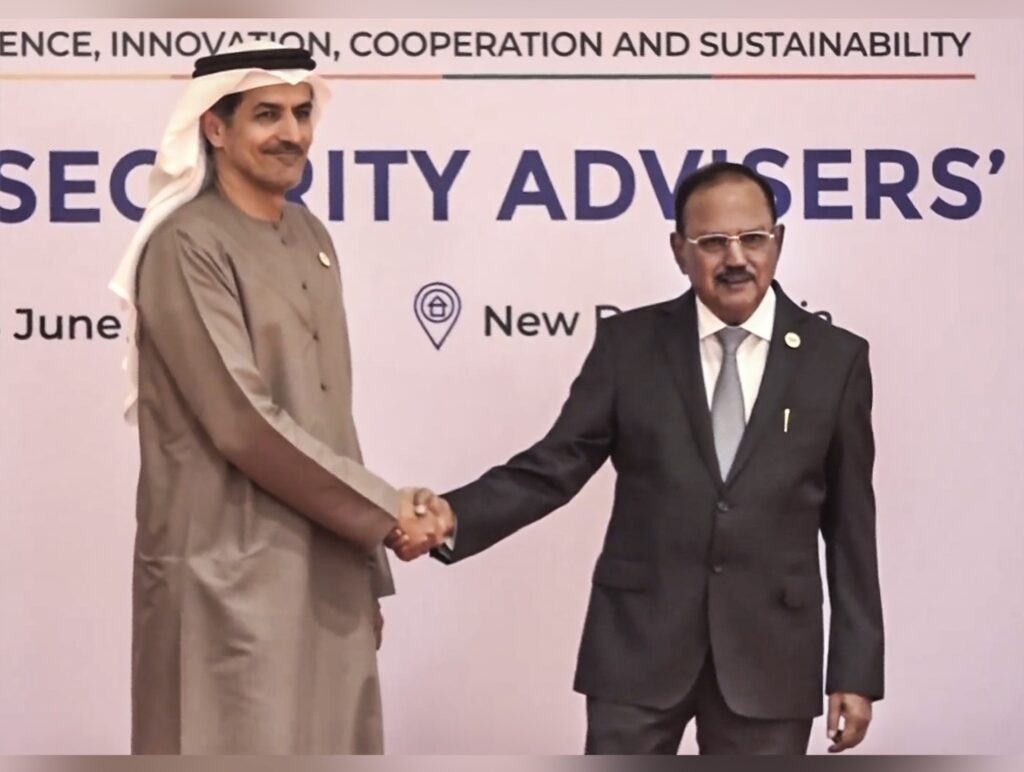
New Delhi, June 23
National Security Advisor Ajit Doval on Tuesday welcomed the reopening of the Strait of Hormuz describing it as a positive step for global energy security and supply chains at a time of growing geopolitical uncertainty.
Speaking at a BRICS security advisers’ conclave in New Delhi on Tuesday, Doval said the development would benefit not only countries in the region but also economies across the world that depend on the strategic waterway for energy supplies and trade.
For millions of people, the Strait of Hormuz is more than a distant maritime route. It is a crucial corridor through which a significant portion of the world’s oil and gas shipments pass. Any disruption can affect fuel prices, transportation costs and the availability of essential goods.
Doval also welcomed the memorandum of understanding reached between the United States and Iran, saying India viewed the development with “cautious optimism”.
“We hope that it will work. It will help energy security,” he said.
He noted that smoother movement through the Strait of Hormuz could ease supply chain pressures and reduce shortages in key sectors such as fertilisers and chemicals, industries that directly impact agriculture and manufacturing.
Addressing representatives from BRICS nations, Doval said the world was currently navigating a period marked by geopolitical tensions, economic pressures and rapidly evolving technologies.
“We are meeting at a very tumultuous time,” he said, warning that existing international institutions are increasingly struggling to respond effectively to emerging conflicts and challenges.
Doval also expressed concern over what he described as a decline in multilateral cooperation, arguing that BRICS has an important role in promoting dialogue and addressing global issues.
He said the grouping was created to strengthen the voice of emerging economies and the Global South while encouraging a more balanced international order.
“BRICS is a very special coalition of countries that believe in peace, progress, development and cooperation,” he said.
India is hosting the conclave as the current chair of BRICS, which has expanded significantly in recent years. Originally comprising Brazil, Russia, India, China and South Africa, the bloc now includes Egypt, Ethiopia, Iran, the United Arab Emirates and Indonesia.
Together BRICS nations represent nearly half of the world’s population and account for substantial share of global economic output and trade, making the grouping an increasingly influential voice in international affairs.
Devastating floods along the Nepal-Tibet border, reportedly killed 270 people so far, have once again…
Jabalpur, June 26 The Madhya Pradesh High Court on Thursday dismissed a defamation case against…
New Delhi, June 25 Prime Minister Narendra Modi on Thursday described the Emergency imposed in…
The Centre government has said that a passport has never been considered conclusive proof of…