








 Disney Brar
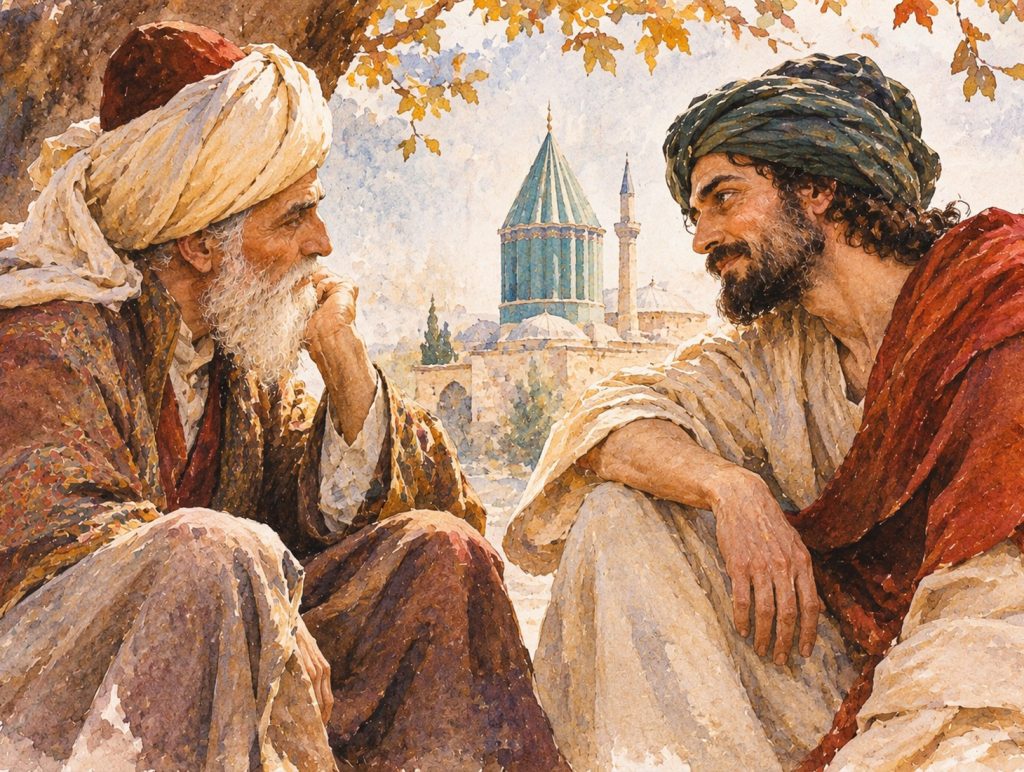
When two souls meet, the universe falls silent, and the heart begins to speak.
Some encounters are written in the stars long before two souls find their way to each other. They arrive quietly, yet leave behind a universe transformed. Some people do not simply walk into our lives; they awaken parts of us we never knew existed. Such was the meeting of Jalaluddin Rumi and Shams of Tabriz — a meeting that blurred the boundaries between love and devotion, longing and liberation, the human and the divine.
It was a love that needed no promises, demanded no possession and feared no distance. A love that found its expression not in declarations, but in silence, poetry, prayer and the ache of separation. When Shams entered Rumi’s world, he did not merely find a companion; he found a mirror to his soul, a flame that would set his carefully ordered world ablaze.
The Art of Loving Beyond the Self
And when that flame disappeared, it did not die. It turned into poetry — verses that would travel across centuries, whispering to generations that the deepest love is not always about holding someone close, but about discovering the infinite within oneself through another.
Some love stories are written in the language of longing, some in the language of sacrifice, and some transcend every definition the world has ever given to love. This story belongs to the last kind — an extraordinary meeting of two souls that transformed the meaning of love, faith and existence.
In the thirteenth century, in the ancient city of Konya, lived Rumi, a respected Islamic scholar, theologian and teacher. He was a man of knowledge, surrounded by books, students and admirers. His life followed the familiar rhythm of scholarship and spiritual discipline. He knew the scriptures, understood the language of religion and had earned the respect of the learned world. Yet, beneath all that knowledge, there was a longing that neither books nor sermons could satisfy.
Rumi and Shams: A Love Beyond the Language of the World
Then came Shams of Tabriz.
A wandering mystic with piercing eyes, unconventional wisdom and a soul that refused to be confined by religious formalities, Shams entered Rumi’s life like a sudden storm. Their first encounter, traditionally placed around 1244, would become one of the most celebrated meetings in the history of Sufism.
Legend has it that Shams challenged Rumi with a question that shook the foundations of his intellectual world. He questioned the difference between spiritual knowledge and lived experience, between knowing about God and actually experiencing divine love.
For Rumi, it was a moment of awakening.
What followed was not an ordinary friendship. It was an intense spiritual companionship, a meeting of minds and hearts in which Shams became the mirror through which Rumi discovered the depths of his own soul.
When the Heart Became a Universe: Rumi’s Bond with Shams
They spent hours together, immersed in conversations about God, love, truth and the mysteries of existence. The scholar who once found comfort in books began to find meaning in silence, music, poetry and the whirling movement of the soul. Shams did not simply teach Rumi; he unsettled him, challenged him and helped him discover a world beyond intellectual understanding.
Their relationship has often been described as a profound spiritual love — one that transcended conventional definitions of companionship. It was a love that demanded surrender, not possession; transformation, not expectation. While the nature of their bond has inspired different interpretations across centuries, its spiritual significance remains undeniable.
But not everyone welcomed this extraordinary closeness.
Rumi’s students and followers grew uncomfortable with the growing influence Shams had over their beloved teacher. Jealousy, misunderstanding and resentment began to surround the two mystics. The world that had once celebrated Rumi struggled to understand the man he was becoming.
And then, Shams disappeared.
Historical accounts suggest that Shams vanished from Konya around 1247, with traditions differing over what exactly happened to him. Some believe he was murdered, while others suggest he left voluntarily. His disappearance left Rumi devastated, plunging him into a profound state of longing.
Yet, from that absence emerged some of the most beautiful poetry the world has ever known.
Rumi began to write not merely about love, but through love. His verses became a reflection of his longing for Shams, his search for the divine and his understanding that separation could become another form of union. The pain of losing his companion transformed into a spiritual journey that would eventually shape his enduring legacy.
For Rumi, Shams was no longer simply someone he searched for outside himself. He had become a presence within him — an awakening that could never be taken away.
Perhaps that is the most extraordinary aspect of their story. Shams came into Rumi’s life not to become the centre of his world, but to show him that the universe was far greater than the world he had known.
Did Shams Teach Rumi How to Love, or How to Find God?
Their story continues to raise a timeless question: Is love about finding another person, or discovering the divine through them?
Centuries later, Rumi’s words continue to travel across borders, languages and generations. His poetry speaks of a love that does not demand ownership, a connection that does not depend on physical presence and a longing that can lead the human soul towards something infinite.
The world may remember Rumi as one of history’s greatest poets, but behind much of his spiritual transformation stands the enigmatic figure of Shams of Tabriz.
Perhaps theirs was never a love story meant to be understood by the world. It was meant to be experienced by the soul.
Because some people enter our lives not to stay forever, but to awaken something within us that remains long after they are gone.
Rumi found a teacher in Shams, a mirror in his presence and perhaps, in his absence, an eternal flame.
And that is how two souls, separated by centuries from our present, continue to remind the world that the deepest form of love is not always about belonging to someone. Sometimes, it is about becoming something greater through them.
The first rays of the sun illuminate the riverbanks as hundreds of tiny “diyas” (earthen…

There was a time when mornings had a different rhythm. Before smartphones, digital alarms and…
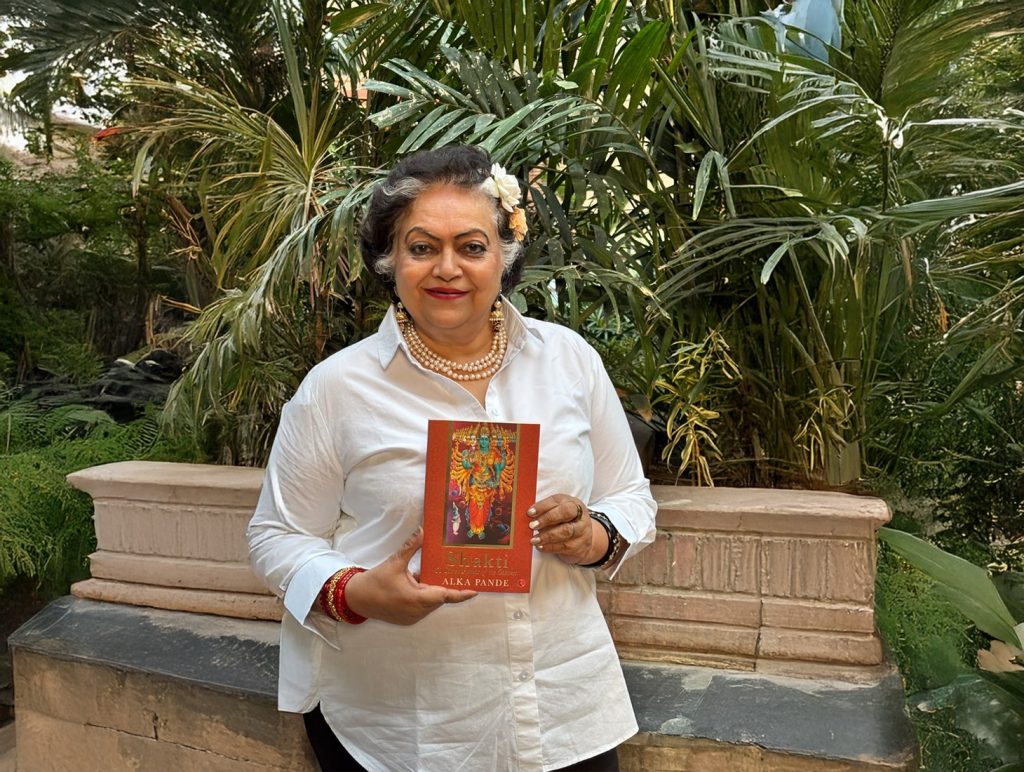
A journey through 51 sacred sites, spread across different geographical and cultural landscapes, offers a…
Some souls arrive in this world carrying no riches, yet leave behind treasures that time…