










Latest
National

Nagar Kirtan: Footsteps of faith, echoes of Guru Nanak

From the footsteps of the Panj Pyare to the warmth of langar, Nagar Kirtan transforms city streets into a celebration of faith, equality and humanity.

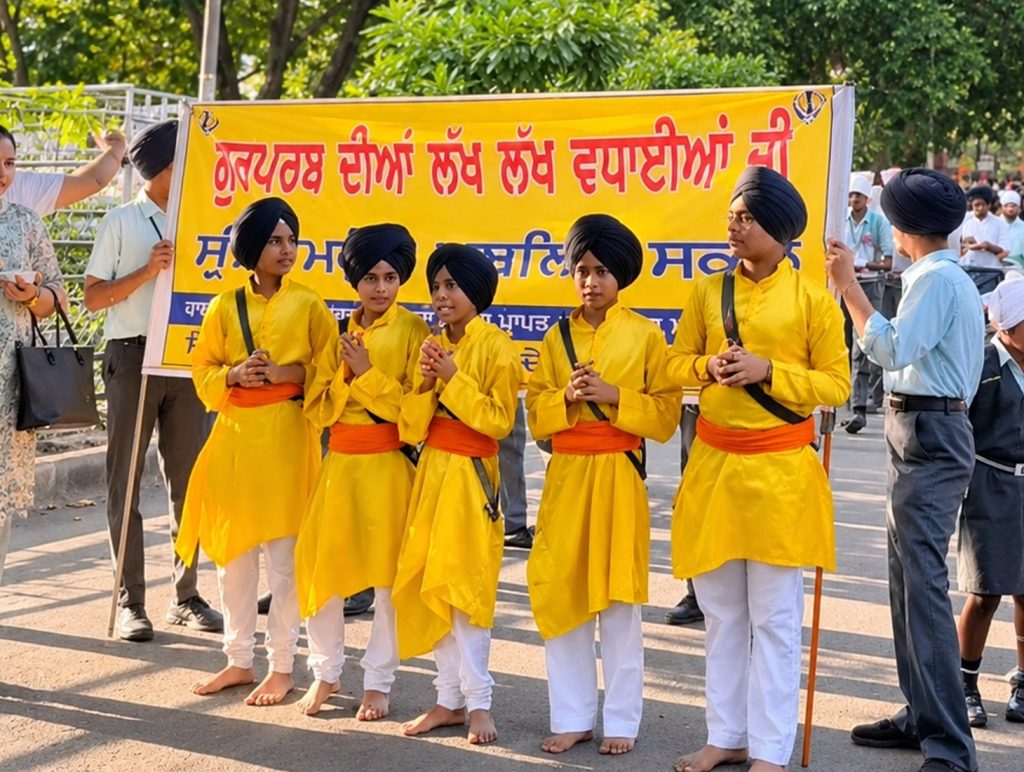
Nagar Kirtan: A moving tapestry of faith, seva and humanity. TNN photo: Disney Brar

Spread the news

There is poetry in a Nagar Kirtan that no pen can fully capture — in the bare feet brushing the earth, in the saffron flags dancing against the winter sky, in the hymns rising above rooftops and in countless hands folding in quiet reverence. The streets become verses, the sangat becomes a chorus, and every act of seva becomes a prayer without words. For a fleeting moment, the city seems to walk to the rhythm of a higher calling, where faith has no boundaries and humanity is the only identity that matters.

From the footsteps of the Panj Pyare to the generosity of langar, Nagar Kirtans are more than religious processions. As the nation prepares for Guru Nanak Dev’s 557th Parkash Purab, the streets become a reminder of a message that society still needs to practise.

For a few hours, a city changes its language. The honking of traffic gives way to the rhythm of nagaras, the rush of everyday life pauses for the sound of Gurbani, and ordinary streets transform into corridors of faith. Saffron Nishan Sahibs flutter above the gathering, devotees walk barefoot, and the fragrance of freshly prepared langar mingles with the air.

This is a Nagar Kirtan — a moving celebration of Sikh faith, history and collective consciousness.

As Nagar Kirtans make their way through the labyrinthine lanes of Punjab and Chandigarh ahead of Guru Nanak Dev’s 557th Parkash Purab which falls on November 24 this year, the spectacle carries a significance far deeper than religious festivities. It brings the Guru’s teachings into public spaces, reminding people of a philosophy founded on equality, humility, honest living and selfless service.

The Spirit and Significance of a Nagar Kirtan

At the forefront are the Panj Pyares, the five beloved ones, representing courage and commitment to the Sikh faith. Their presence recalls the creation of the Khalsa by Guru Gobind Singh in 1699. At its spiritual centre lies an atmosphere of deep reverence. The Guru Granth Sahib, adorned with sacred Rumalas, rests in the beautifully decorated Palki Sahib, while the Chaur Sahib is gently waved in a gesture of devotion. The Panj Pyare lead the way, the Nishan Sahib rises above the congregation, and Gurbani travels from one street to another. Accompanied by Ardas, the collective prayer, the procession becomes an expression of Sangat and Seva — a reminder that faith is not merely about bowing one’s head, but about bringing humility into one’s actions.

The streets resonate with Shabad Kirtan, as ragis and devotees sing Gurbani. Gatka, the traditional Sikh martial art, adds an element of discipline, valour and history. Alongside these visible expressions of faith unfolds perhaps the most powerful tradition of all — seva.

Volunteers sweep roads, distribute water, prepare food and serve langar to everyone, irrespective of religion, caste or economic standing. No questions are asked, no identities are weighed. In that moment, the act of sharing becomes a living expression of Guru Nanak Dev’s message of human equality.

Born in 1469 at Rai Bhoi Ki Talwandi, now Nankana Sahib in Pakistan, Guru Nanak Dev challenged the social and religious divisions of his time. His teachings of “Ik Onkar, Naam Japo, Kirat Karo and Vand Chhako“ continue to offer a blueprint for a more compassionate society.

When the Streets Turn Sacred

And perhaps that is where the Nagar Kirtan becomes more than a procession.

In a Punjab still grappling with caste discrimination, economic inequalities, unemployment and social divisions, its message raises an uncomfortable but necessary question: if thousands can sit together in a langar, why do invisible walls continue to divide society outside it? If seva comes so naturally during a religious celebration, why is compassion not equally visible in everyday life?

The celebration also carries a civic responsibility — keeping streets clean, minimising plastic waste, avoiding food wastage and ensuring safe, accessible arrangements for everyone.

When the procession passes and the hymns gradually fade, the roads will return to their familiar rhythm. But the message should not disappear with the flags.

A Nagar Kirtan may travel through a city in a day, but Guru Nanak Dev’s teachings ask us to carry its spirit every day — in the way we earn, share, serve and treat another human being.

And when the last hymn fades and the streets return to their everyday rhythm, what remains is the question a Nagar Kirtan quietly leaves behind: have we carried its message beyond the procession? Guru Nanak Dev’s teachings were never meant to be confined to a day of celebration or the walls of a gurdwara. They were meant to shape how we live, share, work and treat one another. For the true journey of a Nagar Kirtan does not end when the Palki Sahib returns to the gurdwara; it begins when its message finds a home in our hearts and actions. The procession may pass, but the path of the Guru must go on.

For the true meaning of a Nagar Kirtan lies not just in walking behind the Guru, but in walking the path the Guru showed. Happy Gurpurab!

Related News

Click to explore rhinox
Click to explore CL
Click to explore Cent