Spread the news

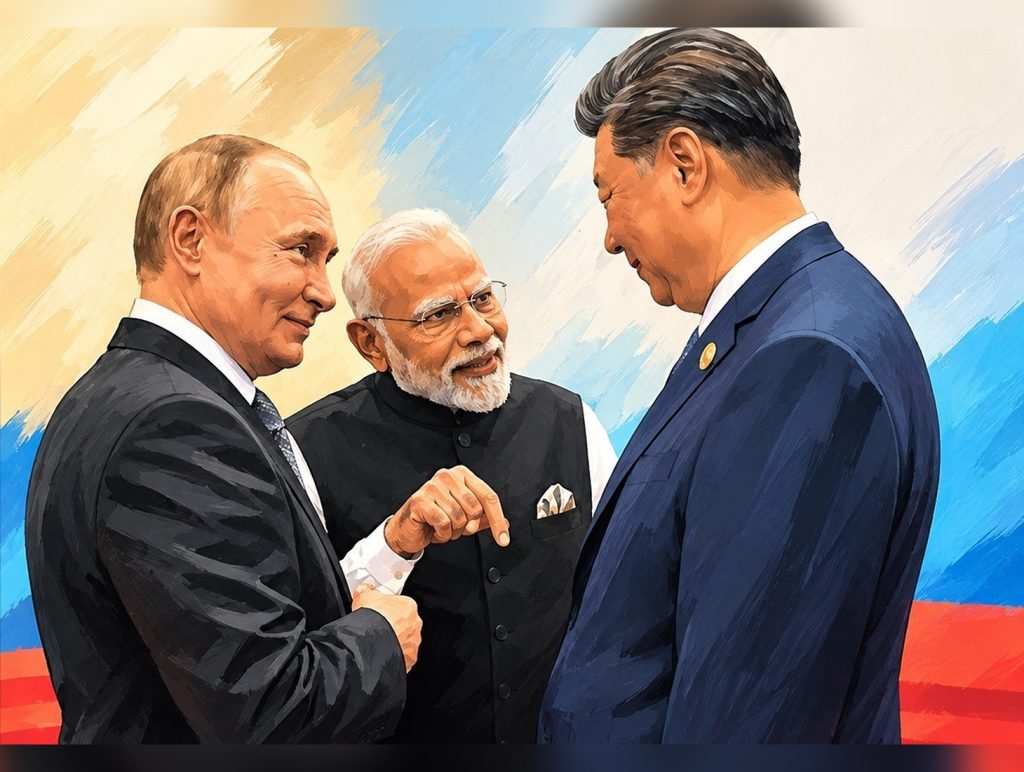
The meeting between Prime Minister Narendra Modi and Chinese President Xi Jinping in New Delhi on Saturday could mark an important moment for India-China relations. The talks come as both countries look for ways to rebuild trust and manage tensions that have persisted since the military confrontation in Ladakh.
The two leaders are meeting under new global diplomatic landscape under US President Donald Trump’s second term. For India and China, dialogue may offer way to protect their interests while navigating new strategic uncertainties.
Chinese officials confirmed on Thursday to the media that Xi would arrive in New Delhi on Saturday for the 18th BRICS Summit, which India will host at Bharat Mandapam on 12 and 13 September. Modi is expected to hold bilateral talks with the Chinese president on the sidelines of the summit.
The visit will be Xi’s first to India in almost seven years. He last visited in 2019 and is expected to leave on Sunday after meeting Indian officials and business leaders.
The two leaders’ talks will be closely watched because of the state of their relationship and the wider implications for Asia. The military confrontation in Ladakh created a deep trust deficit, and the border remains the most difficult issue between the two countries.
But there have been signs of a cautious improvement. Political and military discussions have continued, disengagement has taken place in some areas and peace and tranquillity have been maintained along the border. Previous meetings between Modi and Xi have also helped create space for dialogue.
The Prime Minister met Xi and Russian President Vladimir Putin at the Shanghai Cooperation Organisation summit in Bishkek on 1 September. Such encounters have become more important as major powers reassess their relationships and strategic priorities.
The United States’ approach to China, Russia and Iran has added to the uncertainty. The continuing war in Ukraine and tensions between Washington and Tehran have also influenced the calculations of countries across the world.
For India, maintaining strategic space in this environment is essential. New Delhi has strengthened its relationship with Washington while retaining its longstanding ties with Moscow. China remains India’s most important neighbour and a major economic partner. Reducing tensions with Beijing would not require India to abandon its other partnerships. It could instead give the country greater freedom to pursue its own interests.
China also has an interest in a more stable relationship. Both countries face economic challenges and have major development ambitions. That does not mean they can resolve their boundary dispute quickly. The question is complex and will require sustained negotiations.
There is, however, a difference between having unresolved differences and allowing those differences to become fresh disputes.That distinction could be central to the Modi-Xi conversation.
The two leaders have previously welcomed progress in disengagement and the maintenance of peace and tranquillity along the border. They have also committed themselves to finding a fair, reasonable and mutually acceptable solution to the boundary question, taking into account the larger interests of their countries and people.
The challenge now is to turn that commitment into sustained action.Economic relations could provide another opportunity for a reset. India imposed restrictions on Chinese investment after the 2020 clashes. Some of those restrictions have since been eased, including in sectors such as electronics, capital goods and solar cells.
Greater stability between the two countries could encourage businesses and investors to engage more confidently with each other. A more positive atmosphere could help revive economic ties damaged by the deterioration in relations.
The BRICS Summit provides a useful setting for such discussions. India assumed the BRICS chairship on 1 January 2026 for the fourth time, having previously held it in 2012, 2016 and 2021. The grouping is also marking 20 years since its establishment.
Under India’s chairship, more than 350 meetings and high-level engagements have been held across more than 25 cities. These have focused on political and security cooperation, economic and financial issues, and cultural and people-to-people exchanges.
India’s theme for its chairship, “Building for Resilience, Innovation, Cooperation and Sustainability”, reflects its emphasis on cooperation, development and a people-centred approach rooted in “Humanity First”.
The summit will also provide an opportunity for Modi to meet other leaders. His meetings with Putin and Iranian President Masoud Pezeshkian on Friday are expected to draw attention because of the war in Ukraine and tensions between Iran and the United States.
But the Modi-Xi meeting carries a different significance.It is a conversation between two neighbours whose relationship has been defined for too long by suspicion and strategic competition.
When the leaders met on the sidelines of the Shanghai Cooperation Organisation summit in Tianjin on 31 August 2025, they welcomed the positive momentum and steady progress in bilateral relations since their meeting in Kazan in October 2024. They reaffirmed that India and China were development partners rather than rivals, and that differences should not be allowed to become disputes.
The message was clear. The two countries may not agree on every issue, but they have an interest in preventing disagreements from turning into confrontation.If Modi and Xi can turn that understanding into greater trust, ease tensions along the border and deepen economic engagement, their meeting could mark the beginning of a more stable chapter in India-China relations.
For both leaders, the opportunity is significant. The task is to ensure that dialogue produces more than another diplomatic gesture.









 Dr Kiran Deep