Spread the news

New Delhi, September 14
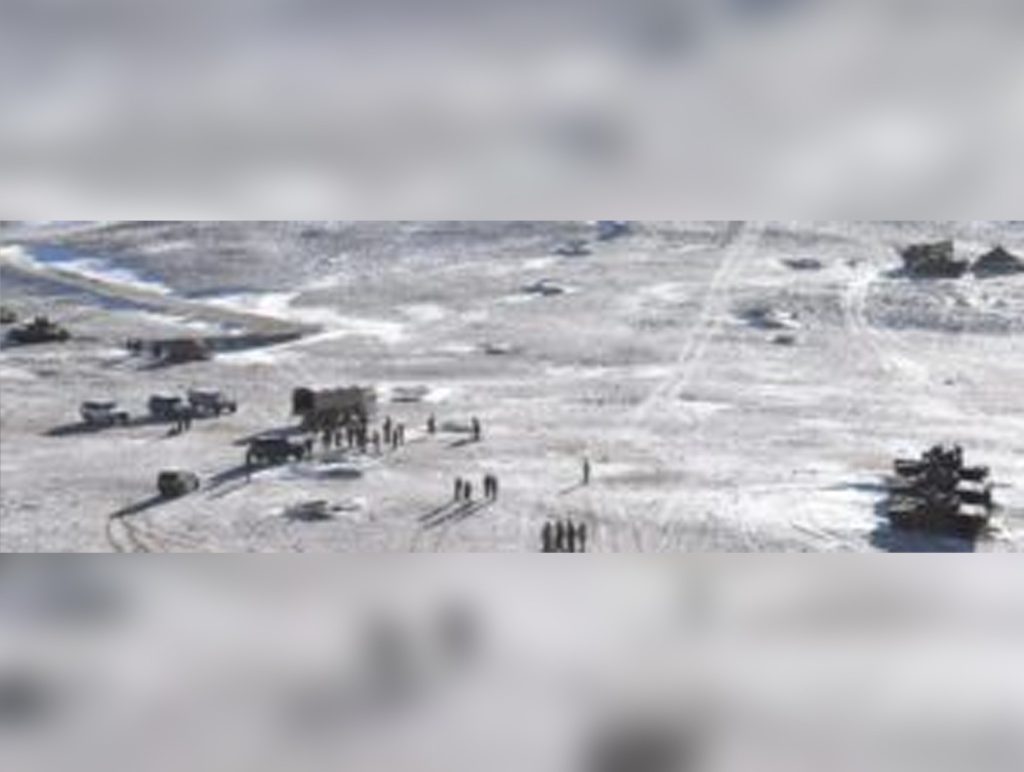
Improving political, diplomatic and military engagement between India and China has helped bring greater stability along the Northern Borders. The year 2025 saw significant reduction in PLA deployments opposite the Northern Borders, with 10 Combined Arms Brigade-sized forces deployed in areas along the LAC and traditional training areas, the Indian Army’s Annual Report 2025-26 revealed.
The Indian Army said its deployment across all sectors along the LAC remained “robust, well poised and prepared” to deal with any emerging contingency. The bilateral interactions at various levels had facilitated “positive developments” along the Northern Borders, leading to greater stability.
The improvement in bilateral engagement was reflected in the 33rd and 34th meetings of the Working Mechanism for Consultation and Coordination held in March and July 2025 respectively.India and China also resumed talks between their Special Representatives on the boundary question with two rounds held in December 2024 and August 2025.
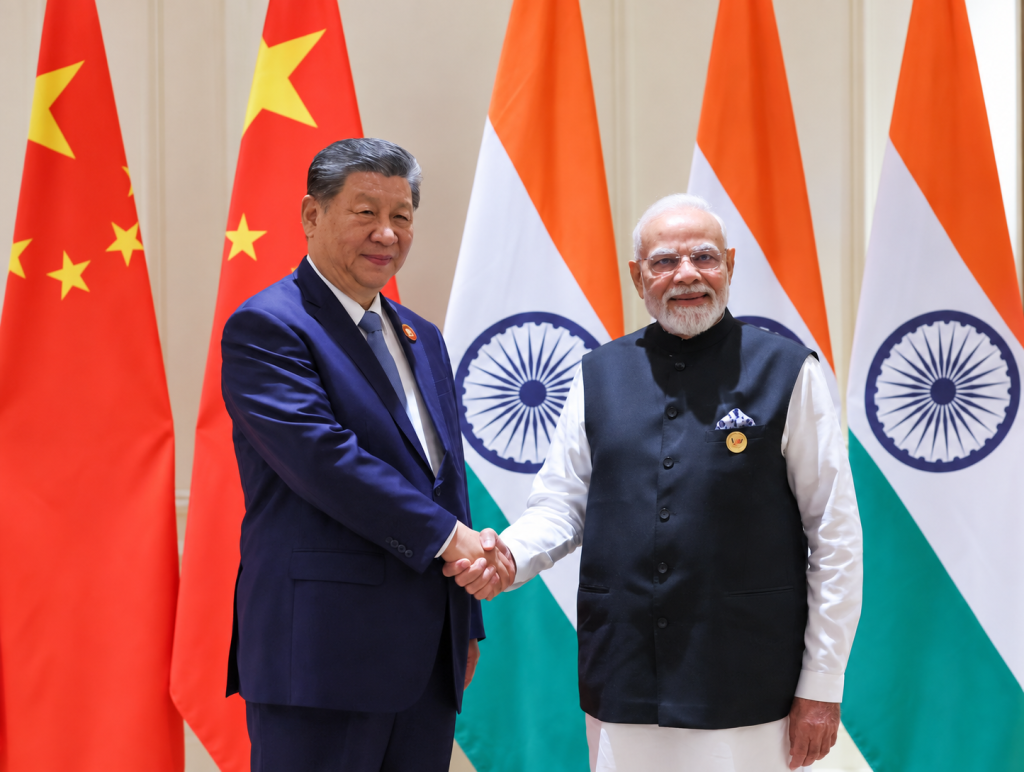
The report said the positive developments in bilateral relations were further reinforced during Prime Minister Narendra Modi’s visit to China for the Shanghai Cooperation Organisation summit in Tianjin in August 2025.The 23rd Corps Commander Level Meeting, described by the Army as the highest military commander-level engagement, was held in Eastern Ladakh on 25-26 October 2025.
At the ground level, border personnel Meetings between Indian and Chinese forces continued across sectors in what the report described as a cordial and friendly environment aimed at resolving issues of concern.The Army report said the security situation in Jammu and Kashmir remained firmly under control, attributing the improvement to sustained efforts by the Indian Army.
The annual report highlighted that the people had increasingly chosen the path of development and were participating in large numbers in government and Army-run initiatives. This, according to the report, had contributed to lower levels of violence, fewer protests and zero incidents of stone-pelting.The situation in Jammu and Kashmir and along the Line of Control changed significantly during Operation Sindoor.
However, following talks between the Directors General of Military Operations of India and Pakistan on 10 and 12 May 2025, the situation stabilised to a large extent, although the Army said unpredictability remained.
The report described Operation Sindoor as significant demonstration of India’s resolve against terrorism following the killing of tourists by Pakistan-based terrorists at Baisaran Valley in Pahalgam on 22 April 2025.The Indian Air Force carried out precision air strikes against nine identified terrorist targets including key facilities linked to Lashkar-e-Taiba and Jaish-e-Mohammed at Muridke and Bahawalpur.
The strikes used long-range precision-guided weapons and intelligence-based targeting to destroy what the report described as terrorist infrastructure involved in recruitment, training, indoctrination and operational planning.The operation avoided civilian and military targets and, according to the report, caused no collateral damage.The report said the strikes conveyed a clear message that terrorist attacks would face a decisive response.
Pakistan subsequently escalated the conflict with coordinated drone and missile attacks targeting Indian military installations in Punjab, Rajasthan and Jammu and Kashmir, according to the report.The Indian Air Force responded using its Integrated Air Command and Control System, coordinating different air-defence assets to counter drones, missiles, unmanned aerial vehicles and loitering munitions.
The annual report further said the IAF’s advanced air-defence systems, including the S-400 and Shaurya, successfully neutralised multiple Pakistani aircraft, allowing India to maintain air superiority and restrict the operational freedom of the Pakistan Air Force. Between May 8 and 10, Pakistan carried out attacks targeting military assets as well as civilian infrastructure, places of worship, schools and healthcare facilities, the report said.
India’s response remained “calibrated but punitive”, according to the Indian Army. IAF strikes targeted Pakistani air-defence radars, command-and-control centres and military infrastructure at locations including Chaklala, Rahim Yar Khan, Sukkur, Murid, Sargodha, Jacobabad and Bholari.
The report described the objective as “demonstrative compellence”, aimed at compelling the adversary through the demonstrated use of force.
It said Pakistan subsequently called for a cessation of hostilities.Six radars and two surface-to-air guided weapons locations were also successfully targeted using a mix of air-launched weapons and unmanned loitering munitions, according to the report.
The Army said India’s security challenges were becoming increasingly complex because of technological advances, changing geopolitical dynamics and shifts in the foreign policies of other countries. Against this backdrop, the Army has designated 2022-2032 as the “Decade of Transformation” to build a technology-enabled, self-reliant and future-ready force.
According to the annual report, the Indian Army working to enhance its capabilities in line with the national vision of “Viksit Bharat 2047”. The report described Operation Sindoor as a demonstration of decisive leadership, joint operational synergy and India’s resolve to safeguard its sovereignty.
The annual report said that the operation showcased India’s multi-domain capabilities, strategic foresight and restraint while highlighting the importance of intelligence, emerging technologies and joint operational readiness.
Following the operation, the Army said it had undertaken a comprehensive review of capability gaps, with a focus on force restructuring, greater jointness and the integration of emerging technologies.








 Dr Kiran Deep