Spread the news
Punjab has heard promises to end the drug menace for years. The Aam Aadmi Party came to power promising that it would do things differently. The Punjab government has repeatedly projected the fight against drugs as one of its major achievements. But two recent cases have put that claim under serious political pressure. The alleged suicide of Gulzar Singh in Sangrur and the allegations of custodial torture levelled by Mohanjit Singh have raised an uncomfortable question for the AAP government, what happens when people who raise the issue of drugs say they are not being heard?That question has given the Opposition a powerful political opening.
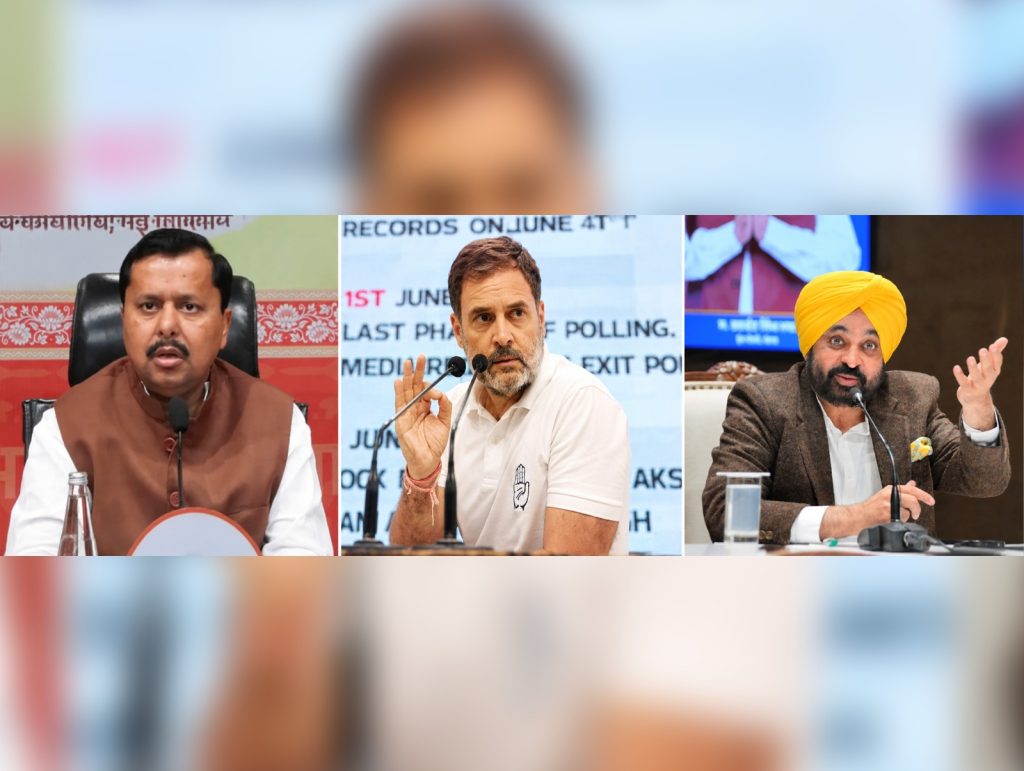
Congress, the BJP and the Shiromani Akali Dal have launched a sustained attack on the government. Congress leader Rahul Gandhi has demanded the resignation of Finance Minister Harpal Singh Cheema over the Gulzar Singh case, while the BJP has announced a statewide campaign against the government over drugs, law and order and governance.
The government has rejected the allegations and described the Opposition’s campaign as political tactics. But politics cannot be allowed to become a substitute for facts. The allegations in both cases must be investigated properly independently and transparently. If the accusations are false the investigations should establish that. If there has been wrongdoing, those responsible must face the law.
That is the only credible way forward.
Congress leader Rahul Gandhi has sought to turn the two cases into a broader challenge to the AAP government. Reacting to the Gulzar Singh case, he asked Chief Minister Bhagwant Mann to seek Cheema’s resignation and demanded an independent and impartial investigation.
Rahul Gandhi alleged that a dangerous pattern was emerging in Punjab claiming that people who questioned government failures were facing threats and torture. He referred to Gulzar Singh as a member of the Dalit community whose son had fallen victim to drugs and alleged that Gulzar had questioned the Finance Minister over the government’s failure to stop the drug trade.
He further alleged that Gulzar was pressured and humiliated before consuming poison. Rahul Gandhi also referred to Mohanjit Singh, saying he had spoken to him after he was allegedly tortured for protesting against the chief minister.
Chief Minister Bhagwant Mann has hit back at Congress over its allegations in the Gulzar Singh case, accusing the party of trying to turn a death into a political issue. “Rahul Gandhi ji, don’t do politics over dead bodies; Punjabis don’t like this kind of politics,” Mann said.
He said Congress leaders had tried to politicise the matter when they visited the victim’s village and claimed that local people chased them away.
Mann said the police had already arrested the accused in the case after they were identified by Gulzar Singh’s family. He also blamed successive Akali, BJP and Congress governments for allowing the drug problem to grow in Punjab.Mann maintained that his government would not spare anyone involved in drug smuggling.
AAP has also sought to counter the Opposition’s allegations by releasing a video of Gulzar Singh’s son. In the video, he said the family had no grievance against the government and that his brother had been assured a government job.
He also said the police had taken action against those accused in the case, while one of the accused was absconding and had reportedly left the country.
That is the government’s defence.But the government’s defence will ultimately have to rest on facts, not competing political narratives.
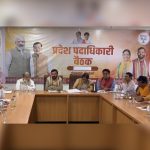
The Punjab BJP also protested strongly s against the state government over the alleged suicide of Gulzar Singh. The BJP has already made clear that it intends to turn the drug issue into a major political weapon ahead of the 2027 Assembly election. BJP national president Nitin Nabin while addressing the press conference in New Delhi, has described drugs as a major issue in Punjab and said the party would make it a central part of its campaign. He has accused the state government of corruption and anarchy and said the BJP would raise these issues through a mass agitation.Nabin has also alleged that the kind of people being recruited by the AAP poses a threat to national security. The BJP is now preparing a major statewide campaign.
Union Home Minister Amit Shah and Nitin Nabin will be among the prominent leaders taking part in the BJP’s 12-day yatra across Punjab from September 18 to 30. The party plans anti-drug yatras across all 117 Assembly constituencies.
The strategy is obvious.
The BJP wants drugs, law and order and governance to become defining issues of the 2027 election.Congress is also seeking to make the issue politically costly for AAP, while the SAD has joined the attack. For the ruling party, this could become a difficult political battle. The Opposition is no longer focusing only on arrests, seizures and government statistics. It is raising a more troubling question, do ordinary people feel safe enough to speak out about Punjab’s drug problem?
This is where the AAP government faces its biggest test. The government must answers
difficult questions. Punjab has seen successive governments promise to eradicate drugs. Families have suffered, young people have been lost to addiction and communities have repeatedly demanded stronger action. The AAP came to power promising a different kind of politics and that promise now carries greater weight, particularly when serious allegations are being made against those in positions of power. The government should therefore have no reason to shy away from a credible and impartial investigation into both cases. The issue should not be allowed to become another political contest between AAP and the Opposition.
The present controversy came to light on August 8 after Gulzar Singh, from Toor Vanjara village in Sangrur district, allegedly died after consuming a poisonous substance.A video surfaced in which Gulzar purportedly accused local panchayat representatives of mentally harassing him after he questioned Finance Minister Harpal Singh Cheema about the drug menace. The Punjab Police registered an FIR against five accused, including the village sarpanch, and formed an SIT to investigate the case. The government, however, has questioned the veracity of the video in which Cheema is named.That makes the investigation all the more important. What happened before Gulzar consumed poison? And was his death connected to the allegations he made?
These are questions that cannot be settled through political statements or competing social media posts.
The Gulzar Singh case is not the only controversy confronting the government. On September 2, during Chief Minister Bhagwant Mann’s ‘Lok Milni’ programme in the Sangrur area, Mohanjit Singh allegedly displayed a black flag and raised slogans over the continuing drug menace.
He later alleged that he was tortured in police custody, including being subjected to electric shocks and other forms of abuse.The allegations created an immediate political storm. Four police personnel including a DSP were transferred after the Opposition raised the issue.
Punjab has heard promises to end the drug menace for years. The Aam Aadmi Party came to power promising that it would do things differently. The AAP government has repeatedly projected the fight against drugs as one of its major achievements.But two recent cases have put that claim under serious political pressure. The alleged suicide of Gulzar Singh in Sangrur and the allegations of custodial torture levelled by Mohanjit Singh have raised an uncomfortable question for the AAP government, what happens when people who raise the issue of drugs say they are not being heard? That question has given the Opposition a powerful political opening.
The drug menace will be one of the defining issues of the next Punjab Assembly election. The BJP is preparing a statewide anti-drug campaign, Congress is demanding accountability and the SAD is stepping up its attack on the government. AAP, meanwhile, is defending its record.
But behind the political slogans lies far more painful reality. Families are still battling addiction, young lives are being damaged and communities are still asking whether Punjab can really break the grip of drugs. The success of Punjab’s fight against drugs will ultimately be judged not just by statistics, but by public trust.








 Dr Kiran Deep