








 Tara Thakur

Haryana’s Anti-Terrorist Squad (ATS) has arrested two more wanted accused from Punjab in connection with the September 13 firing at Alif Laila Club in Sector 11, Panchkula. The arrests have taken the total number of accused held in the case to nine, with investigators probing suspected links to an international narco-terror network.
The arrested accused have been identified as Balwinder Singh alias Chhanku and Sukhwinder Singh alias Sonu, both residents of Fazilka district in Punjab. A reward of Rs 50,000 had been announced for Balwinder Singh and Rs 10,000 for Sukhwinder Singh.
According to the police, both accused had been repeatedly changing their identities and locations to evade arrest. A special team of the Special Operations Group (SOG), Ambala, arrested them during a planned operation on November 14. A court subsequently remanded them in five-day police custody.
ATS SP Kuldeep Singh said the investigation into the September 13 firing had revealed suspected links to a larger international network. Investigators have found leads concerning handlers based in the United States, the alleged supply of weapons, narcotics, and financial transactions involving the drug money.
With these arrests, nine accused have been held in the case so far. Earlier, the police recovered three vehicles, one motorcycle, two illegal pistols, 11 cartridges, 529 grams of heroin and three cash-counting machines from previously arrested accused.
The ATS is now examining the mobile phones of the arrested accused, their financial transactions and contacts with foreign handlers. The police expect further details about the alleged network to emerge during questioning.
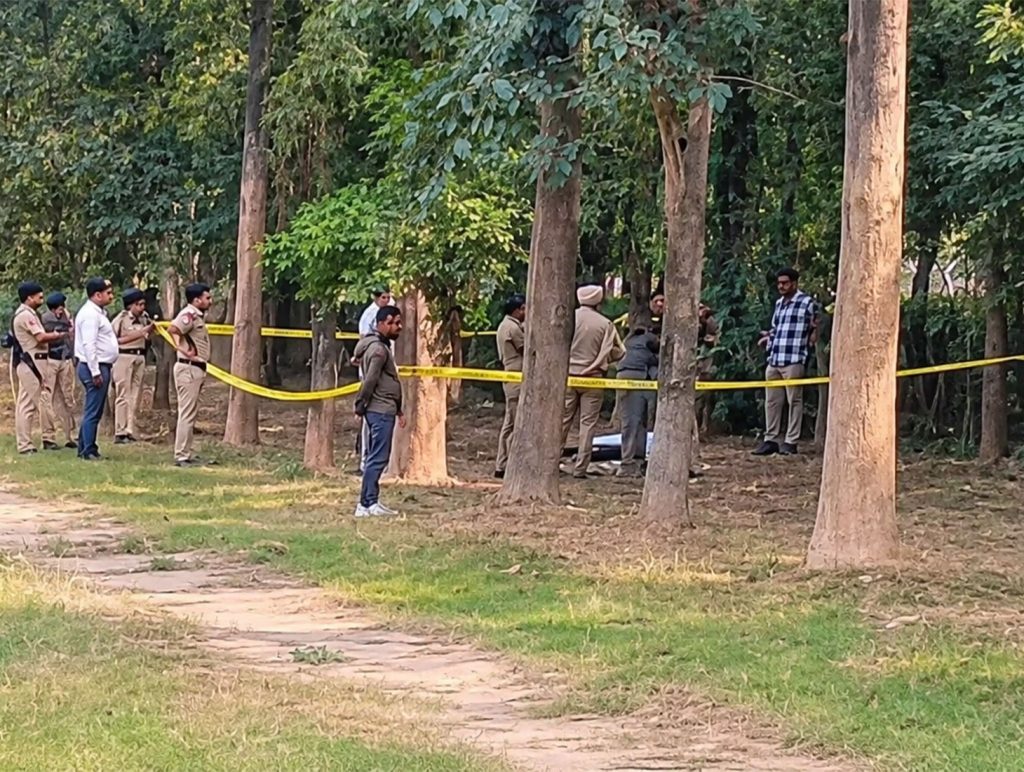
A 34-year-old woman was allegedly stoned to death at Leisure Valley Park in Sector 10,…

More than 40 people suffered burn injuries and other wounds in firecracker-related incidents across Panchkula…

The Juvenile Justice Board has ordered the removal of videos circulating on social media in…

The Haryana State Commission for Women chairperson has raised concerns over growing violent behaviour among…