








 Dr Kiran Deep
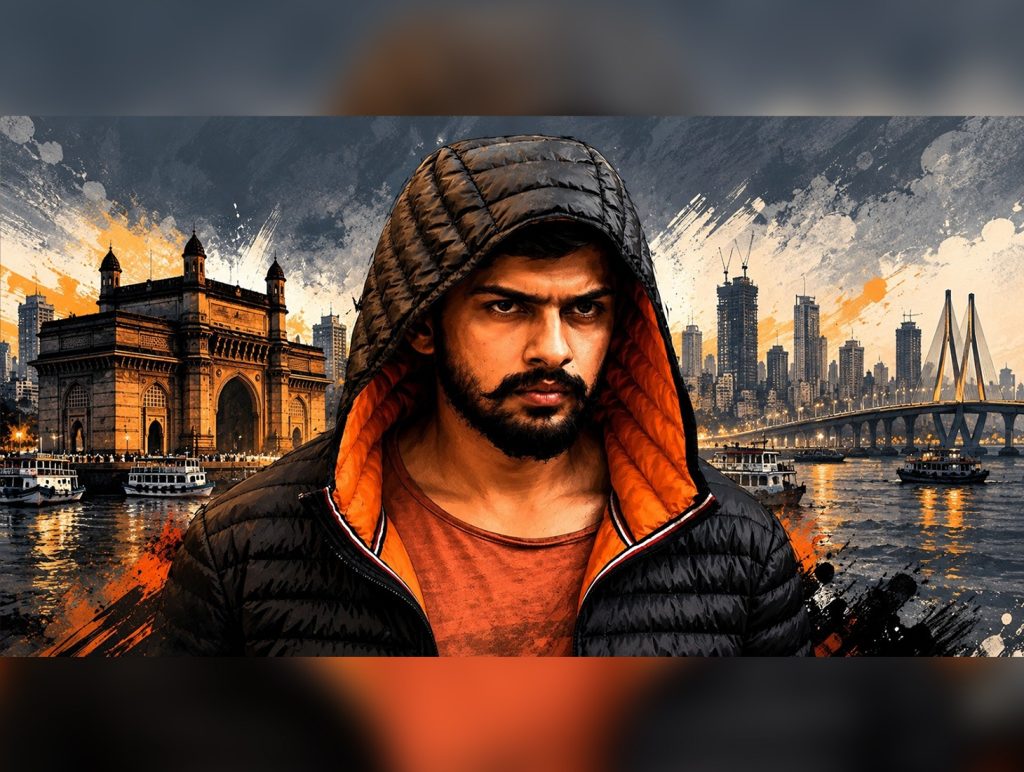

The firing outside actor Tiger Shroff’s residence has renewed a troubling question. Is Lawrence Bishnoi gang trying to establish itself as a dominant force in Mumbai’s underworld? The incident is not isolated. From the killing of Punjabi singer Sidhu Moosewala and former Maharashtra minister Baba Siddique to the shooting outside Salman Khan’s home and threats against other Bollywood personalities, a series of high-profile cases has brought the gang’s reach into sharp focus.
Yet the question is not simply who controls Mumbai’s underworld. It is whether organised crime is once again finding ways to intimidate the film industry, exploit celebrity culture and project power far beyond the streets. Mumbai has a long history of gang rivalries, extortion and criminal networks extending into business, politics and cinema. For decades, Dawood Ibrahim and his D-Company were synonymous with the city’s underworld. Dawood was also accused of masterminding the March 1993 Mumbai serial bombings, which killed 257 people and injured more than 1,400.
The rise of the Bishnoi network has revived comparisons with Dawood Ibrahim’s era. A series of attacks and threats has raised questions about the gang’s expanding reach and whether it is emerging as a major force in Mumbai’s underworld.
Threats, violence and Bollywood connection
The shooting outside Tiger Shroff’s residence has added another disturbing episode to a series of incidents involving Bollywood personalities. An audio recording circulated online after the attack, reportedly carrying a threat against Salman Khan and demanding an apology to Lawrence Bishnoi and the Bishnoi community.
A man identified as Anil Pandit, alleged to be associated with the gang, claimed responsibility for the attack in the recording. He threatened Khan and members of his family if the actor refused to apologise.The North News has not independently verified the audio clip’s authenticity. The allegations should therefore be treated with caution while investigators establish who was responsible for the shooting and whether the threats are genuine.
Pandit, 33, is originally from Panipat and is suspected of operating from the United States. He has also been linked in reports to extortion cases in Pune, Haryana and Delhi. These allegations require independent verification.The recording also invoked Dawood Ibrahim, alleging that his money was being used in the Indian film industry and accusing authorities of failing to tackle the alleged links between organised crime, drugs and corruption. It claimed that hundreds of gang members were operating in Mumbai and made extraordinary assertions about the network’s shooting capacity.
Blackbuck case
The hostility between Salman Khan and Lawrence Bishnoi is often traced to the 1998 blackbuck hunting case in Rajasthan, during the filming of Hum Saath-Saath Hain. Blackbucks hold religious significance for the Bishnoi community, whose traditions include protecting wildlife. The allegations against Khan became a source of anger among sections of the community, and Bishnoi has repeatedly demanded that the actor apologise.
In April 2018, a trial court convicted Khan in the blackbuck case and sentenced him to five years in prison, imposing a fine of Rs 10,000. The other accused actors, including Saif Ali Khan, Tabu, Sonali Bendre and Neelam Kothari, were acquitted. Khan and his family have denied the allegations, while the case has continued through the judicial process.
The growing number of incidents allegedly linked to the Lawrence Bishnoi gang has brought an old question back into focus: is organised crime once again tightening its grip on Mumbai?On April 14, 2024, two men on a motorcycle fired several shots outside Salman Khan’s Galaxy Apartments residence in Bandra before fleeing. Six people were arrested in connection with the case. Six months later, former Maharashtra minister and Nationalist Congress Party leader Baba Siddique, a close associate of Khan, was shot dead outside his son Zeeshan Siddique’s office.
The threats reportedly faced by Ranveer Singh and the firing outside actor Disha Patani’s family residence in Bareilly have added to concerns about the safety of Bollywood personalities. On February 10, Ranveer Singh’s social media manager reportedly received calls from an international number followed by voice messages demanding Rs 20 crore.Whether these incidents are connected and who is behind them, remains a matter for investigators to establish. Treating every threat as part of the same criminal operation without evidence would be premature. But neither can the authorities afford to dismiss the pattern of intimidation surrounding prominent public figures.
Lawrence Bishnoi has been lodged in Gujarat’s Sabarmati Central Jail since 2023. He has been linked through investigations and allegations to several high profile cases including the murder of Punjabi singer Sidhu Moosewala, the killing of Baba Siddique and the shooting outside Salman Khan’s residence. His lawyer has denied allegations made against him in the media.His imprisonment raises an obvious question: if the gang is operating behind these threats, how is it functioning with its alleged leader in jail? Investigators need to establish whether communications are taking place from prison, who is issuing instructions and who is carrying out the attacks.
The fear surrounding a criminal gang can sometimes be as powerful as its actual reach. A threat against a Bollywood star makes headlines, spreads rapidly on social media and puts others in the industry on edge. Producers, colleagues and business associates may begin to wonder whether they could be next.
For those seeking notoriety that attention can work in their favour. Repeated threats and bold claims about a gang’s strength can create the impression that it has an extensive network and can strike anywhere. The claims may not always stand up to scrutiny, but the fear they generate is real enough.
Bollywood’s fame makes its stars easy targets for intimidation. Even threat against a well known actor can quickly make headlines and spread across social media. The police must establish who is behind such threats instead of letting unverified claims fuel fear or shape public perception.
Providing security to threatened celebrities is necessary, but it cannot be the whole answer. Police must trace extortion demands, follow the money and identify those financing or carrying out attacks. If the networks cross state or international borders, investigations must follow them wherever the evidence leads.
Who really controls Mumbai’s underworld?
Dawood Ibrahim’s name still looms large over Mumbai’s history of organised crime. His rise showed how criminal networks can acquire money, influence and the capacity to spread fear. But comparisons with that era should not become proof of a new underworld hierarchy.
The allegations surrounding the Bishnoi gang warrant serious scrutiny but a series of high-profile incidents does not establish that it has taken control of Mumbai’s underworld. That can only be determined through evidence of its operations and connections.
If the firing outside Tiger Shroff’s residence is part of wider campaign of intimidation, it would be another warning that demands firm response. Equally claims circulated online must be verified rather than repeated as fact.
The real question is not who deserves the title of Mumbai’s next underworld boss. It is whether the police can identify those behind the threats, break the networks that enable them and ensure that fame does not become a liability for those targeted. No criminal gang should be allowed to turn fear into influence or use violence to make itself appear untouchable.

Risks of exposing illegal mining on screen and in real life Watching Reporting Live on…
Sachin Pilot has brought rival leaders together, but public displays of unity must translate into…

Salian’s family asks the CBI to summon the former NCB Zonal Director as a key…

What is it that stays with us after a cricket match is over? Sometimes, it…