Spread the news

Two universities in Punjab. Two student protests. Two outbreaks of violence within days of each other.
That coincidence alone does not prove a conspiracy. But it is enough to demand uncomfortable questions.
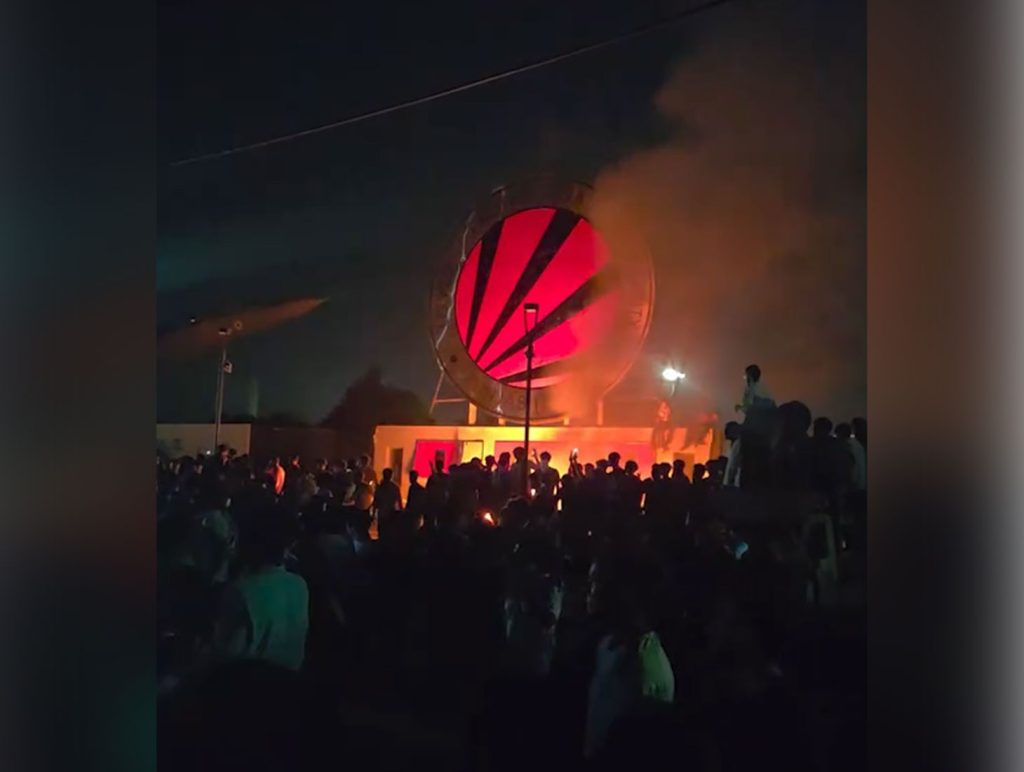
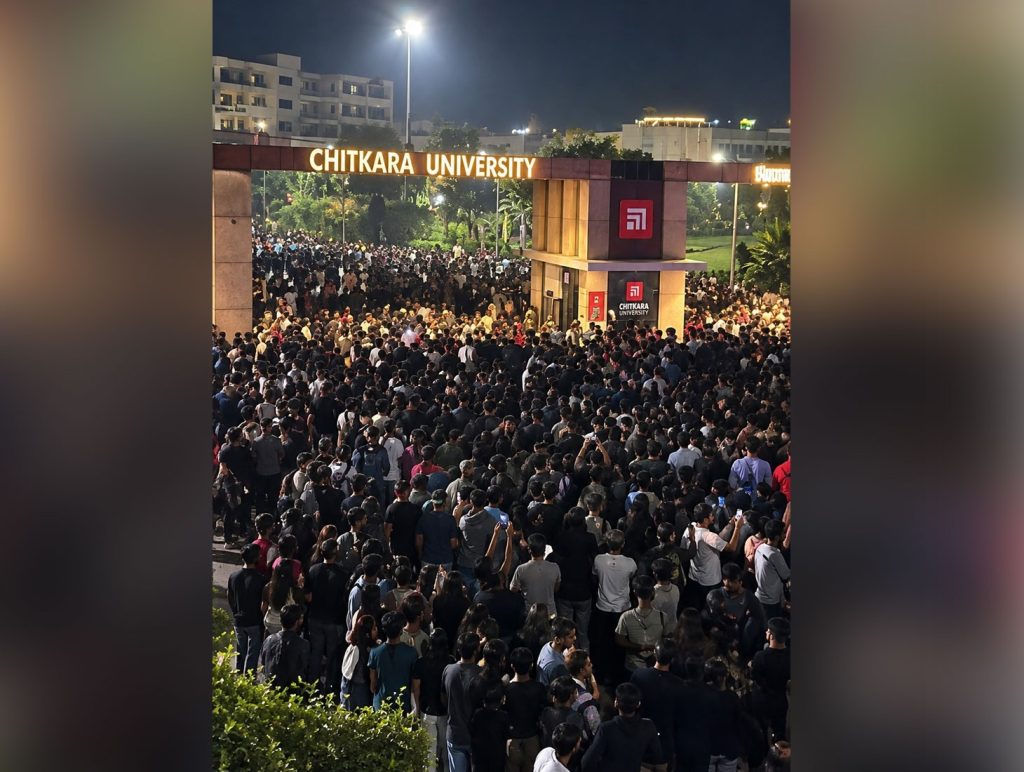
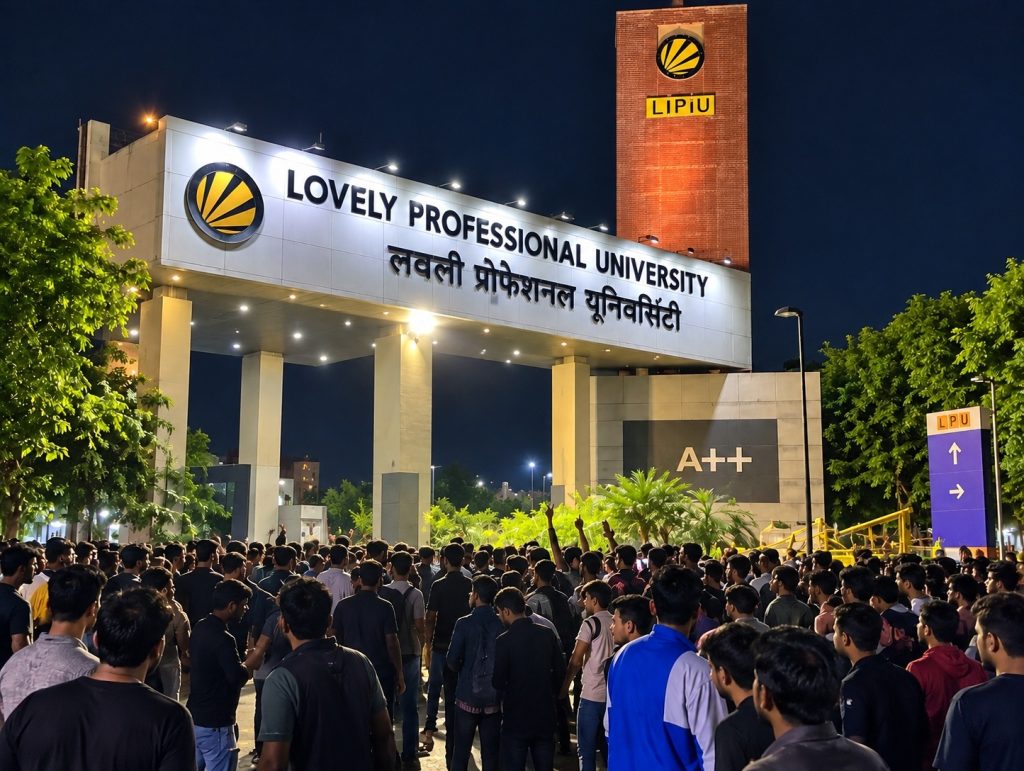
At Chitkara University in Rajpura, rumours about missing students and alleged deaths spread rapidly before students took to the streets. Police later said there were no missing students or suicides. At Lovely Professional University in Phagwara, an unverified allegation of sexual assault involving a female student triggered a protest that escalated into vandalism, arson and the blocking of a national highway. The university has denied the allegation.
What happened between the first message and the first act of violence is the question that matters.
Because the story is no longer simply about two university protests. It is about the extraordinary power of a rumour travelling through a campus full of young people carrying smartphones, WhatsApp groups, Instagram feeds and videos that can reach thousands before an official statement has even been drafted.
Universities have a responsibility to listen to students before anxiety turns into anger. They must communicate quickly, clearly and transparently when rumours begin circulating. If students are demanding answers, silence rarely fills the vacuum. It allows others to fill it for them.
The state has a responsibility too. Once large student gathering begins forming around an unverified allegation, the police and administration need to understand the mood before it becomes mob. If outsiders entered either campus and contributed to violence that too must be established and explained.
What is evidence and what deserves far greater attention, is the speed with which unverified information appears to have travelled through these campuses.This is where Chitkara and LPU stop looking like isolated university stories and become part of a much larger global question.
In Nepal, Bangladesh and Sri Lanka, social media played a significant role in helping young people organise, communicate and amplify grievances during major protest movements. WhatsApp, Facebook, Instagram and other platforms have changed the mechanics of mobilisation. A message no longer needs an organisation behind it to reach a crowd.
The smartphone has become both witness and megaphone. By the time authorities arrive, the original allegation may have become almost irrelevant. What matters is what thousands of people now believe has happened.
That is the dangerous gap between information and truth.The question, therefore, should not only be who started the unrest. It should also be who first created the information environment in which unrest became possible.
Who recorded the first video?
Who circulated it?
Who added the accompanying claim?
Who amplified it?
Who brought outsiders into the confrontation, if outsiders were indeed involved?
And why did the authorities take so long to understand what was happening?
These are questions for investigators, not social-media speculation.
There are failures to examine at several levels.
Punjab Police are now examining the two incidents and whether there is any connection between them. Police have said they are considering all possible reasons for the sudden outbursts. At Chitkara, investigators are also examining social media videos and the possible role of outsiders.
That investigation must be allowed to run its course.
There is a temptation, especially in politically charged times, to fill an information vacuum with the most dramatic explanation available, a political conspiracy, an organised group, a foreign hand or a separatist network. Those possibilities can be investigated. They cannot simply be declared.
The same caution applies to the timing. The violence has occurred just days before Union Home Minister Amit Shah’s scheduled visit to Jalandhar on September 30. Political parties have already seized upon that coincidence. BJP leaders have demanded an NIA investigation, while the Congress has used the incidents to question law and order and the state government’s handling of the situation.
But timing is not evidence.
BJP leader and former Punjab BJP president Sunil Jakhar has demanded a National Investigation Agency (NIA) probe, saying the role of any external or internal forces behind the incident should be investigated. In a post on X, Jakhar said the escalation of the student protest following the alleged involvement of outsiders warranted a detailed investigation. He questioned whether students’ emotions had been exploited for political purposes or to create tensions in Punjab.
Punjab Chief Minister Bhagwant Mann has directed police authorities to take strict action against those responsible for the violence, while DGP Gaurav Yadav visited LPU on Monday and said student safety remained the priority. Police have formed a Special Investigation Team to investigate the LPU incident. While Punjab Congress president Amarinder Singh Raja Warring said the situation at LPU was deeply concerning, accusing the Bhagwant Mann government of being “fast asleep”. He said that at a time when students were seeking safety, support and answers, the Congress stood firmly with them, adding that the safety and well-being of every student must remain the top priority.
LPU has suspended regular classes for 10 days and postponed its mid term examinations. Chitkara has also suspended academic activity following the unrest. These measures may restore immediate calm but they do not answer the deeper questions.
Students have a right to protest. They have a right to question university authorities.
They have a right to demand transparency, particularly when they believe another student’s safety is at stake.
But no right to protest can turn an unverified claim into an established fact. Nor can anger become a licence for arson, vandalism or violence. That is why the investigation into Chitkara and LPU should go beyond identifying the people who broke windows or damaged vehicles. It should reconstruct the entire chain of events from the first rumour to the final confrontation.
If the investigation finds that individuals deliberately manufactured false information, they should be held accountable.
If outsiders were involved, their role should be established.
If organised political or foreign actors were involved, evidence should expose them.
And if the truth is less dramatic — if rumours, poor communication, panic, social media amplification and institutional failures were enough to produce the violence — that truth must also be faced.
The most uncomfortable possibility may be that nobody needed to engineer the unrest at all.
A rumour, once released into a digitally connected crowd, can acquire a life of its own.
That is the lesson Punjab should take from Chitkara and LPU.
The danger is not simply that someone may be using social media to create unrest. It is that, in an age of instant forwarding and viral video, unrest can create itself before truth has had time to catch up.








 Dr Kiran Deep