








 Disney Brar
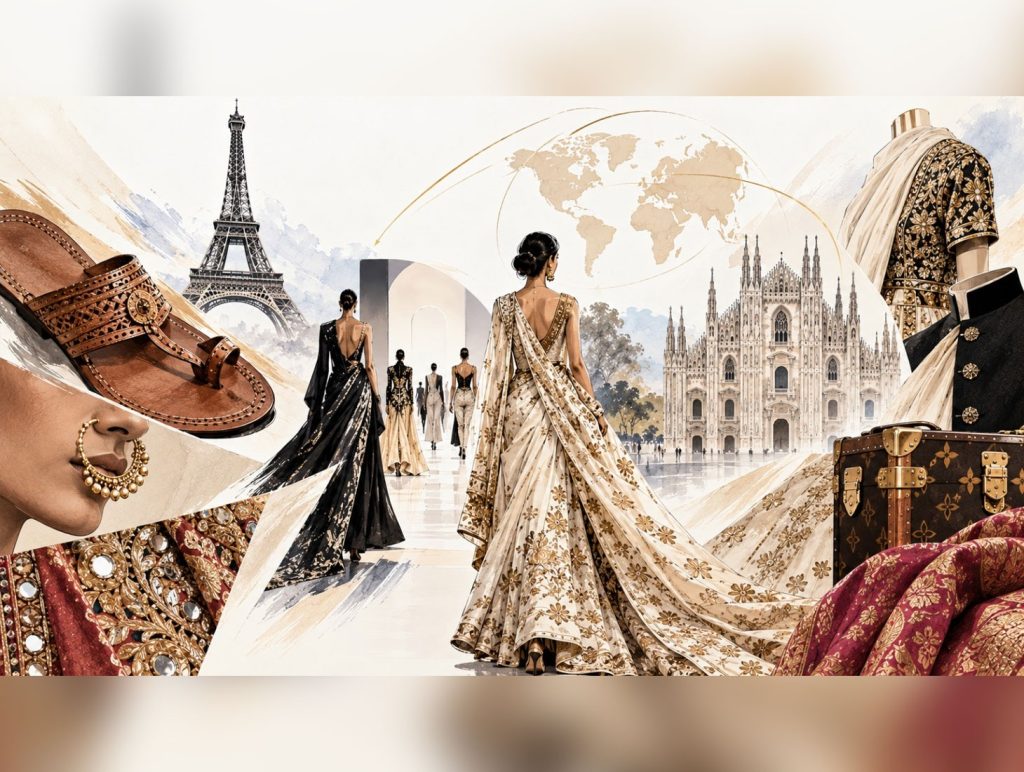

From Milan to Paris: Indian cultural iconography, Bharatiya tokenism, traditional craftsmanship, quintessential Indian weaves and patterns have long been ruling the international fashion runways
Chandigarh, September 22
Be it Italian luxury brand Prada’s antique leather pumps or their toe-ring sandals inspired by the Kolhapuri chappals, Gaultier’s nose rings, Lagerfeld’s maang tikkas, Dior’s cholis and lehenga-inspired skirts, Louis Vuitton’s signature prints, John Galliano’s collection inspired by our nine yards to Dolce & Gabbana’s bright-hued skirts flaunting Indian embroideries that may just have their roots in Rajasthan or Gujarat. Our Indian ethnic folk arts, techniques, embroideries, and embellishment trends like Gotta patti, zaari, mirror work, and prints like Chanderi, Madhubani, and hand-block prints have long splashed the international fashion scene with their towering presence, without a trace of any credit received by India for the same by any international fashion brand or designer. Celebrities like Beyonce, Gwen Stefani, Selena Gomez, Katy Perry, and Oprah Winfrey have worn our Indian inspired haute couture in their ramp walks, red carpet appearances, and music videos.
LV’s love affair with India
Louis Vuitton’s signature trunks have long been said to be inspired by ancient Indian iconography-motifs and embroideries with paisleys, florals and geometric metaphors. Louis Vuitton’s Men SS26 show was not just a new chapter in the brand’s vision under Pharrell Williams, but also touched on an Indian narrative, with celebrated Indian architect Bijoy Jain of Studio Mumbai designing their international runway inspired by the traditional Indian board game Snakes and Ladders. The ramp walk was complemented by a soundscape featuring Yaara, a track co-created by Pharrell and A. R. Rahman.
Prada and the Kolhapuri kiss (SS26)
The Kolhapuri chappals subtly and very quietly made their way down the international runway, juxtaposed with minimalistic design and bold tailoring. The traditional Indian footwear was placed on the international runway without any acknowledgment given to our signature Indian, specifically Maharashtrian footwear from Kolhapur.
Jean Paul Gaultier Haute couture (FW17)
Jean Paul Gaultier’s Haute Couture Fall/Winter show in Paris back in 2017 featured saree-inspired drapes and silhouettes inspired by Indian brides. The look also featured models wearing nosepins, completing the Indian bridal look.
Chanel’s Paris-Bombay collection (Pre-Fall 2012)
In 2012, Karl Lagerfeld didn’t just transform the Grand Palais into a luxurious Indian palace for Chanel’s Paris-Bombay Metiers d’Art show, in which the models were seen completing the Indian wedding look with bindis, maang tikkas, and brocade jackets while the men flanked Nehru collars and completed the look by wearing turbans, but literally drenched the palace in typical Indian sights and sounds, including the marigold hues and incense used to complete the look.
The Great Indian Bazaar
Before Gaultier, John Galliano’s Spring 2003 collection at Dior raised a toast to the Indian Saree once again. His collection showcased saree-style wraps, cholis and skirts inspired by lehengas. Designer Bibhu Mohapatra too conceptualized his whole collection around Indian textiles and techniques and presented them on the New York runways. His designs lavishly indulged in Benarasi silks and zardozi, embroidered, printed, and embellished with signature Indian temple architecture and heritage.
Even US brand Ralph Lauren, in September 2026, showcased a deep pink evening gown featuring Indian Zardozi embroidery, which the brand passed off as a generic embellishment without mentioning its Indian heritage. In the late 2025-26 season, Fendi also released a multi-hued baguette embellished with beads and mirror work, a direct pick from the signature Gujarati mirror-work. After backlash, the brand clarified that Mumbai-based atelier Chanakya had actually handcrafted the embroidery for Fendi.
Straight from the horse’s mouth
Talking about the Global relevance, acceptance, and popularity of our Indian designs and styles, Chandni Pahwa, co-founder of The Front Row, a platform which brings together the best of homegrown labels and bridges the gap between the designers and their clients, says, “Indian design has always had a strong visual identity; the world is finally recognising its global relevance. From our craftsmanship to our silhouettes, there’s a renewed appetite for the Indian point of view. And not to mention the Indian fabric, nobody has fabrics the way we have; our silks , crisp cottons, mul, and brocades are so unique , and now they are becoming a part of the global fashion conversation.”
Sharing her views on the issue, Chandigarh-based designer Rashmi Bindra, Founder, Taraashbyrashmi, says, “ International fashion houses actually dote on Indian trends; Zardozi embroidery is often used in their collections. They seem to have borrowed our heritage thread work, brocades, and Bandhani too. They are even using our Karigars without giving them due credit; lately, there’s been a controversy around Kolhapuri chappals being sold at a heavy price tag internationally without any credit given to their origin and craftsmanship, which is kind of sad. So I feel they secretly admire our kaarigiri, and from time immemorial they look for new Indian collections, which they then adapt and style with their logos.Indian Kaarigars need recognition and rightful rewards for their toil and vision, giving the globe the extraordinary of designs and collections”
Adding more, Amritsar-based couture designer Heer Randhawa adds, “The Bindi couture is a global trend. Saree-inspired drapes, silk organzas, and silhouettes are everywhere. The indian trends globally are not minimalism but maximalism at its best.”
India is a land of diversity, brimming with colors and creativity unmatched anywhere in the world. Our fabrics, weaves, folds, styles, ancient embroideries, embellishments, techniques, skillful labour, and artistic skills have long been lapped up by international luxury brands, couture labels, designers, and celebrities, without India ever receiving formal acknowledgment or even a passing mention. It’s high time we call out this brazen trespassing into our designers’ vision and safeguard the hard-earned creations and the signature Indian styles of our artisans and their collections.
Ninth season of ‘Kahin Gum Na Ho Jayein’ brings budding chefs closer to culinary professionals…
From Amul’s corporate corridors to couture front rows, luxury fashion influencer, content creator and Zoom…
Drawing on his prison experiences, the author explores life behind bars, theatre with inmates and…
Global Shapers Chandigarh initiative creates a safe, informal, no-judgement setting to discuss emotions, everyday struggles…