Spread the news

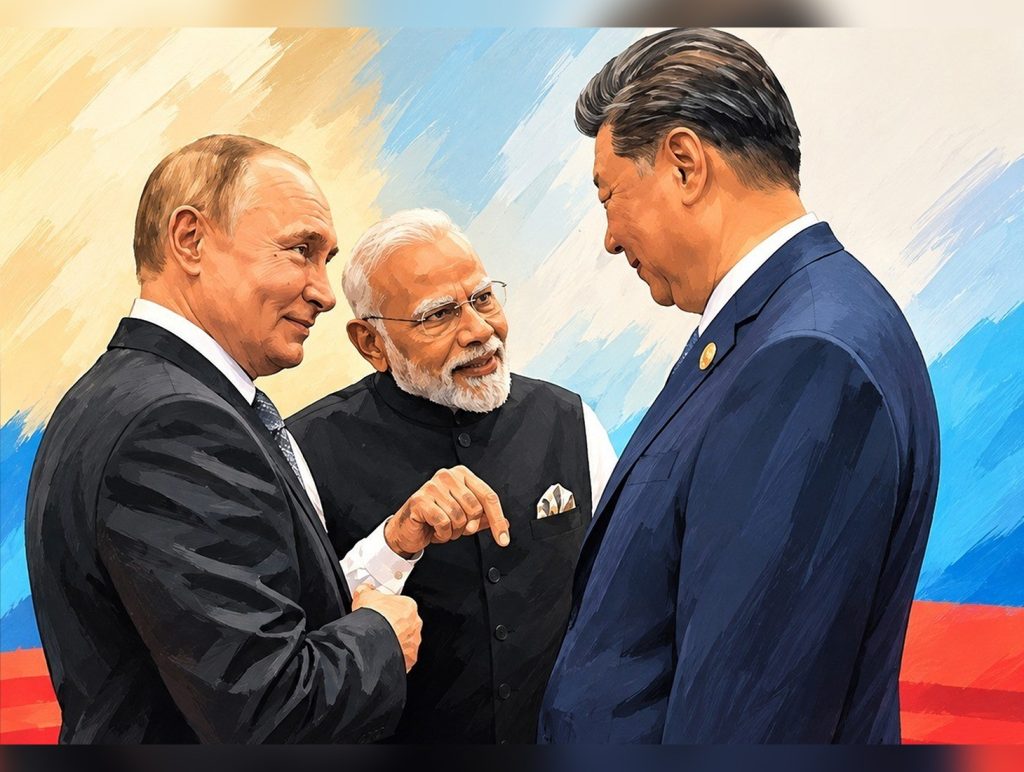
The meeting between Prime Minister Narendra Modi and Chinese President Xi Jinping in New Delhi on Saturday during the BRICS Summit could be a defining moment for India-China relations. For both countries, the talks offer an opportunity to rebuild trust, ease tensions and open a new chapter in a relationship that has been strained since the Ladakh military face off. Their meeting is also significant because it comes amid a changing US diplomatic approach under Donald Trump’s second presidency, forcing major powers to reassess old assumptions and new strategic equations. For India and China, this may be the moment to recognise that managing their differences through dialogue is not simply desirable but increasingly necessary.
Xi Jinping will arrive in New Delhi on Saturday, Chinese officials confirmed on Thursday. Prime Minister Narendra Modi set to hold bilateral talks with the Chinese president on the sidelines of the summit on Saturday. The meeting will be closely watched not merely because it brings together the leaders of two major Asian powers but because of what it could mean for the future direction of their relationship.
India will host the 18th BRICS Summit at Bharat Mandapam in New Delhi on September 12 and 13, the Ministry of External Affairs official said. Leaders of BRICS member and partner countries along with outreach invitees are expected to attend the summit.Xi’s visit will be his first to India in almost seven years. He last visited the country in 2019. He will be accompanied by a delegation of officials and business leaders and is expected to leave India on Sunday.
The timing could hardly be more important. India-China relations deteriorated sharply after the military face-off in Ladakh, leaving behind a deep trust deficit. The border remains the most difficult issue between the two countries, but there have been signs that both sides now recognise the cost of allowing the relationship to remain permanently defined by confrontation.
The recent improvement did not happen overnight. Political leaders and military officials have held discussions, disengagement has taken place and peace and tranquillity along the border have been maintained. The previous meetings between Modi and Xi have also helped create some space for dialogue.Even Prime Minister Modi recently met Xi and Russian President Vladimir Putin at the 26th Shanghai Cooperation Organisation Summit in Bishkek on September 1.
Such meetings have gained greater importance as the world enters a period of diplomatic uncertainty with major powers reassessing their relationships and strategic priorities.The Modi-Xi meeting should therefore be seen against a much wider backdrop.
The diplomatic position of the United States has changed considerably in recent years, particularly since Donald Trump began his second term as president. Washington’s relations with Beijing, Moscow and Tehran, alongside the continuing Russia-Ukraine war and the US-Iran conflict, have altered the strategic calculations of countries across the world.
For both countries, maintaining strategic space in such an environment is crucial. India has strengthened its relationship with US while maintaining its long standing ties with Russia. Meanwhile China remains India’s most important neighbour and a major economic partner. A reduction in tensions with Beijing would not mean moving away from other partnerships. Rather, it could give India greater room to pursue its own interests in a rapidly changing international environment.
China also has reasons to consider this as useful opportunity. Both countries need stability and have major economic ambitions. That does not mean India and China can suddenly resolve all their differences. They cannot. The boundary question is complex and will require sustained negotiations. But there is a difference between having unresolved differences and allowing those differences to become fresh disputes.
That distinction could be at the heart of the Modi-Xi conversation.
The two leaders had earlier noted with satisfaction the successful disengagement and the maintenance of peace and tranquillity along the border areas. They had also expressed their commitment to a fair, reasonable and mutually acceptable resolution of the boundary question, keeping in mind the larger interests of the two countries and their people.
That commitment now needs to translate into sustained action.
Economic relations could provide another important part of the reset. India had imposed restrictions on Chinese investment after the 2020 clashes. Some of those restrictions have subsequently been eased, particularly in sectors such as electronics, capital goods and solar cells.
The political trust and economic confidence often go hand in hand. If relations between the two governments become more stable then businesses and investors may also feel more confident about engaging with each other. A more positive atmosphere could help revive economic ties that have suffered as bilateral relations deteriorated.
The BRICS Summit offers a timely setting for that conversation.The summit will also give leaders an opportunity to discuss common priorities and exchange views on major global and regional issues.Modi’s meetings with Putin and Iranian President Masoud Pezeshkian on Friday will attract attention of their own, particularly because of the Russia-Ukraine war and tensions between Iran and the United States.
But the Modi-Xi meeting carries a different significance.
It is a conversation between two neighbours whose relationship has been defined for too long by suspicion and strategic competition.
When Modi and Xi met on the sidelines of the Shanghai Cooperation Organisation summit in Tianjin on August 31, 2025, both leaders welcomed the positive momentum and steady progress in bilateral relations since their meeting in Kazan in October 2024. They reaffirmed that India and China were development partners rather than rivals and that differences should not be allowed to become disputes.
India assumed the BRICS chairship on January 1, 2026, for the fourth time, having previously held the chair in 2012, 2016 and 2021. This year also marks 20 years since the establishment of BRICS. Under India’s chairship, more than 350 meetings and high-level engagements have been held across more than 25 cities. These have focused on political and security cooperation, economic and financial issues, and cultural and people-to-people exchanges.
India’s theme for its BRICS chairship, “Building for Resilience, Innovation, Cooperation and Sustainability”, reflects its emphasis on cooperation, development and a people-centred approach rooted in “Humanity First”.
If Modi and Xi can turn dialogue into greater trust, ease tensions and deepen economic engagement then their meeting could mark the beginning of more stable chapter in India-China relations.







 Dr Kiran Deep