Spread the news
Auckland, July 10
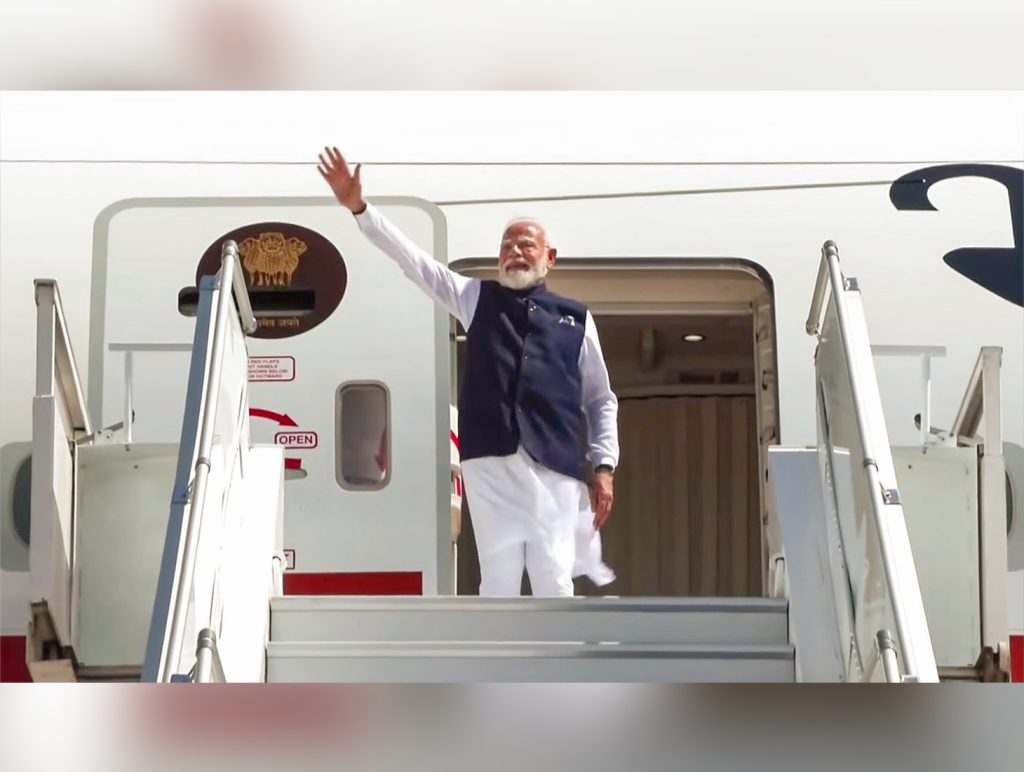
Prime Minister Narendra Modi on Friday arrived in Auckland for a two days visit to New Zealand, the final stop of his three-nation diplomatic tour, where he is set to hold talks with Prime Minister Christopher Luxon aimed at deepening economic and strategic ties. Modi will also address members of the Indian diaspora, highlighting the community’s role in strengthening relations between the two countries.
Prime Minister Luxon welcomed Modi at the airport, underlining the growing warmth in bilateral ties.
Ahead of his departure from New Delhi, Modi said the visit would build on the momentum generated by Luxon’s visit to India in March 2025. He described the trip as an opportunity to further expand cooperation across trade, investment and other areas of shared interest.
During their discussions, the two leaders are expected to focus on boosting economic, trade and commercial engagement while exploring new avenues of collaboration. The visit also carries significance for the large Indian-origin community in New Zealand, with Modi scheduled to interact with the diaspora during his stay. New Zealand marks the final destination of Modi’s three-nation tour, which began in Indonesia and continued in Australia.
In Australia, Modi and Prime Minister Anthony Albanese reaffirmed their commitment to a peaceful, stable and open Indo-Pacific. The two sides agreed to strengthen defence cooperation, particularly in the maritime sector, and concluded a long-negotiated civil nuclear energy agreement that will enable Australia to commercially supply uranium for India’s civilian nuclear power programme.
Earlier in Indonesia, Modi and President Prabowo Subianto oversaw the signing of 14 agreements covering critical minerals, maritime security, defence cooperation and other strategic sectors, reflecting India’s growing engagement with Southeast Asia under its Act East Policy.
The Prime Minister has said the three-nation tour reinforces India’s Act East Policy, its MAHASAGAR vision for maritime cooperation, and its commitment to a free, open and inclusive Indo-Pacific.







 The North News