








 The North News
Ahmedabad, June 12
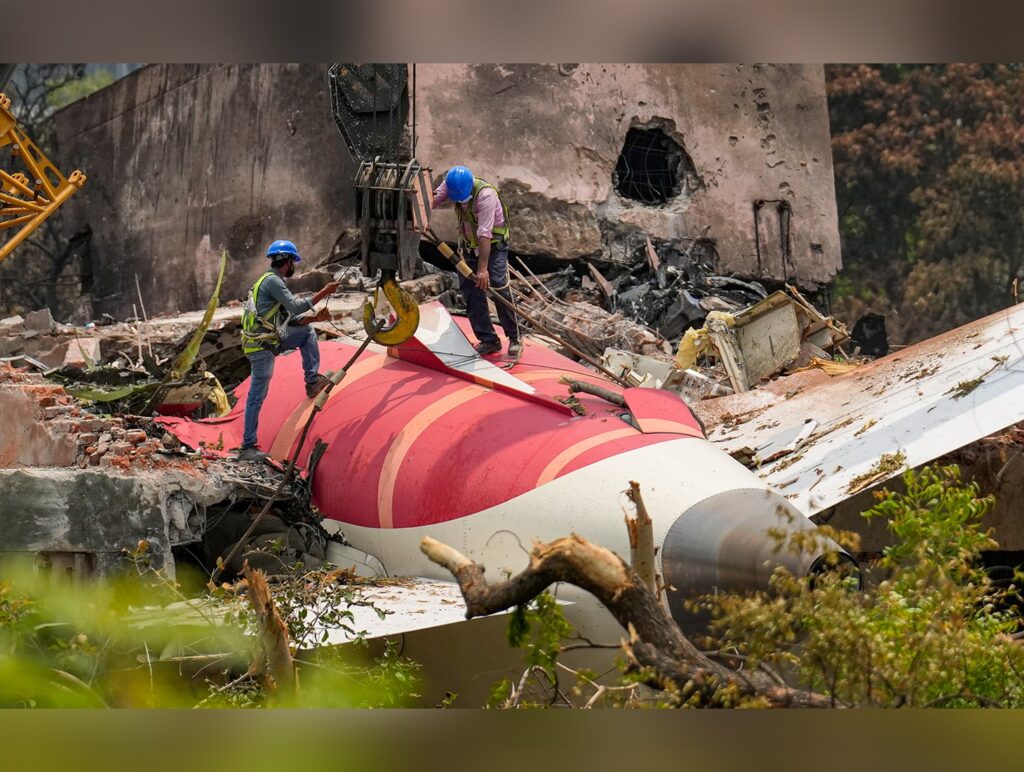
A year after the Air India AI-171 crash that killed 260 people, many families are still searching for answers about what caused one of India’s deadliest aviation disasters.
For relatives of those who died, the passage of time has done little to ease the pain. Instead, the absence of a final investigation report has left many feeling trapped between grief and uncertainty, still unable to understand why their loved ones never made it home.
The London-bound flight crashed just 32 seconds after taking off from Ahmedabad’s Sardar Vallabhbhai Patel Airport on 12 June last year. The aircraft slammed into a hostel complex at BJ Medical College, killing 241 passengers and crew members and 19 people on the ground. Only one passenger survived.
Among those killed was former Gujarat chief minister Vijay Rupani.
India’s Aircraft Accident Investigation Bureau (AAIB) released an interim report last July but stopped short of identifying a cause. A section of the report indicated that the aircraft’s engine fuel switches appeared to have been cut off shortly after take-off, but investigators offered no conclusions.
Since then, families have been waiting for the final report, hoping it will provide clarity and accountability.
“The most important thing these families can have is transparency,” said Mike Andrews, a lawyer with US-based law firm Beasley Allen, which represents more than 130 victim families from India and the UK.
Andrews has urged the Indian government to release technical data from the aircraft’s Flight Data Recorder (FDR), arguing that independent experts should be allowed to examine the evidence. He said access to the data could also help families pursuing legal action, including possible product liability claims in the United States.
The families themselves have repeatedly appealed for the release of black box and Cockpit Voice Recorder (CVR) data. In April, relatives of 30 victims from Gujarat wrote to Prime Minister Narendra Modi, requesting that the information be made public and that the investigation be completed as soon as possible.
Under international aviation norms, investigators are expected to issue a final report within a year whenever possible. If that is not feasible, authorities may release an interim statement explaining the status of the inquiry.
Last month, Civil Aviation Minister K Rammohan Naidu said the investigation was in its final stages and that a report could be completed within a month. He stressed that the AAIB was conducting the inquiry independently, with the government providing necessary support.
Meanwhile, aviation professionals have urged caution. Federation of Indian Pilots president C S Randhawa said investigators should publish their findings only after completing a thorough examination of all evidence.
He warned that releasing another interim report without firm conclusions could fuel speculation rather than provide answers.
For families marking the first anniversary of the crash, however, the central question remains unchanged: what exactly happened in those final 32 seconds, and why?
Devastating floods along the Nepal-Tibet border, reportedly killed 270 people so far, have once again…
Jabalpur, June 26 The Madhya Pradesh High Court on Thursday dismissed a defamation case against…
New Delhi, June 25 Prime Minister Narendra Modi on Thursday described the Emergency imposed in…
The Centre government has said that a passport has never been considered conclusive proof of…