







 The North News
New Delhi, June 6
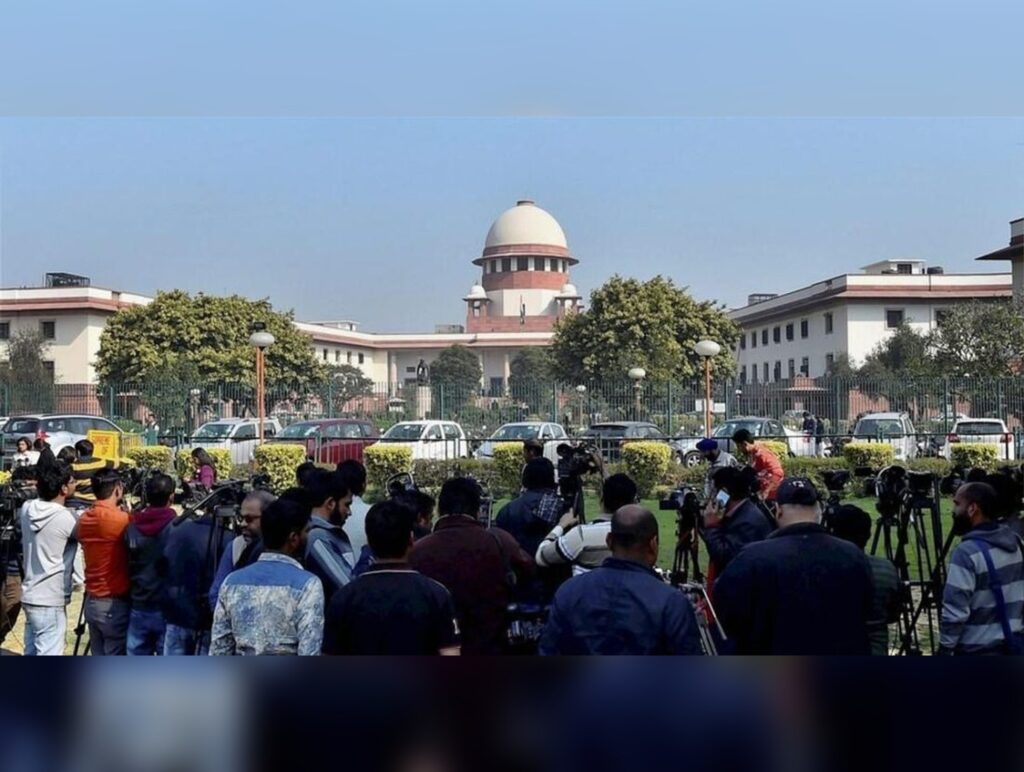
The Supreme Court has ruled that an accused person cannot be denied access to documents that form part of a chargesheet, saying such a denial could undermine the right to a fair trial.A bench comprising Justices J K Maheshwari and A S Chandurkar made the observation while hearing a plea filed by retired Major General V K Singh, a former officer of India’s external intelligence agency, RAW, who is facing prosecution under the Official Secrets Act in a case dating back to 2007. The court directed investigators to provide Singh with typed copies of certain documents described as “highly confidential”, subject to strict conditions preventing their public disclosure. The Central Bureau of Investigation (CBI) had raised objections stating that while the documents were relevant to the trial, copies should not be supplied because of concerns related to national security and the possibility of the material entering the public domain.
Rejecting that argument, the Supreme Court said it was a settled principle of law that an accused cannot be denied access to documents forming part of the chargesheet when those records are relevant to the prosecution’s case and necessary for ensuring justice. “Withholding such documents could seriously prejudice the accused’s right to a fair trial,” the bench said in its order dated 18 May.
The case arose from Singh’s challenge to a Delhi High Court order that had allowed him only to inspect the documents rather than obtain copies. The High Court had modified a 2009 trial court order that directed the prosecution to supply the records sought by him under Section 207 of the Code of Criminal Procedure (CrPC). The Supreme Court noted that the disputed records formed part of the chargesheet and were being used against Singh. It said they should therefore be made available to him for the purpose of preparing his defence.
Under the court order, Singh will receive typed copies of the documents but may use them only for court proceedings. The material must not be circulated through print, electronic or social media, or by any other means.
The court set aside the High Court’s order and directed that the documents be supplied within two months. It also required Singh to file an undertaking before the trial court within one month confirming that the documents would not be disclosed publicly.
The case stems from a CBI investigation launched in September 2007 following allegations that Singh revealed classified information in his book, India’s External Intelligence – Secrets of Research and Analysis Wing. A chargesheet was filed in April 2008 under provisions of the Official Secrets Act and the Indian Penal Code.

Devastating floods along the Nepal-Tibet border, reportedly killed 270 people so far, have once again…

Jabalpur, June 26 The Madhya Pradesh High Court on Thursday dismissed a defamation case against…
New Delhi, June 25 Prime Minister Narendra Modi on Thursday described the Emergency imposed in…
The Centre government has said that a passport has never been considered conclusive proof of…