








 The North News
Chandigarh, April 26
India should draw upon its own civilisational foundations rather than rely on western frameworks, the Bharatiya Janata Party’s National General Secretary (Organisation), BL Santhosh, said on Sunday, presenting Integral Humanism as a guiding framework for public life and governance.
Addressing a symposium in Chandigarh, he described the philosophy articulated by Pandit Deendayal Upadhyaya as a “living framework” capable of offering a balanced and sustainable direction rooted in India’s own cultural and social ethos.
BL Santhosh situated Upadhyaya’s ideas in the post-Independence period, when the unity forged during the freedom movement gave way to competitive party politics. This transition, he said, led to deeper questions about the country’s direction, not merely who governs, but what the nation stands for and where it is headed.
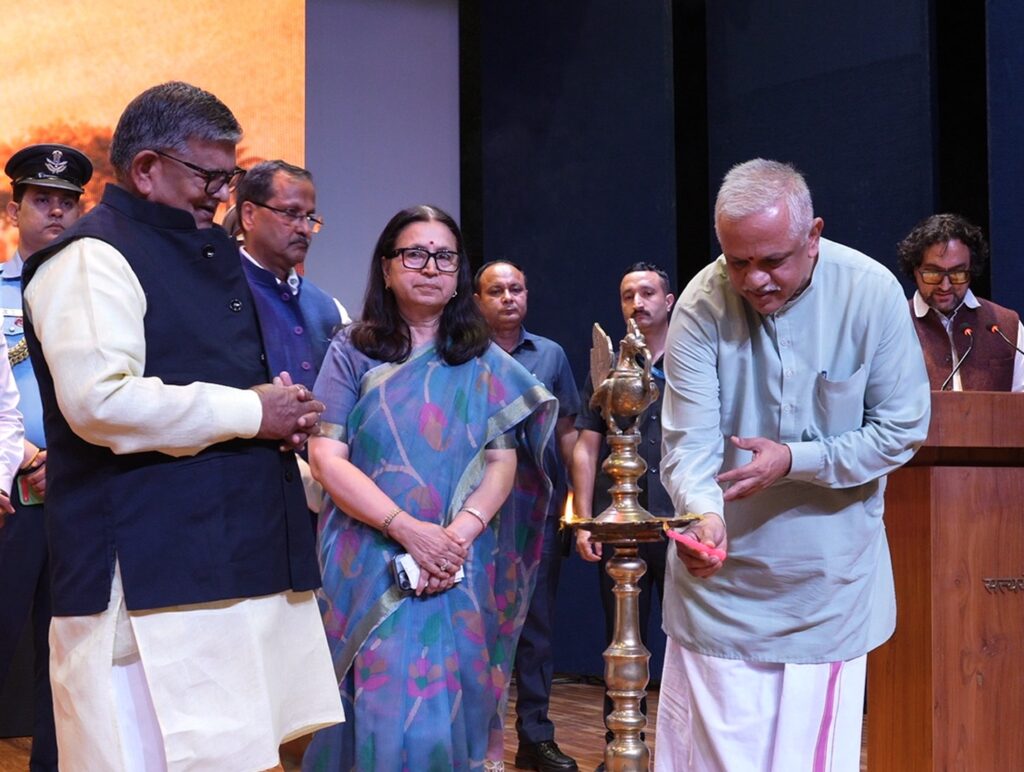
The symposium, organised by The North News at Guru Nanak Dev Bhawan in Punjab Lok Bhavan, was attended by academics, policymakers and civil society representatives who deliberated on the relevance of indigenous thought in contemporary India.
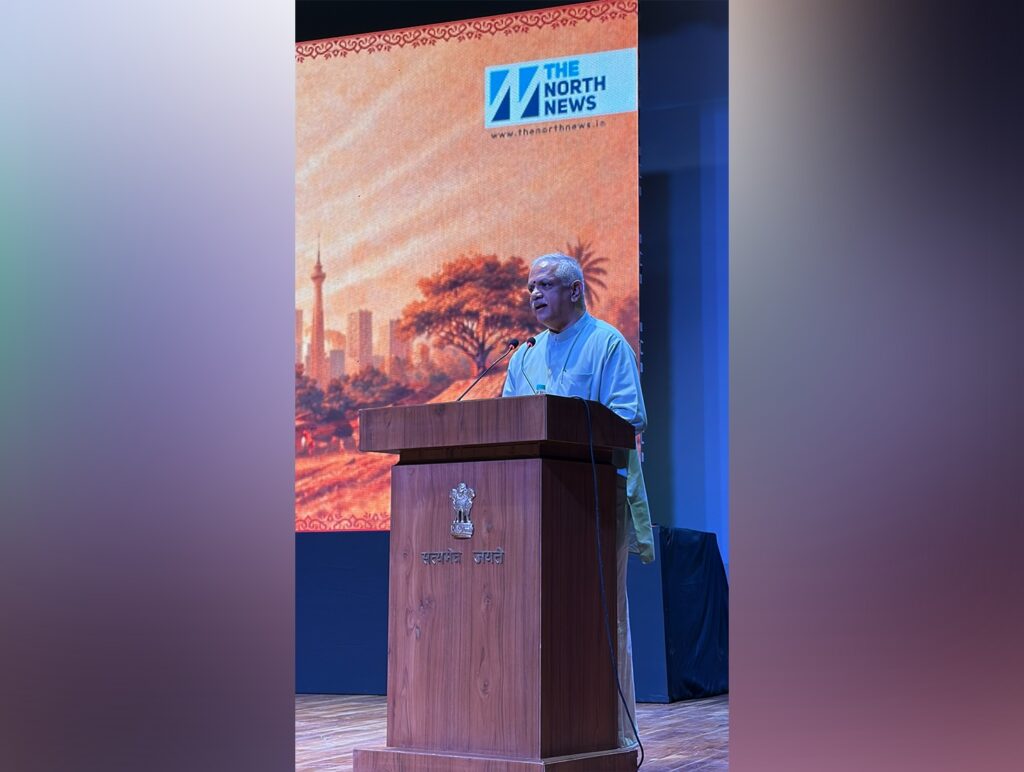
Highlighting contradictions in present-day society, BL Santhosh pointed to rising levels of education coexisting with corruption, and the expansion of religious and social institutions alongside incidents of violence. These, he said, reflected a disconnect between material progress and ethical grounding. Development, he observed, cannot be measured solely in economic terms.
Integral Humanism, first articulated at the Bharatiya Jana Sangh’s 1965 national convention, was described as a synthesis that avoids the extremes of capitalism and communism. With dharma at its core, the philosophy seeks to align individual aspirations with collective welfare, he added.
BL Santhosh also criticised what he termed India’s continued intellectual dependence on western models. He called for an approach that is “Indian in spirit”, arguing that the country’s resilience lies in its long-standing social traditions shaped over centuries.
Drawing a distinction between rule-based governance and value-based society, he cautioned that democracies lacking ideological clarity could become fragile and driven by short-term political considerations. Political organisations, he said, must be rooted in clear principles and sustained commitment.
Linking philosophy with policy, he referred to welfare initiatives as examples of inclusive development, or sarvodaya, aimed at reaching all sections of society, particularly the marginalised. At the same time, he warned against the adverse effects of unchecked urbanisation and consumerism, which he said have contributed to social and environmental pressures.
He emphasised the importance of a holistic way of life, integrating the development of mind, body and spirit, while maintaining harmony with nature. Natural resources, he added, should be used responsibly and based on need rather than exploitation.
For BL Santhosh, Integral Humanism remains a continuing proposition, suggesting that India can shape its future by drawing upon its philosophical traditions while addressing the challenges of a rapidly changing world.
Born in Hiriyadka village in Karnataka’s Udupi district, BL Santhosh, trained as an engineer and obtained a degree in Instrumentation Technology from BDT College of Engineering, Davanagere. He later moved into organisational work within the BJP.
He served as general secretary of the BJP’s Karnataka unit for eight years from 2006 before being appointed national joint general secretary in charge of the southern States in 2014. On July 15, 2019, he assumed his present role as national general secretary (organisation), a key position within the party’s organisational structure.
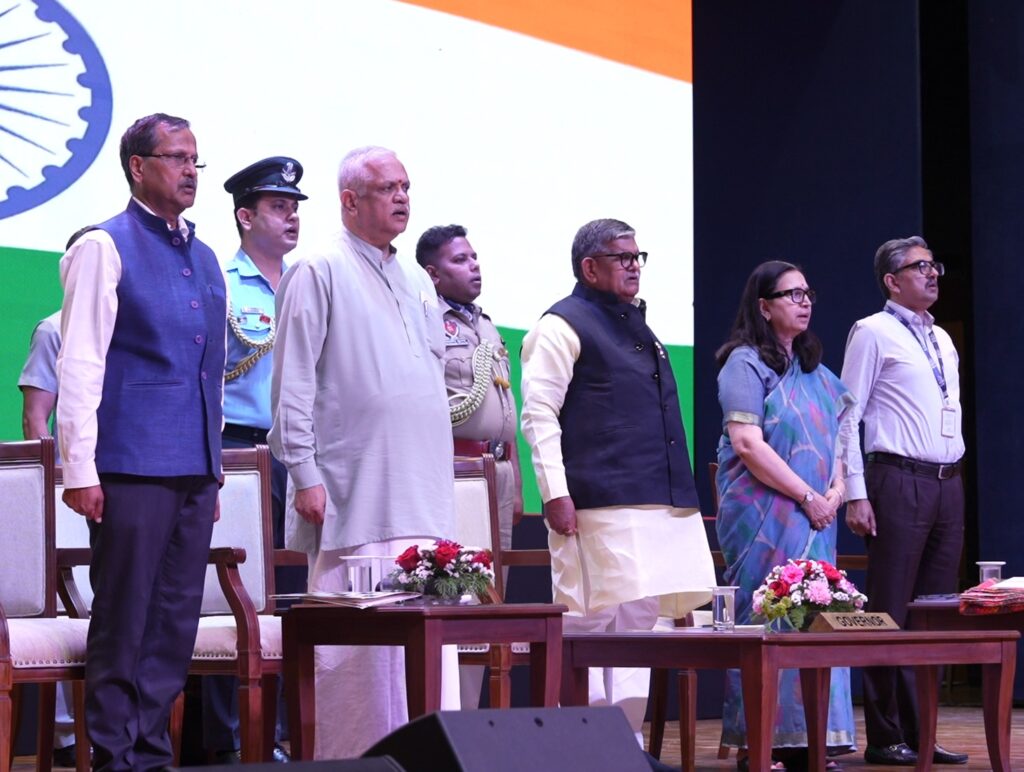
The symposium was presided over by Punjab Governor Gulab Chand Kataria. Among those present were Panjab University Vice-Chancellor Renu Vig, Socio-Political analyst Dr. Dharinder Tayal, and CEO of Mantrin and Founder of The North News, Lalit K. Sharma.
In his address, Kataria underlined the need to work for the uplift of weaker sections and stressed the importance of selfless service. He said the principles of Integral Humanism could be applied in governance as well as in daily life, encouraging balanced development anchored in human values.
Dr. Dharinder Tayal observed that Integral Humanism is rooted in India’s cultural and philosophical traditions, which emphasise coexistence and harmony between humans and nature. He noted that while economic discourse often centres on material capital, India has historically been rich in human capital and requires solutions aligned with its own social context.
Lalit K. Sharma highlighted the importance of balanced growth and a sense of responsibility towards society and the nation. He said the philosophy, which gained prominence in 1965, continues to offer insights into constructive social engagement.
Devastating floods along the Nepal-Tibet border, reportedly killed 270 people so far, have once again…
Jabalpur, June 26 The Madhya Pradesh High Court on Thursday dismissed a defamation case against…
New Delhi, June 25 Prime Minister Narendra Modi on Thursday described the Emergency imposed in…
The Centre government has said that a passport has never been considered conclusive proof of…