





Tokyo, April 13
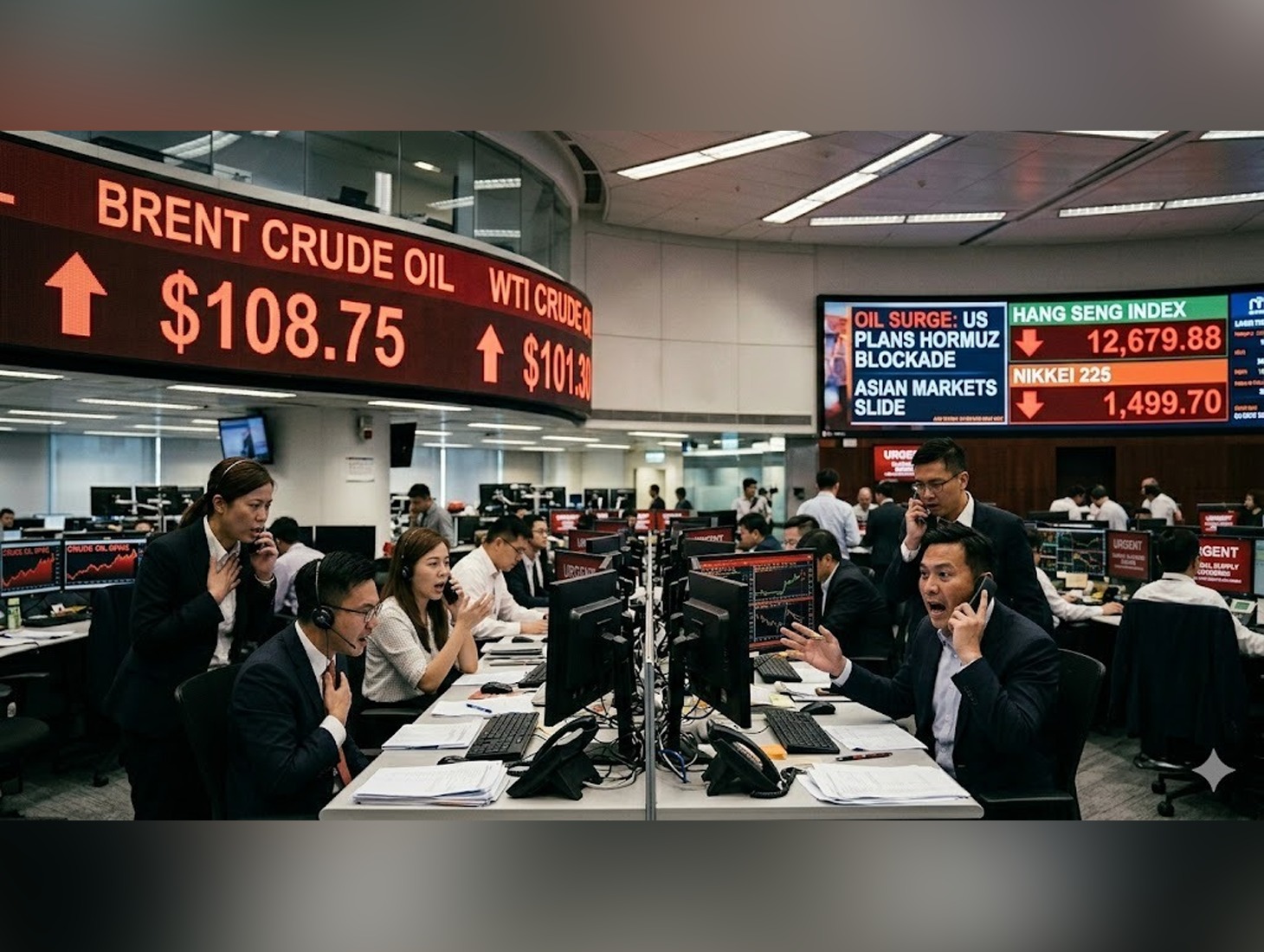
Oil prices surged, and most Asian markets declined on Monday as the United States prepared to blockade ships entering and leaving the Strait of Hormuz following stalled US-Iran ceasefire talks in Pakistan, raising fresh concerns over global energy supply and market stability.
US President Donald Trump announced the proposed blockade after negotiations between Washington and Tehran ended without an agreement. The US military said the move, which will cover all Iranian ports, is set to begin at 10 am EDT, or 5.30 pm in Iran.
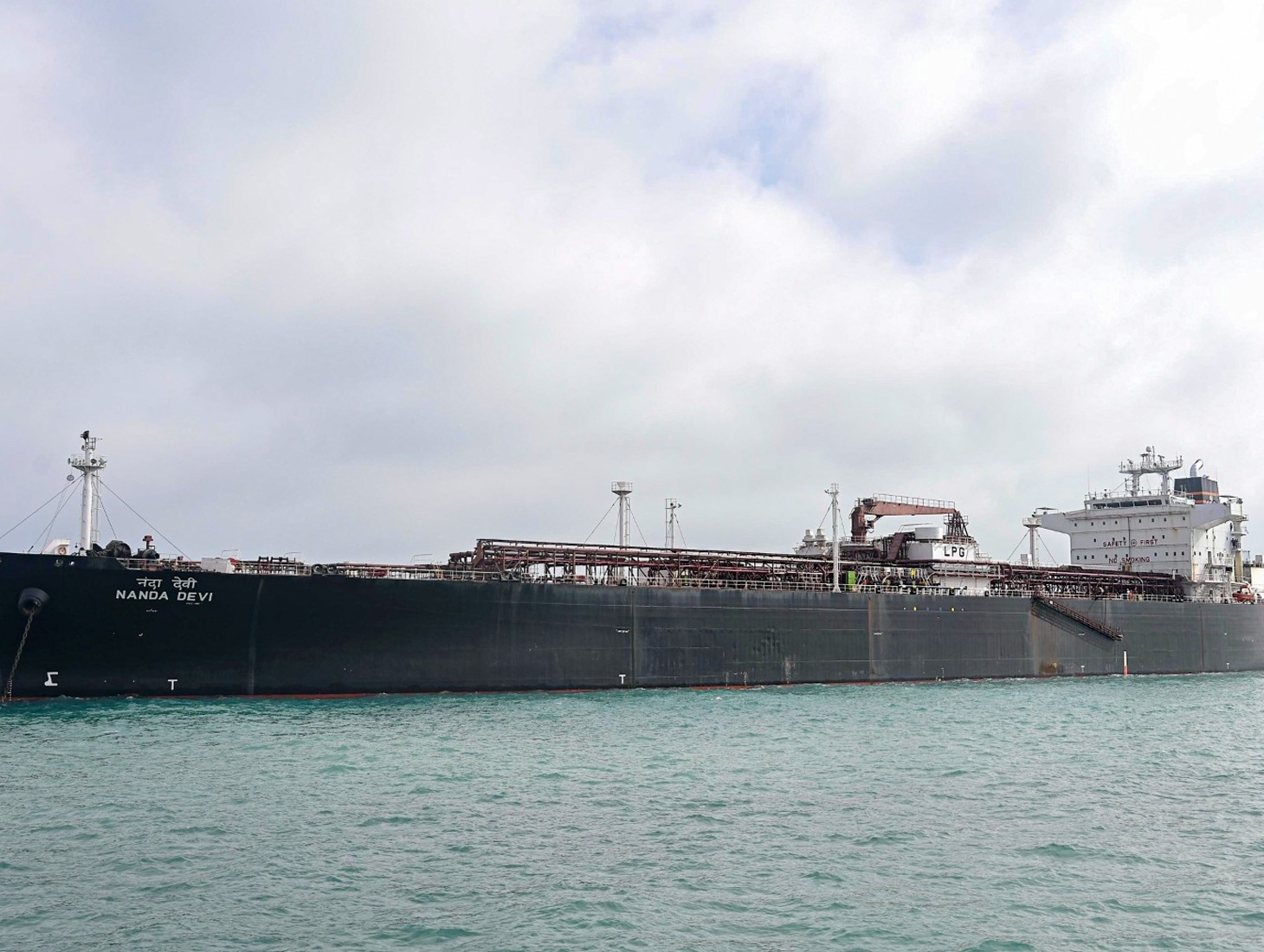
The Strait of Hormuz, a critical route for global oil shipments, has been disrupted since late February after Iran halted much of the shipping activity following the outbreak of conflict. The tightening supply has pushed oil prices sharply higher in recent weeks. Brent crude, the international benchmark, has risen from around 70 dollars per barrel before the conflict to over 119 dollars at certain points.
On Monday, US benchmark crude jumped 8.38 dollars, or 8.7 percent, to 104.95 dollars per barrel. Brent crude gained 7 dollars, or 7.4 percent, to 102.23 dollars per barrel.
Equity markets across Asia reflected investor caution. Japan’s Nikkei 225 fell 1 percent in morning trade to 56,357.40. Australia’s S and P ASX 200 declined 0.5 percent to 8,913.50. South Korea’s Kospi dropped 1.1 percent to 5,795.15. Hong Kong’s Hang Seng slipped nearly 1.5 percent to 25,513.42, while China’s Shanghai Composite edged down 0.2 percent to 3,976.57.
Analysts said the breakdown of talks has added to global market uncertainty. “The outcome of the talks was not really what people were hoping for, that’s for certain,” Neil Newman, Managing Director and Head of Strategy at Astris Advisory Japan, said in Hong Kong. “As we stand here at the moment, it doesn’t look very nice. Certainly, the oil prices are a big concern.”
In the United States, Wall Street ended last week with its second consecutive weekly gain, although trading remained volatile. The S and P 500 slipped 0.1 percent on Friday. The Dow Jones Industrial Average fell 0.6 percent, while the Nasdaq composite rose 0.4 percent. Earlier gains had been supported by optimism over the Pakistan talks, but that optimism faded after no agreement was reached.
The yield on the 10-year US Treasury note rose to 4.32 per cent on Friday from 4.29 per cent a day earlier, indicating firming bond market expectations.
At the close of trading, the S and P 500 fell 7.77 points to 6,816.89. The Dow dropped 269.23 points to 47,916.57, while the Nasdaq gained 80.48 points to settle at 22,902.89.
In currency markets, the US dollar strengthened to 159.74 Japanese yen from 159.25 yen. The euro weakened to 1.1687 dollars from 1.1729 dollars.
The developments point to continued volatility in global financial markets as geopolitical tensions remain unresolved and energy prices stay high.