







 Manjari Verma
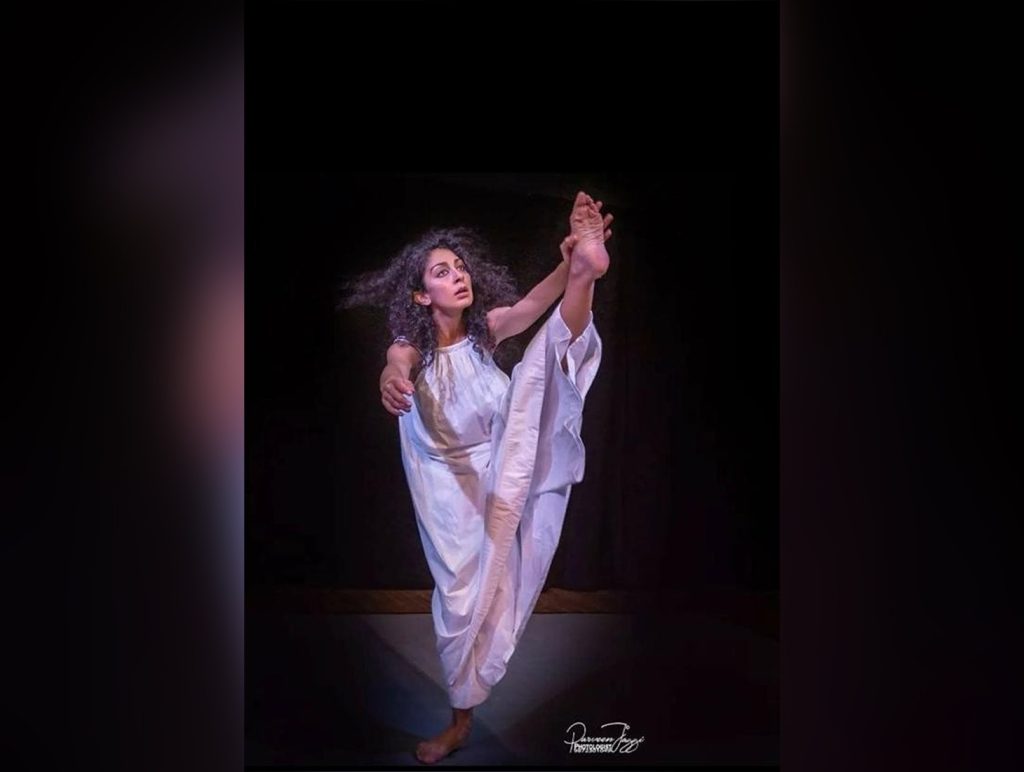
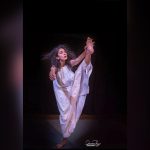
Puneet Jewandh’s journey reflects her belief in moving freely and finding her truth.
Chandigarh: You cannot hold back the wind. You cannot tell it where to go. It finds its own direction, moves through spaces and leaves its lingering presence behind without asking to be noticed.
Puneet Jewandh seems to understand that language.
A dancer, choreographer and director of musicals, she has spent years exploring movement not simply as an art form, but as a way of looking at the world. For her, dance can begin with an emotion, a question, an observation, or even something as ordinary as a piece of plastic repeatedly noticed lying on the street.
It began, however, with something much simpler: a childhood certainty.
“I was very clear that this was what I wanted to do,” Puneet recalls.
She wanted to dance. She wanted to choreograph. And, unlike many childhood ambitions that change shape with time, this one stayed.
Her early training was in classical dance, but she was never interested in keeping her curiosity within one tradition. Jazz, Broadway and Ballet opened up other possibilities, eventually taking her abroad for 2 years for further training.
There was no single dramatic turning point.
“Good things happen slowly. Slowly, slowly and naturally, organically,” she says.
That gradual movement perhaps explains her own artistic journey. Each experience added another layer to the way she understood the body, space and performance.
After returning to India, yoga and martial arts became part of that exploration. Contemporary dance eventually offered another vocabulary, one through which she could respond to what she felt and observed.
“If I’m feeling anxious, I’ll express that emotion. If I’m feeling anger, I’ll express that. If I’m feeling at peace with myself, I will express that too,” she says.
But the emotion does not exist in isolation. The world around her enters the work too — the environment, the political atmosphere, recurring thoughts and things that disturb or intrigue her.
One work grew from repeatedly noticing plastic and imagining its journey as though the discarded material itself had an existence and perspective. Another explored desire.
For Puneet, an idea does not necessarily arrive fully formed. Sometimes it simply refuses to leave.
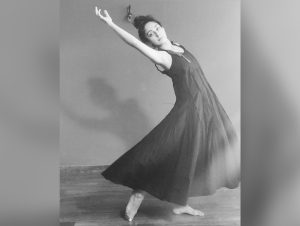
That openness has also shaped where she chooses to perform.
She has taken dance beyond conventional stages and into public spaces, allowing people to encounter movement without having planned to see a performance. There is no auditorium, no ticket, and no expectation. Someone may simply stop.
And that moment of stopping matters to her.
In an age when attention is constantly pulled towards phone screens, the act of watching a live performer — even for a few minutes — has acquired a different meaning.
“If somebody is giving their attention to somebody performing live, that too that they’ve encountered by chance, I think that means a lot,” she says.
Puneet does not ask the audience to leave with one particular emotion or message. She is less interested in telling them what to feel than in creating the possibility that something might shift.
“Something in them changes, or something in them moves,” she says.
Even a question — What is this? — can be enough.
Because somewhere within that question lies another possibility: seeing dance differently.
Her own relationship with dance has never been confined to one definition. She believes movement can take many forms and does not always need to be labelled before it can be experienced.
“Dance is not just contemporary dance. Dance can be anything,” she says.
That philosophy has followed her beyond performance as well.
Puneet had earlier run-The Engine Room, a studio in Chandigarh connected with her work in dance and movement. She has not been running the studio for around a decade now. Today, she works independently as a freelance dancer and choreographer and also directs musicals.
The change in structure has not meant a narrowing of her practice. If anything, her work continues to move between forms, people and spaces.
She still takes up music videos and collaborates with people whose ideas resonate with her. There is no fixed formula for the projects she chooses. What matters, she says, is whether the work connects deeply with her and whether what it seeks to express comes from an honest place.
Perhaps that is the thread running through everything she does.
Truth.
Not a grand declaration, but something personal enough to be followed.
Her message to those who watch her work is therefore uncomplicated: “Find your truth and just move with it.”
And then comes another thought — one that seems almost like an invitation.
Everybody should dance.
For Puneet, dance belongs neither exclusively to professionals nor to stages. It is a universal language, a way of expressing what words sometimes cannot and of connecting with oneself and the world outside.
That may be why the image of wind feels so fitting.
The wind does not remain in one place. It responds to its surroundings, changes direction, and keeps moving.
So does Puneet.
Not towards one predetermined destination, but through experiences, questions, emotions, and possibilities — allowing each new movement to reveal where the next one might lead.
Fatima Sana Shaikh and Raghubir Yadav add weight to the courtroom drama By Manya Bhasin…
Mandeep Garg, a practising radiologist in real life, enacts the character of a doctor in…
Harbhajan Mann is not just a singer and actor par excellence, but also the…
District administration coordinates with education and panchayat departments Gurugram, October 1 Five cultural troupes of…