








 Jasriman Kaur
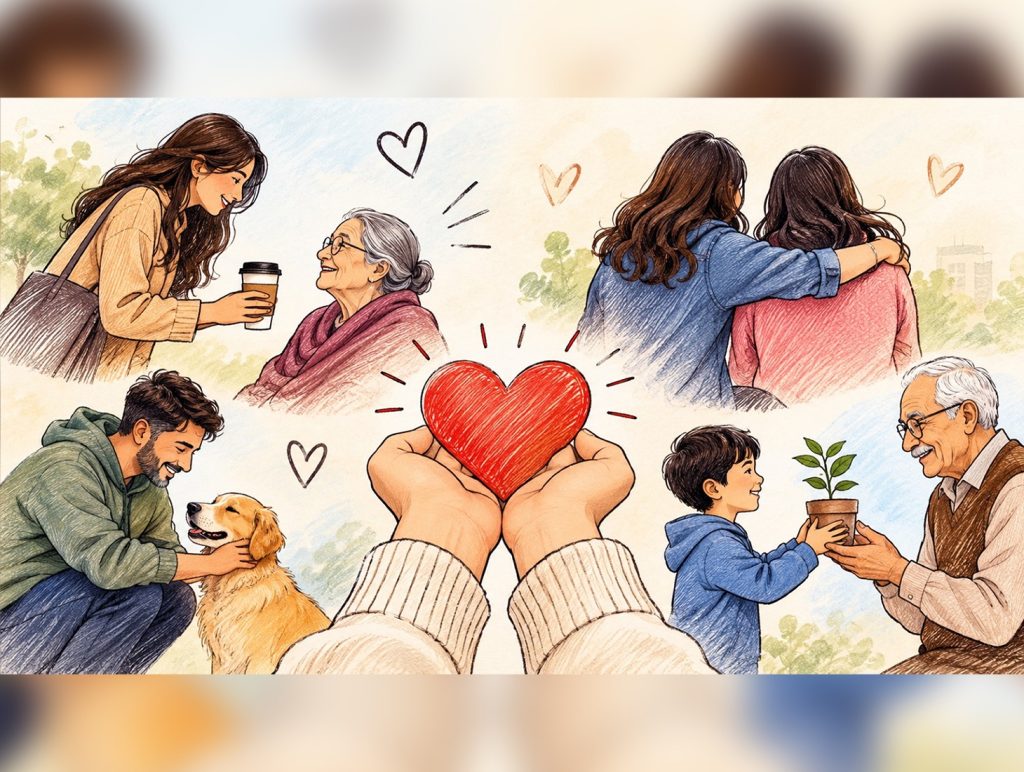

Sometimes, all it takes is one message to make someone’s day. A friend checking in without a reason, a stranger holding the door open, someone remembering a small detail about you or simply asking if you are okay; gestures that may seem ordinary can mean a great deal to another.
We rarely know what someone is going through. Behind a smile, a busy routine or a casual “I’m fine” could be a difficult day, an exhausting week or a struggle they have not found the courage to talk about. And perhaps that is why kindness matters more than we give it credit for.
Observed on November 13, World Kindness Day was introduced in 1998 by the World Kindness Movement to highlight good deeds and the positive power of kindness in communities. It is a reminder that making a difference does not always require money or grand gestures. Sometimes, it is about being patient, listening without interrupting, offering help or choosing not to judge someone whose circumstances we do not understand.
There is a science behind it, too. A 2026 article in the American Psychological Association’s “Monitor on Psychology” examined research linking volunteering and other acts of kindness with greater happiness and lower levels of depression, anxiety and loneliness. A study involving 777 participants found that those who performed acts of kindness for others reported improvements in all three areas, partly because they felt more connected to people around them.
Explaining the importance of this connection, UCLA researcher Naomi Eisenberger, whose work was featured in the article, has said, “The feelings of connection are critical for good mental health.”
A 2024 systematic review and meta-analysis published in “Clinical Psychology Review”, covering 23 randomised controlled studies, also found that loving-kindness interventions had positive effects on several mental health measures compared with no-intervention control groups.
In our increasingly hurried lives, we often underestimate the importance of human connection. For Chandigarh-Tricity residents juggling work, commutes and daily responsibilities, kindness can be as simple as helping an elderly neighbour, acknowledging support staff, sharing a meal, offering directions or checking on a friend who has been unusually quiet. Such gestures can make someone feel seen, valued and less alone.
At times, what a person needs most is not advice or a solution, but someone willing to listen, remember to check in or make them feel that they matter. We remember big celebrations, expensive gifts and elaborate plans, but it is often the smallest gestures that stay with us; a meal shared during a difficult time, a call made just to check in or someone who stands by us.
Kindness also begins at home. It is in the way we speak to our parents, treat our colleagues, respond to children and acknowledge those whose work often goes unnoticed. It extends to strangers, too, in the patience we show, the respect we offer and the help we give without expecting anything in return.
Perhaps the world does not need elaborate promises to become a better place. It needs people willing to notice, listen and care.
This November 13, do something kind, not for a photograph, a social media post or a thank-you, but simply because you can.
You never really know how much a small gesture might mean to someone.
Sometimes, art begins with emotions that cannot easily be expressed in words. A canvas becomes…

There are days when doing absolutely nothing feels like the greatest luxury. No deadlines, no…

Before the world awakens, before the noise of the day takes over, there is a…

Cricketers and Bollywood personalities celebrated Bhai Dooj on Wednesday, November 11, sharing photographs and heartfelt…