








 Disney Brar
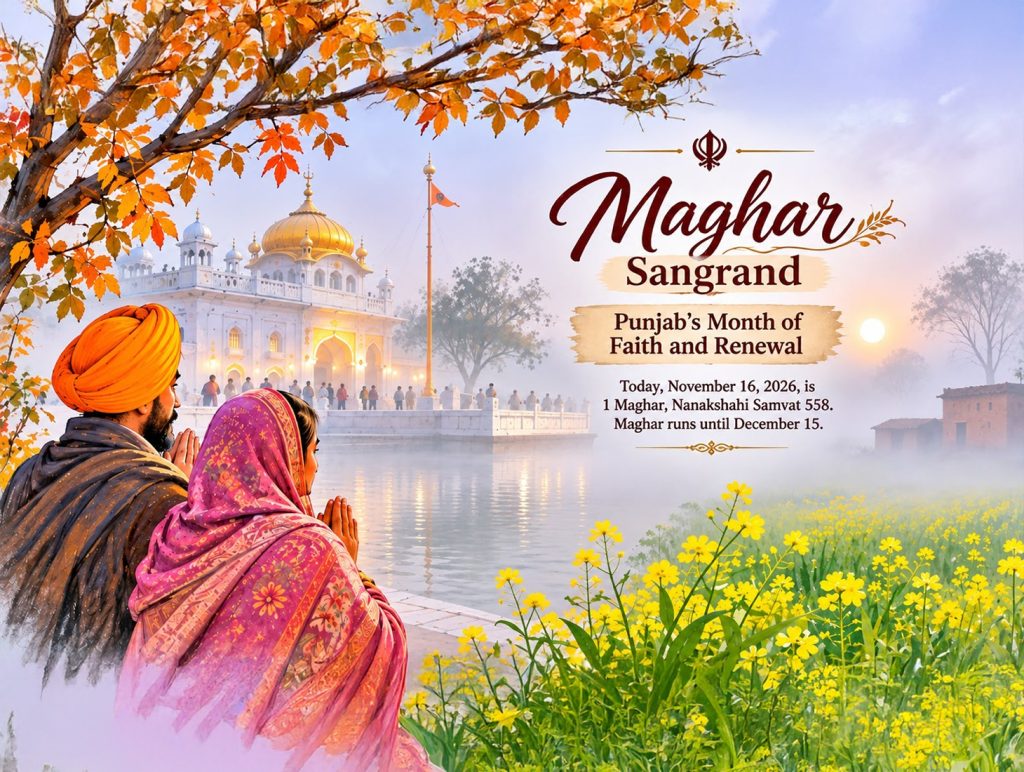
“In the month of Maghar, those who sit with their beloved lord look beautiful.” As Maghar begins, Sangrand offers a moment to pause, reflect and reconnect with the spiritual and cultural rhythms of Punjab.
There is something quietly beautiful about a new month arriving without the noise of celebration. No countdowns, no fireworks, no grand resolutions. Just another page turning in the calendar, a shift in the season and a moment to pause, reflect and offer gratitude.
November 16 marks the beginning of Maghar, the ninth month of the Nanakshahi calendar and Nanakshahi Samvat 558. Extending until December 15, Maghar arrives as autumn gives way to winter, bringing softer sunlight, misty mornings and a distinct change in the landscape of Punjab.
For the Sikh community, Sangrand marks the beginning of a new month. Many devotees visit gurdwaras, listen to Gurbani, offer prayers and seek the Guru’s guidance for the days ahead. But beyond the observance, the occasion carries a deeper message: every new beginning is an opportunity to embrace gratitude, humility and good deeds.
Maghar finds a special place in Barah Maha, Guru Arjan Dev Ji’s composition in Sri Guru Granth Sahib that reflects on the twelve months through the relationship between the human soul and the Divine. The verses associated with Maghar describe the beauty of those who remain connected with their Beloved Lord. In this spiritual imagery, fulfilment is not determined by material comforts or changing circumstances, but by devotion and the company of the spiritually enlightened.
It is a thought that resonates particularly in today’s hurried world. Life is increasingly measured in deadlines, appointments, targets and digital notifications. Months pass almost unnoticed, seasons change outside our windows and everyday existence becomes a race from one responsibility to another. Sangrand offers a gentle interruption. It invites us to take stock, not of what we have accumulated, but of how much kindness, compassion and contentment we have cultivated.
In Sikh tradition, the changing month is not treated as a predictor of fortune. Rather, the emphasis remains on remembering the Guru’s teachings and living by them. Kirtan, prayers and readings from Barah Maha bring the sangat together in reflection, making the occasion as much about inner renewal as it is about the turn of the calendar.
Maghar also carries particular significance in the Sikh calendar. The month witnesses the Prakash Purab of Sri Guru Nanak Dev Ji on November 24 and the Shaheedi Divas of Sri Guru Tegh Bahadur Sahib Ji on December 14. These occasions bring into focus the enduring Sikh values of equality, compassion, courage, selfless service and the freedom to practise one’s faith.
Beyond its spiritual significance, Maghar has its own poetry in the Punjabi countryside. Fields begin to take on their winter hues, farmers prepare for the season ahead and the landscape settles into a slower rhythm. Morning fog, steaming cups of tea, the warmth of a winter hearth and Gurbani echoing from neighbourhood gurdwaras become part of the season’s familiar charm.
Perhaps that is the enduring beauty of Sangrand. It does not call for elaborate celebrations or ambitious resolutions. It simply reminds us that every new month offers another chance to become more conscious of our actions, more generous in our relationships and more connected to our roots.
As Maghar unfolds, the invitation is not merely to welcome another month, but to make its days meaningful. For in the Sikh understanding of life, the true auspiciousness of a day lies not in the date on the calendar, but in the goodness one brings into it.
And as Punjab turns another page, Maghar arrives with a timeless reminder: the most beautiful beginnings are those that bring us closer to the Divine, to one another and to ourselves.
Punjab Chief Minister Bhagwant Singh Mann on Monday appealed to Prime Minister Narendra Modi to…
Punjab Chief Minister Bhagwant Singh Mann on Monday visited Sarabha, the ancestral village of freedom…
The Amritsar Sessions Court has sought a response from the Punjab Government by tomorrow on…
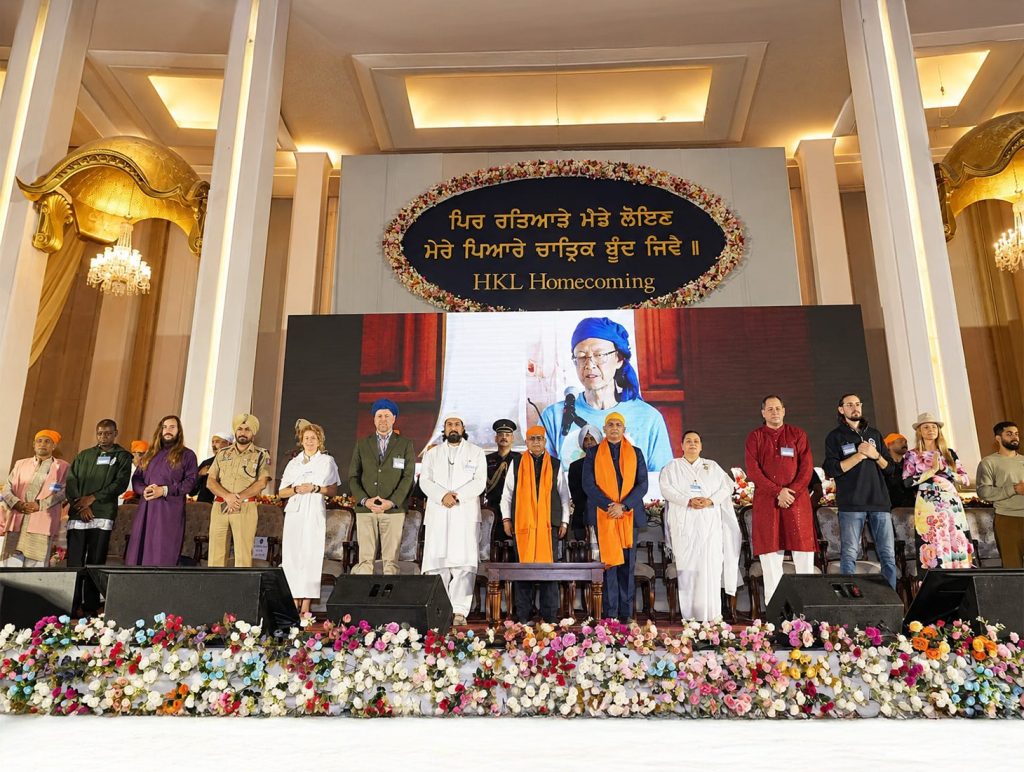
The 8th International Conference of the Humility, Kindness and Love (HKL) Global Movement opened at…