






 The North News
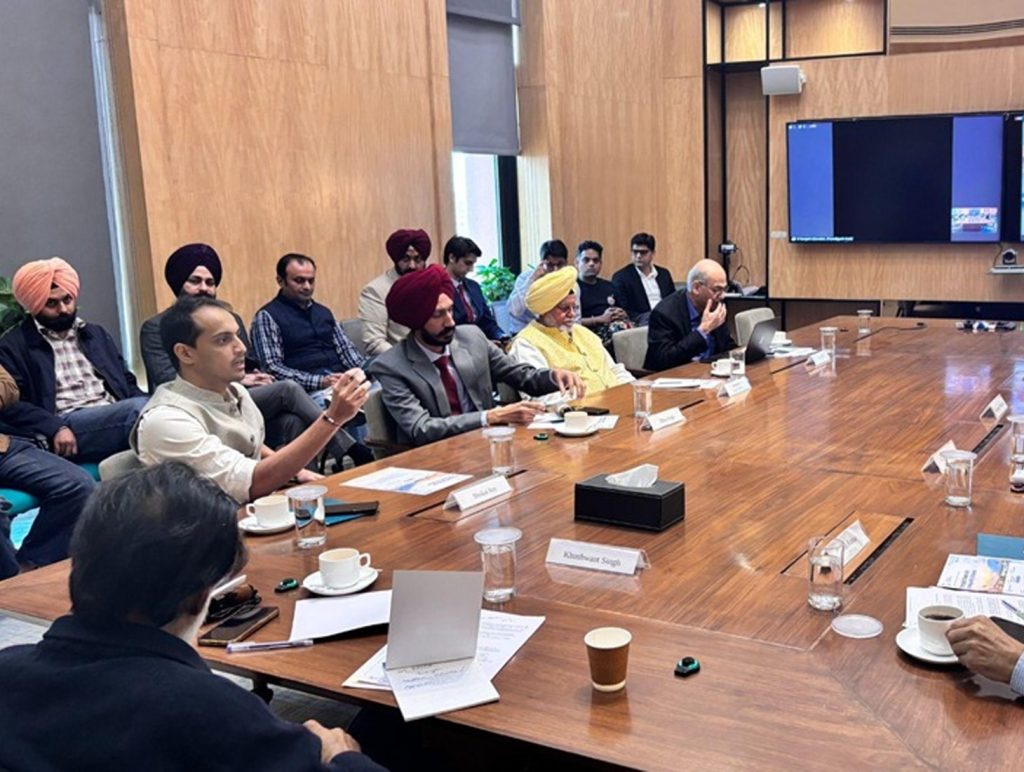
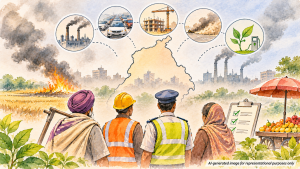
Punjab’s air pollution crisis extends beyond stubble burning, with industrial emissions, vehicular pollution, construction activity and road dust also contributing to poor air quality. The need for region-specific interventions was discussed at a policy roundtable in Chandigarh recently, where policymakers, industry representatives, researchers and environmental experts examined the unequal impact of pollution across communities.
Different regions, different challenges
Titled “Punjab Clean Air: Unequally Shared”, the roundtable was organised by the Global Shapers Chandigarh Hub, part of the World Economic Forum’s Global Shapers Community, under the Equal Air Collaborative and in partnership with Plaksha University.
Participants noted that pollution sources vary across agricultural belts, industrial centres, cities and smaller towns. While crop residue burning remains a seasonal concern, industrial practices, transport systems, energy consumption and urban development also contribute to the problem.
Unequal exposure across communities
Farmers, industrial workers, traffic police personnel and street vendors face different levels and durations of exposure depending on their occupations and surroundings.
Participants stressed that air quality assessments should go beyond city-level and state-level Air Quality Index (AQI) readings to account for occupational exposure, vulnerability and access to protection.
From solutions to implementation
The discussion highlighted the gap between available technologies and their implementation. Participants called for effective enforcement, institutional accountability, adequate funding and incentives to encourage cleaner alternatives.
Stronger environmental monitoring, cleaner industrial technologies, alternative fuels and better utilisation of agricultural residue were also identified as priorities. Greater collaboration among startups, research institutions, industries and government agencies was seen as essential to scaling up solutions beyond pilot projects.
Outcome statement in the works
Moderated by former Punjab State Information Commissioner Khushwant Singh, the roundtable featured former Chief Principal Secretary to the Punjab Chief Minister Suresh Kumar, IAS (Retd.); Punjab Development Commission member Shoikat Roy; Cheema Boilers Ltd chairman Dr Harjinder Singh Cheema; Startup Accelerator Chamber of Commerce CEO Vineet Khurana; Plaksha University’s Dr Vishal Garg; CCNaP India director Dilraj Singh; and Punjab Pollution Control Board Senior Good Governance Fellow Dr Gurshagan Kandhola.
The discussion identified five areas for coordinated action, namely government, regulatory institutions, industry and startups, academia and research, and communities and youth.
The Global Shapers Chandigarh Hub will release a Punjab Clean Air Outcome Statement in the coming weeks, outlining recommendations and areas for collaboration. The document is expected to guide further engagement with government departments, industries, research institutions and civil society.
Chamkaur Sahib is set to witness the 322nd Shaheedi Samagam dedicated to Shaheed Baba Jiwan…

As Punjab moves towards the 2027 Assembly elections, political activity is gathering pace. Parties are…
From Surinder Kaur and Kuldeep Manak to Chamkila and Yamla Jatt, Punjabi folk music has…
The expert committee constituted by the Akal Takht has reiterated its readiness to hold a…