








 Manjari Verma
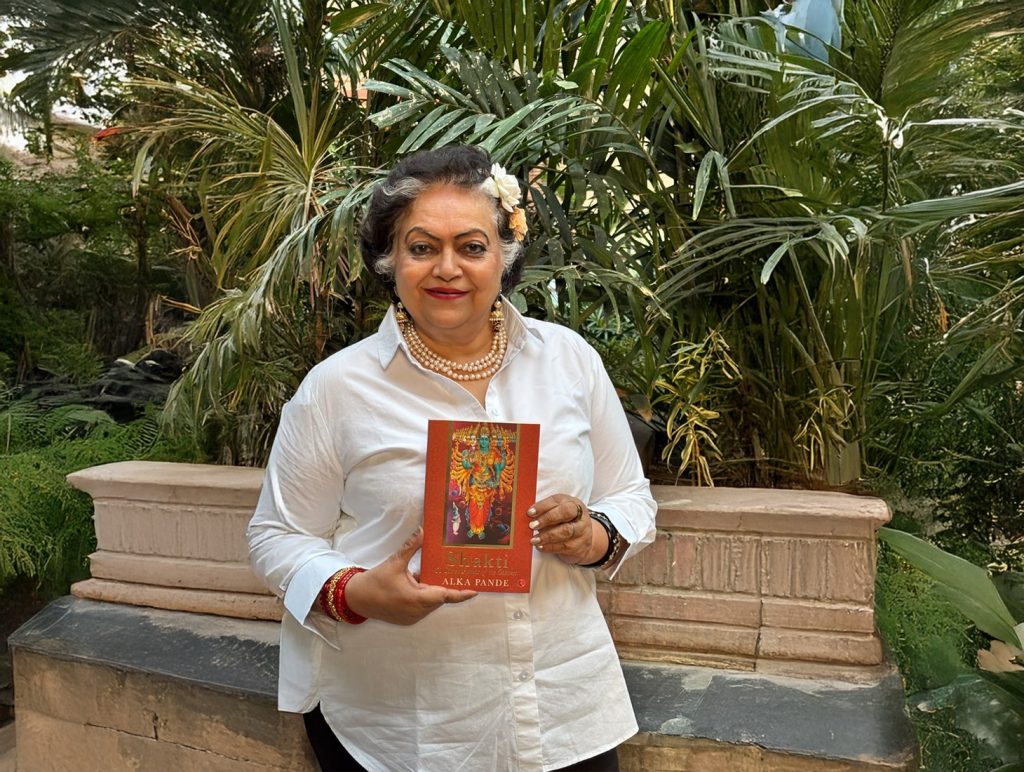
A journey through 51 sacred sites, spread across different geographical and cultural landscapes, offers a glimpse into how mythology, faith, and regional traditions have shaped the worship of the goddess over centuries. From Kamakhya in Assam to Tripurmalini in Jalandhar, the Shakti Peethas connect places separated by geography but brought together through a shared spiritual tradition.
In her book, Shakti: 51 Sacred Peethas of the Goddess, writer and historian Dr Alka Pande examines these sacred destinations through their associated legends, rituals, local beliefs and cultural histories. Rather than presenting them merely as pilgrimage locations, the book explores how each site carries a distinct narrative within the larger tradition of Shakti worship.
For Pande, the subject has roots in her own upbringing. Coming from a family where devi worship was an established household tradition, she describes the research as both a personal and intellectual experience.
“My family has been a Shakta family, where the puja of the Devi has been part of our household. So researching the Shakti Peethas was an extremely enlightening and enriching journey,” she says.
Having visited at least half a dozen such sites before beginning the book, Pande approached the subject with an existing familiarity with the tradition. However, her research brought an unexpected observation about the changing place of these sacred centres in contemporary society.
She noticed that belief in and the significance attached to the Shakti Peethas had grown considerably over the past decade.
“One of the unexpected discoveries was that, in the last decade, the power and the belief in the Shakti Peethas have grown much more than they were when I was a young girl,” she says.
Pande also points to a wider renaissance of Hinduism and Hindu iconography, particularly the renewed recognition of feminine creative energy, which she describes as the creative feminine.
The book traces the origins of the Peethas to the story of Daksha’s sacrifice, Sati’s death and Shiva’s grief. According to Hindu mythology, after Sati’s death, Shiva carried her lifeless body and began performing the Tandava. Lord Vishnu intervened with his Sudarshan Chakra, dividing the goddess’s body into several parts, which are believed to have fallen at different locations and have become sacred centres of worship.
While traditions differ on the number of these sacred locations, Pande has selected 51 Peethas for her work.
“The number is normally believed to be 108 parts in some accounts, but I have chosen 51 Peethas to show the different narrative stories, myths, legends and rituals surrounding each Shakti Peetha,” she explains.
The geographical spread of the sites forms an important part of the book. Its contents include Kamakhya in Assam, Vishalakshi in Varanasi, Tripura Sundari in Tripura and Kalika at Pavagadh in Gujarat. Northern India also features prominently, with Brajeshwari Devi and Jwalaji in Himachal Pradesh, Bhadrakali in Kurukshetra and Tripurmalini Devi in Jalandhar.
The selection also extends beyond India’s borders, covering sacred locations in Bangladesh, Nepal, Pakistan, Tibet and Sri Lanka.
Although the Peethas are connected through a common spiritual narrative, their individual identities are shaped by local customs, worship practices and folklore. The rituals associated with them have evolved within different regional settings, giving each destination its own cultural character.
For Pande, understanding these variations is essential to appreciating the wider significance of Shakti worship.
She also sees digital platforms as an important means of introducing younger generations to India’s spiritual heritage. Their immediate reach and ability to communicate across audiences, she believes, offer new opportunities to engage with traditional knowledge.
At a deeper level, the book examines the goddess not simply as a figure associated with individual temples but as an expression of primordial feminine energy. Its introductory note also emphasises that the 51 sites cannot represent the entirety of the goddess’s presence, as the Devi is believed to exist everywhere.
By bringing together mythology, sacred geography and regional narratives, Pande’s work invites readers to look beyond the boundaries of individual pilgrimage sites. It raises a larger question about how ancient traditions continue to find meaning in changing times and how their stories can be carried forward to future generations.
Some souls arrive in this world carrying no riches, yet leave behind treasures that time…
Some journeys end at a destination; others remain suspended in the memory of a conversation.…
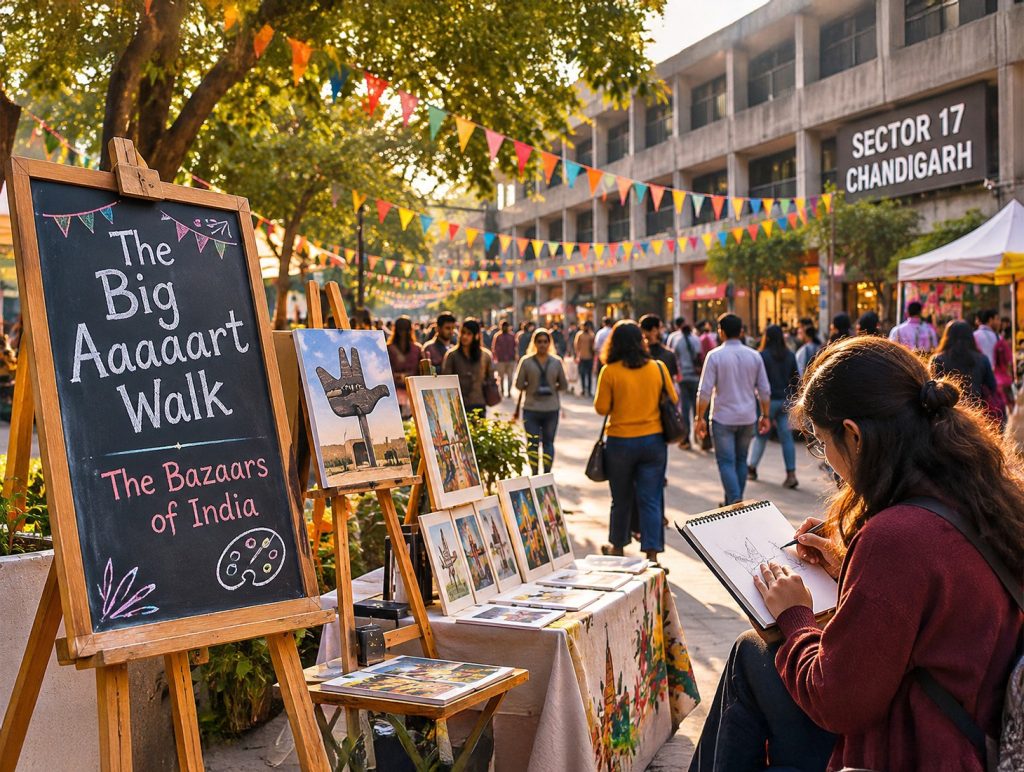
The Big Aaaaart Walk will be held at Chandigarh’s Sector 17 Market at 4 pm…
Where the Ganga flows, faith finds its way to eternity. There are places in India…