





 Dr Kiran Deep

The most revealing aspect of BJP president Nitin Nabin’s Jalandhar speech on Wednesday was not what he said, but what he chose to leave unsaid. In a nearly 31-minute address, he launched a sustained attack on the Aam Aadmi Party (AAP) government and the Congress, but made no criticism of the Shiromani Akali Dal (SAD). At a time when speculation over a BJP-SAD alliance has intensified, the silence was politically significant.
While attacking AAP and Congress in Jalandhar, BJP chief offered a glimpse of the party’s political priorities, with his speech leaving the Akalis untouched as alliance talks gather momentum.
There was a carefully calibrated political message in Nabin’s choice of words. While he questioned the Chief Minister Bhagwant Mann government’s handling of drugs, law and order and the state’s finances, and attacked the Congress over its internal divisions and Rahul Gandhi’s criticism of India abroad, the Akali Dal remained outside his line of fire.
With discussions between the two parties reportedly reaching an advanced stage, Nabin’s speech appeared to indicate that the BJP was keen to avoid reopening old political wounds while keeping the possibility of an alliance alive.
It was perhaps the clearest indication yet of the BJP’s changing political calculations in Punjab. The party appears to recognise that expanding its electoral footprint in a state where it has historically depended on an alliance partner may require a broader political understanding.
Nabin declared that the countdown for the AAP government had begun and asserted that the BJP would form the next government in Punjab. Yet, beyond the rhetoric of political change, his speech was notable for the space it left for a possible understanding with the Akalis.
His principal target was the AAP government which he accused of failing to tackle the drug menace despite making it a central political issue. He alleged that the anti-drug campaign was being used to advance the party’s political interests rather than address the crisis confronting Punjab.
He also questioned the state government’s ability to maintain law and order and claimed that its financial position had deteriorated to such an extent that the treasury was virtually empty. Nabin accused the AAP leadership of using Punjab’s resources for political purposes outside the state, describing the government as an “ATM for Kejriwal”.
The attack was not confined to governance. Nabin sought to connect the drug crisis with unemployment, migration and the growing frustration among young people, while invoking Punjab’s contribution to the country’s security and development.
“Punjab has made immense sacrifices for the country. Its contribution to the nation’s security and development cannot be forgotten. But today, the state is struggling with drugs, unemployment and a lack of opportunities for its youth,” he said.
His criticism of the Congress followed a different political line. He alleged that the party was weakened by internal differences and questioned Rahul Gandhi’s approach to national issues, particularly his criticism of India’s democratic institutions during visits abroad.
Contrasting Gandhi’s remarks with the leadership of Prime Minister Narendra Modi, Nabin said that while the Prime Minister was working to strengthen India’s position in the world and accelerate development, the Congress leader was allegedly damaging the country’s image.
The contrast was deliberate. Nabin wanted to position the BJP as a party of development and national confidence while portraying both AAP and Congress as political alternatives that had failed to meet people’s expectations.
“Whatever we promise, we deliver. Our resolve is to build a developed Punjab, create employment opportunities, empower women and ensure the welfare of every section of society,” he said.
But the political significance of the visit extended beyond the rally and its attacks on the opposition.
Jalandhar emerges as BJP’s political priority
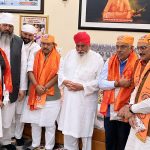
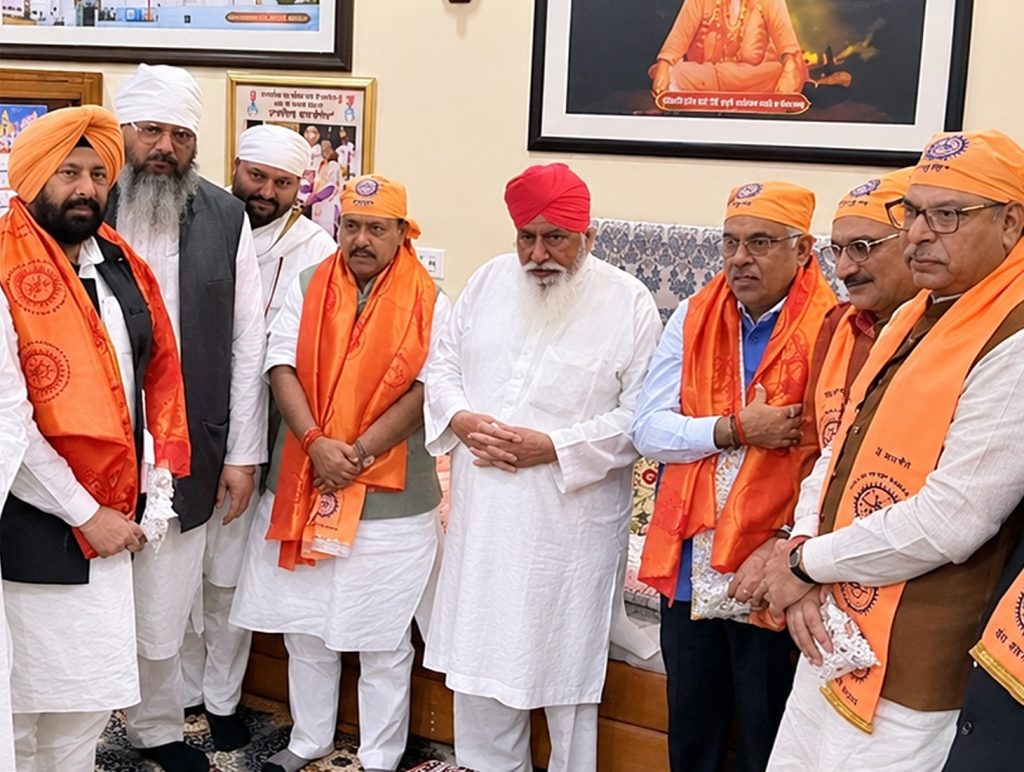
Nabin’s visit to Dera Sachkhand Ballan, where he honoured its head, Padma Shri Sant Niranjan Das, was another important part of the BJP’s outreach in the state. He was accompanied by Punjab BJP president Kewal Singh Dhillon, Rajya Sabha member Tarun Chugh and other senior leaders.
The choice of Jalandhar was hardly incidental. Dera Sachkhand Ballan is among the most influential spiritual centres for followers of Guru Ravidas, particularly the Ravidassia community. Its influence extends across the Doaba region and beyond giving it considerable social and political significance.
The BJP’s growing attention to this region has also been evident in Prime Minister Narendra Modi’s two visits to Jalandhar this year.
On February 1, Modi attended celebrations marking Guru Ravidas Jayanti after an invitation from the head of Dera Sachkhand Ballan. The visit underlined the importance the BJP attaches to the community and its wider political outreach in Punjab.
The BJP’s decision to launch the Samrasta Sankalp Yatra from the region further reinforces this strategy. The emphasis on social harmony and outreach to Dalits, who constitute 32 percent of Punjab’s population, is central to the party’s efforts to build a wider electoral base.
For Nabin, therefore, the visit was not simply an occasion to attack the ruling party. It was also an opportunity to signal that the BJP intends to approach Punjab’s politics with a wider social and electoral strategy.
The challenge, however, is considerable. The BJP has ambitions of becoming a major political force in Punjab.
This is where the possible alliance assumes importance. The BJP and SAD have governed Punjab together in the past, and their political partnership was a defining feature of state politics for decades. Their separation in 2020 over the farm laws changed the political equations, but it did not erase the electoral and organisational networks built during their years together.
Nabin’s speech offered a glimpse of how the BJP may be preparing for a different political phase. He was aggressive towards its principal rivals but restrained towards a party with which it may again find common political ground.
Whether the alliance is formally announced soon remains to be seen. But in Punjab politics, silence can sometimes carry as much weight as a public declaration.
And on Wednesday, the BJP president’s silence on the SAD may have been the most politically significant part of his Jalandhar address.
Khadoor Sahib MP Amritpal Singh, lodged in Assam’s Dibrugarh jail, has been granted one-day custodial…
Haryana Chief Minister Nayab Singh Saini on Friday targeted the Aam Aadmi Party (AAP) government…
The Aam Aadmi Party (AAP) has fielded Jalandhar Mayor Vaneet Dhir from the Jalandhar North…
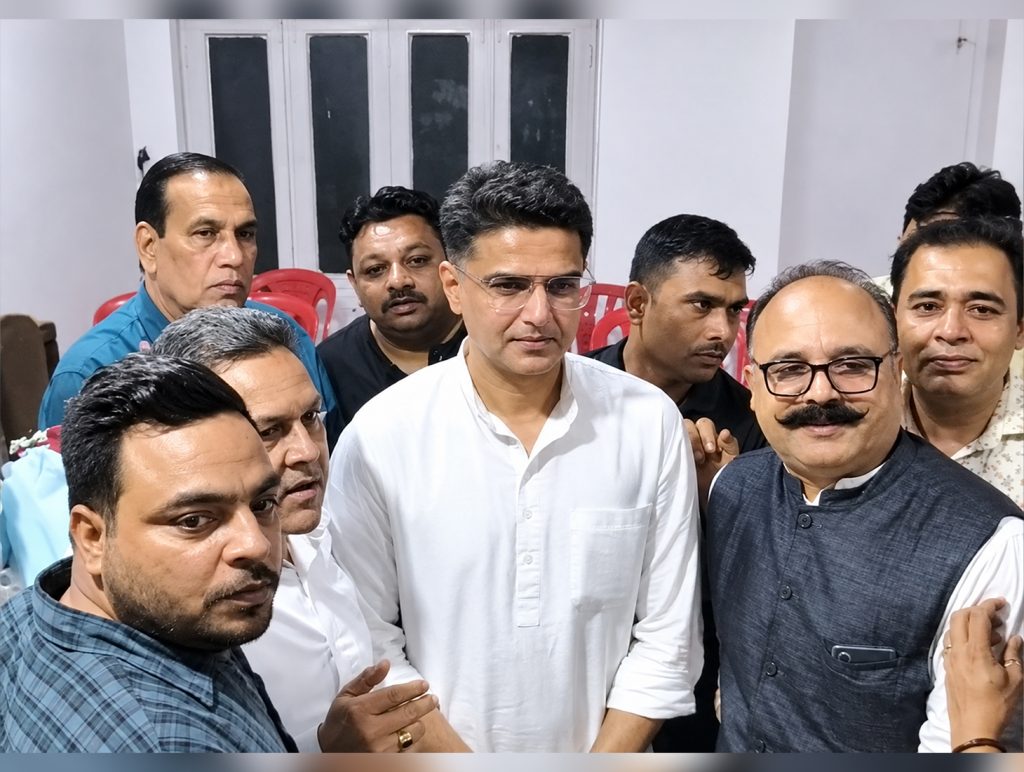
Senior Congress leader Sachin Pilot met party office-bearers, former Assembly candidates and grassroots workers at…