







 Disney Brar
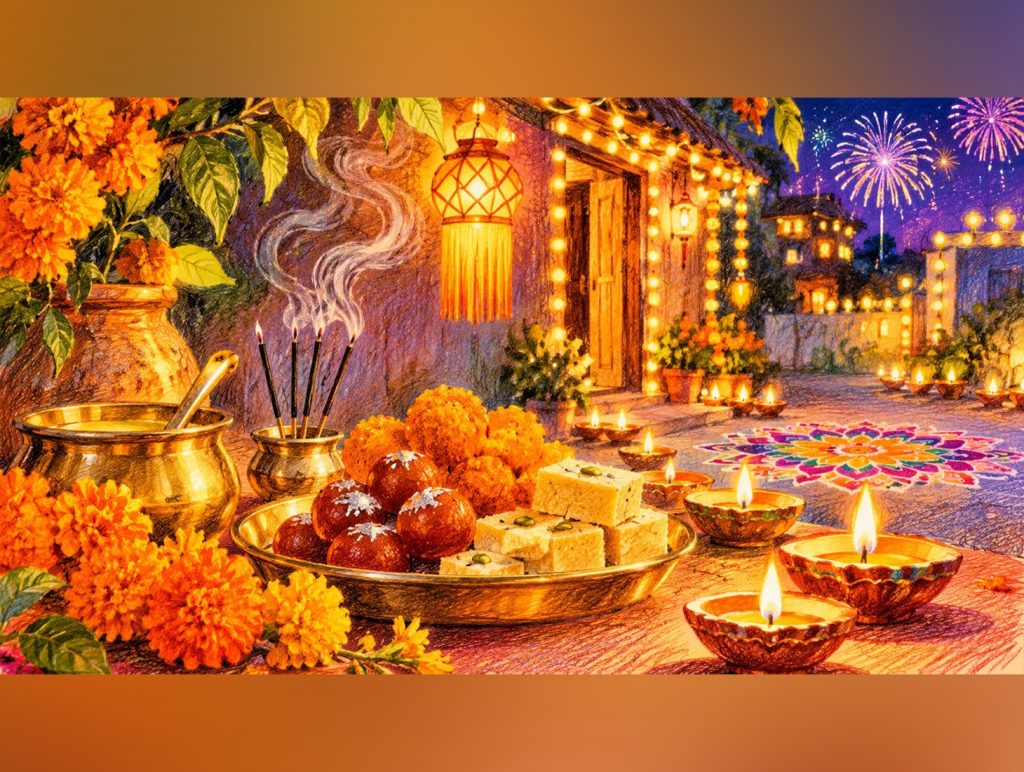

There is something about Diwali that cannot quite be captured in a photograph or wrapped in a greeting. It is a smell — an unmistakable, intoxicating mix of marigolds, homemade sweets drenched in warm ghee, the waft of incense, the earthy smell of earthen lamps soaking in water before being lit for the evening, and the faint scent of firecrackers lingering in the air.
Diwali has a fragrance of its own, one that announces its arrival long before the first diya is lit.
It begins in the kitchen. The comforting aroma of besan (gram flour) roasting slowly in a generous dollop of ghee, the sweetness of freshly fried jalebis, and the cardamom-laced fragrance of kheer simmering on the stove. Somewhere, a box of kaju katli is being opened, while another batch of pakoras waits to be fried. These are not merely smells; they are childhood memories returning home, sometimes even in the cold, impersonal ambience of a big city.
Before the Lights, Comes the Fragrance
Then comes the fragrance of a freshly cleaned house. Of floors mopped with devotion, cupboards opened after months, new curtains being hung and old brass utensils polished until they shine like gold. There is the earthy smell of fresh rangoli colours, the perfume of flowers being strung into garlands, and the unmistakable scent of new clothes waiting to be worn. And not to forget the crisp rustle of a mother’s classic Kanjeevaram saree, carefully laid out for the annual Diwali pooja.
As dusk settles, the air changes. A matchstick strikes, a cotton wick catches fire, and the first diya comes alive, casting a gentle glow across the interiors of the house. The faint fragrance of mustard oil mingles with incense and the gentle smokiness of burning camphor in the family temple. For a moment, even time seems to slow down.
Outside, the neighbourhood begins to stir. Children get ready to burst crackers, distant celebrations fill the twilight sky, and the familiar smell of gunpowder drifts through the lanes. Some may find it overwhelming, but for many, it remains an evocative part of Diwali nostalgia — a scent inseparable from evenings spent in the warmth of family, friends and neighbours.
The Invisible Poetry of Diwali
But perhaps the most beautiful fragrance of Diwali is one that has no name. It is the smell of togetherness. Of relatives arriving unannounced, doors opening to welcome guests, sweets being exchanged, laughter spilling out of homes and people finding reasons to reconnect.
It is the fragrance of generosity, warmth and belonging.
In a world increasingly obsessed with picture-perfect celebrations, Diwali reminds us that some of life’s most beautiful experiences are invisible. They cannot be filtered, edited or uploaded. They simply linger — in the corners of our homes, in the folds of our memories and somewhere deep within our hearts.
Long after the diyas have burnt out, the sweets have disappeared and the last guest has left, the smell of Diwali remains, safe and sound in the chambers of our hearts and souls.
Perhaps that is the magic of the festival. Diwali doesn’t just light up our homes; it leaves a fragrance in our memories.
By Manya Bhasin Festive celebrations are getting a creative makeover as Gen Z finds new…
There is something timeless about the humble mitti ka diya. Shaped from a lump of…
“Never doubt yourself. You are stronger than you think and more capable than you know.…
Every Diwali, as markets burst into a riot of shimmering lights and pops of…