







 Shimona Sharma
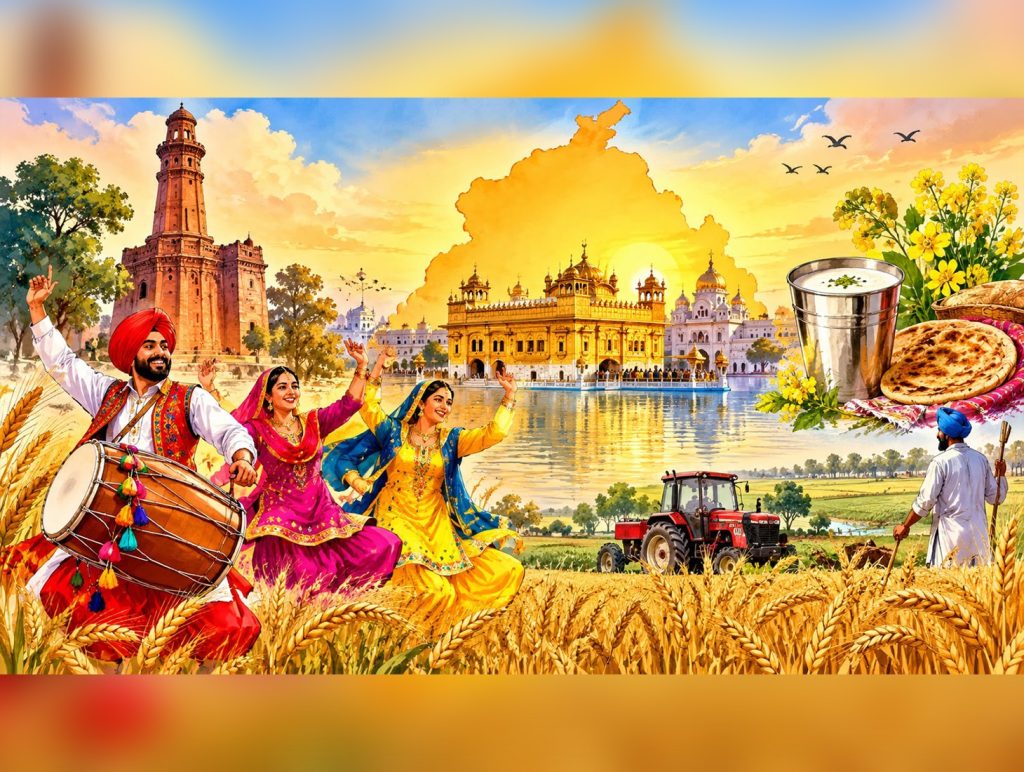
Punjab Day is observed annually on November 1 to commemorate the formation of the modern Punjabi-speaking state in 1966 under the Punjab Reorganisation Act. The reorganisation, which followed the Punjabi Suba movement, led to the creation of Haryana as a separate Hindi-speaking state, the transfer of certain hill districts to Himachal Pradesh and Chandigarh becoming a Union Territory and the shared capital of Punjab and Haryana. The occasion celebrates Punjab’s rich history, language, cultural identity and contributions to the nation.
Speaking to The North News on the occasion, senor journalist and filmmaker Daljit Ami emphasised the importance of preserving Punjabi language and cultural heritage, promoting advanced research in the mother tongue and understanding Punjab’s historical significance beyond its present geographical boundaries.
Reflecting on Punjab Day, he said the occasion marks a significant chapter in the state’s history. He explained that the reorganisation of Punjab on November 1, 1966, reshaped its territorial boundaries, with Haryana carved out as a separate state and certain parts transferred to Himachal Pradesh.
Discussing Punjab’s contribution to India’s freedom struggle and nation-building, Daljit stressed that its historical role should not be assessed solely within its present boundaries.
He pointed out that the larger historical region of Punjab included territories now forming part of Pakistan, Haryana and Himachal Pradesh. Understanding Punjab’s contribution, therefore, requires a broader perspective that considers its geographical and historical evolution.
On preserving Punjabi language, culture and folk traditions for future generations, he said linguistic preservation remains a concern across several regions, including Punjab.
Daljit emphasised the importance of connecting Punjabi with cutting-edge research across disciplines. He raised the need to make contemporary research accessible in Punjabi while encouraging the creation of new knowledge within the language itself.
He also highlighted the challenges of passing the mother tongue to younger generations, observing that parents often communicate in languages their children are more comfortable understanding. Preserving Punjabi, he said, cannot depend solely on society or state intervention.
While maintaining that culture and language can survive independently within their cultural domains, he stressed that government patronage must extend beyond promoting linguistic identity.
He said state support should encourage advanced research and knowledge creation in Punjabi while facilitating the exchange of ideas between Punjabi and other languages. Translating research into Punjabi and making Punjabi scholarship accessible to speakers of other languages would help ensure its continued development.
Punjab Day also holds historical importance as the 1966 reorganisation came nearly two decades after the 1947 Partition, which divided Punjab between India and Pakistan, leaving Lahore in Pakistan.
Apart from its historical significance, the occasion celebrates Punjab’s cultural identity through folk music, Bhangra and Giddha performances, traditional attire and exhibitions depicting rural life. Traditional objects such as the charkha, chhappi and madhani reflect the region’s village heritage.
The occasion also recognises Punjab’s contributions to agriculture, defence, arts, sports and spiritual history.
Concluding his interaction with The North News, Mr Daljit urged people to look at history dispassionately and make an effort to understand its complexities.
By Rajesh Kumar Kohli The Centre has provided X-category security to Sukhpal Kaur, wife of…
Bharatiya Janata Party (BJP) Punjab president Kewal Singh Dhillon on Saturday criticised the Aam Aadmi…

In a significant development, the Aam Aadmi Party (AAP) on Saturday announced its first list…

By Bharat Sharma The AAP leader Angad Deep Singh Sohal criticised Congress MP Sukhjinder Singh…