


 Rahul Chawla
Kangra, April 30
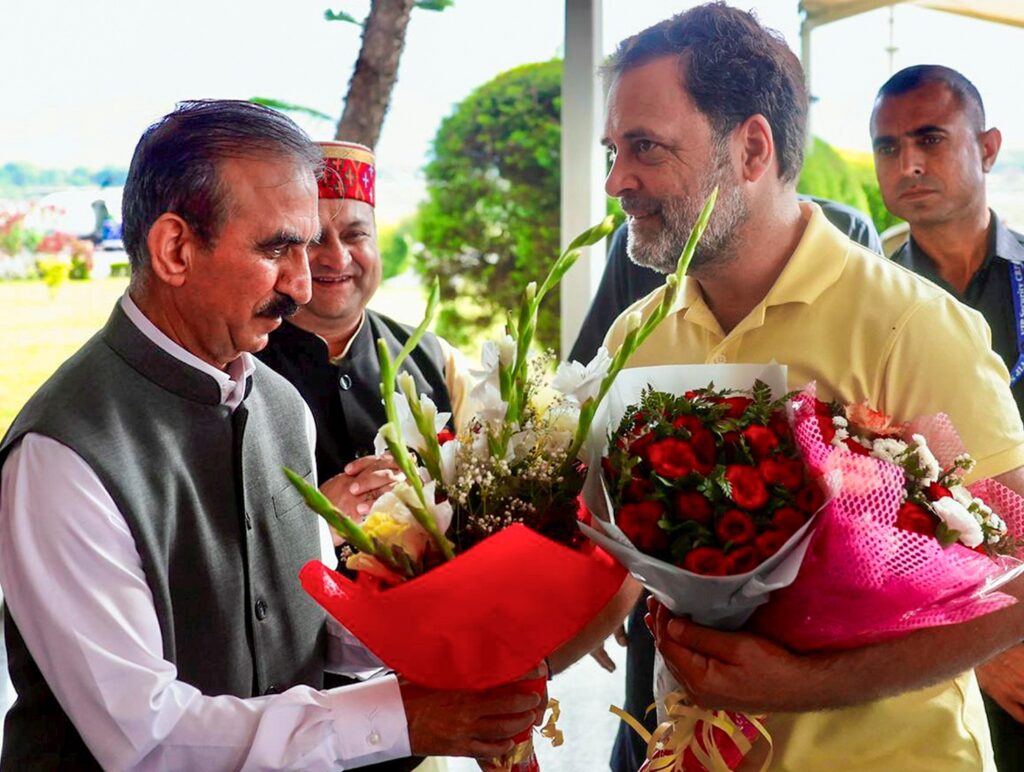
Congress leader Rahul Gandhi departed for Delhi on a 3 pm flight after concluding a training camp for district presidents in Kangra. Youth Congress workers gathered in large numbers at the airport and raised slogans to welcome him. Though he did not meet them individually, Gandhi briefly stopped his vehicle, waved at supporters, and gestured to them to remain silent before proceeding.
Earlier, Rahul Gandhi attended a training camp for district presidents from three states, where he outlined the ideological differences between the Congress and the BJP, Himachal Pradesh Chief Minister Sukhvinder Singh Sukhu said on Thursday.
Speaking to reporters at Kangra airport, Sukhu said Gandhi emphasized that one ideology works for the unity and integrity of the country, even making the ultimate sacrifice, while another seeks to divide society.
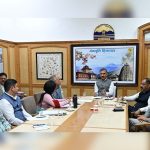
The Chief Minister said Gandhi also briefed the district presidents on future challenges, international policy directions, and the need for systemic changes within the party. Around 62 district presidents participated in the interaction, during which Gandhi issued guidelines to strengthen the organization.
Highlighting Gandhi’s engagement, Sukhu said he remained at the venue from 8 am to 2 pm without any air-conditioned facilities. He added that Gandhi conveyed that a district president could rise to become a Rajya Sabha member or an MLA, but must work with dedication and commitment to the party’s functioning. He stressed that public service should be driven by people’s aspirations rather than political motives.
Targeting the opposition, Sukhu alleged that previous governments had weakened the state’s finances. He said the current government had received Rs 17,000 crore from the Center in three-and-a-half years, compared to Rs 60,000 crore received during the BJP’s five-year tenure.
Sukhu said policy changes were being implemented to transform Himachal Pradesh into one of the most prosperous states by 2032. Referring to municipal elections, he added that voters decide based on local issues and the performance of councilors.
Manpreet Badal’s elevation assumes significance ahead of the next Punjab Assembly election as BJP expands…
New Delhi, August 15 Prime Minister Narendra Modi today announced free online coaching for young…
‘Yeah Jo Des Hai Tera, Swades Hai Tera’ As I drive back home…
New Delhi, August 14 The Narcotics Control Bureau (NCB) has brought back wanted fugitive Virender…