








 The North News
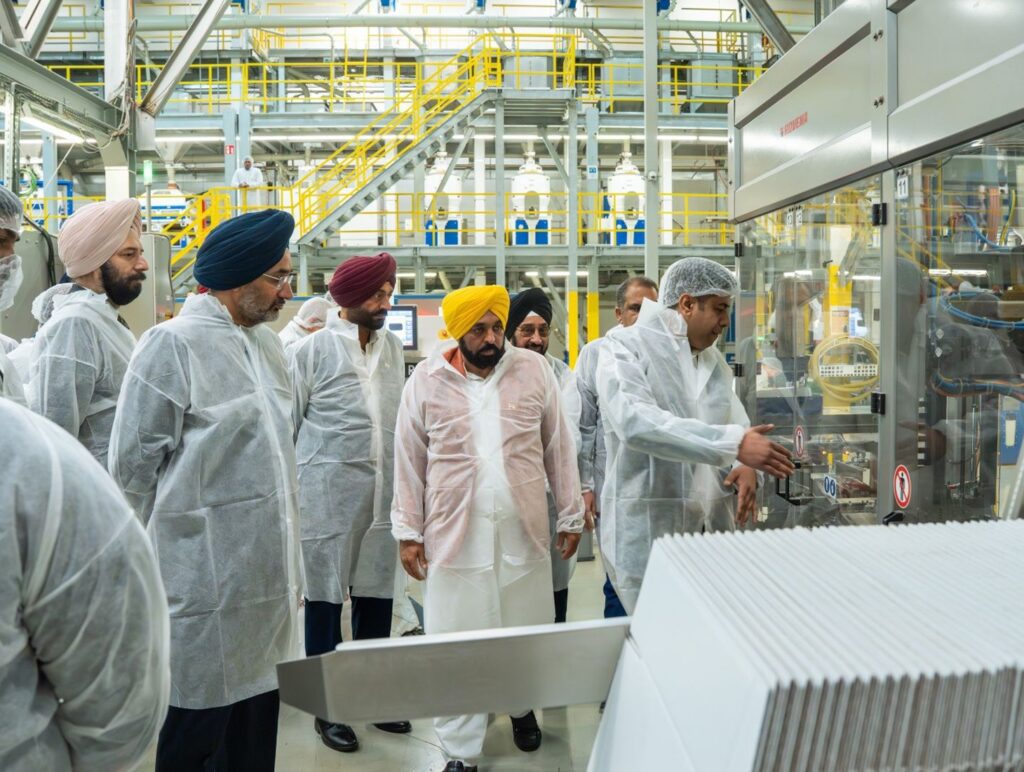
Chandigarh, April 22
The Punjab Government on Wednesday announced plans to establish a Centre of Excellence for basmati rice, following discussions during Chief Minister Bhagwant Singh Mann’s visit to the Netherlands. The initiative is aimed at encouraging crop diversification and reducing the state’s long-standing dependence on the wheat-paddy cycle, which has placed pressure on natural resources.
During his visit, Mann said Punjab’s farmers had played a key role in ensuring India’s food security, but added that this had come at a cost. He said the overuse of land and water resources had made it necessary to shift towards more sustainable farming practices.
At a meeting with LT Foods in Rotterdam, the company agreed to support the establishment of the centre in Punjab. Officials said the project would focus on improving basmati cultivation, promoting low-pesticide farming and creating assured procurement systems for farmers.
The chief minister also stressed the need to align agricultural practices with international standards to expand Punjab’s basmati exports. He highlighted the importance of reducing pesticide use and adopting sustainable methods to strengthen the state’s presence in global markets.
Talks were also held with officials from the Dutch agriculture ministry on cooperation in water-efficient farming, precision agriculture and technology-led solutions such as artificial intelligence and drone-based monitoring.
Mann called for closer collaboration between Punjab Agricultural University and leading Dutch institutions, including Wageningen University & Research, to boost research and innovation in agriculture.
During the visit, he also toured the Aalsmeer Flower Auction, one of the world’s largest flower markets, where he observed advanced logistics and auction systems. He said similar models could help strengthen Punjab’s agricultural value chains and improve farmer incomes. The chief minister also met representatives of VNO-NCW, seeking stronger partnerships in sectors including agri-tech, food processing and dairy.
Officials said the move reflects Punjab’s broader push towards building a more sustainable, technology-driven agricultural economy while improving profitability for farmers facing rising costs and shrinking margins.
Devastating floods along the Nepal-Tibet border, reportedly killed 270 people so far, have once again…

Jabalpur, June 26 The Madhya Pradesh High Court on Thursday dismissed a defamation case against…
New Delhi, June 25 Prime Minister Narendra Modi on Thursday described the Emergency imposed in…

The Centre government has said that a passport has never been considered conclusive proof of…