








 The North News
New Delhi, April 18
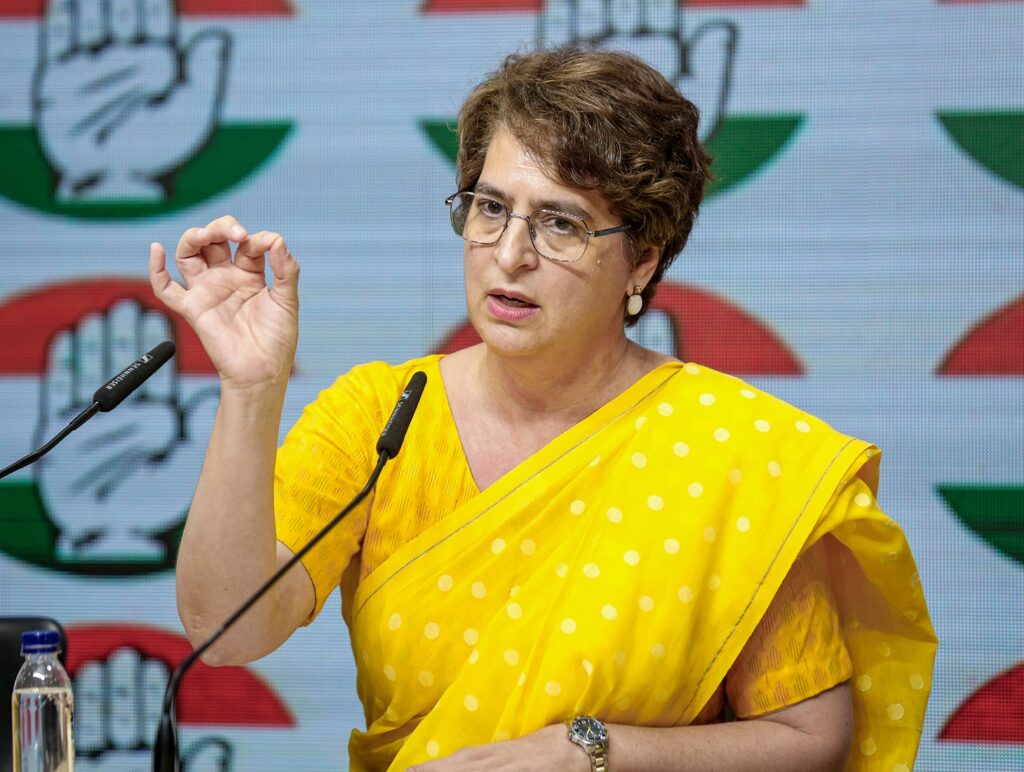
Congress leader Priyanka Gandhi Vadra on Saturday accused the Centre of attempting to alter the federal structure of the country under the pretext of women’s reservation, and said the defeat of the Constitution amendment bill in the Lok Sabha marked a significant victory for opposition unity.
Addressing a press conference, the Congress general secretary said the opposition is not against women’s reservation and would support the Women’s Reservation Act, 2023 if it is implemented on the current strength of the Lok Sabha. She alleged that the government introduced the bill with the intention of securing long-term political advantage. “What happened yesterday was a very significant victory for democracy. The government’s conspiracy to alter the federal structure and weaken democracy was defeated and stopped,” she said.
Describing the outcome as a victory for the Constitution, the country and opposition unity, she said the result reflected the collective strength of opposition parties. She also termed the development a setback for the government, noting that it was the first time such a bill had been defeated in Parliament. Referring to remarks made by Amit Shah in the Lok Sabha, she said they indicated the government’s intent to remain in power for an extended period. She alleged that linking women’s reservation with delimitation was part of a broader political strategy aimed at influencing future electoral outcomes.
Priyanka Gandhi further claimed that the government sought to use the issue to its advantage by projecting the opposition as anti-women if the bill failed. She said the opposition could not support the move as it involved delimitation, which raised wider concerns about its implications.
“The opposition could not have supported the move. It showed that the opposition can defeat the government when united,” she said, adding that the public is aware of the situation and can see through the narrative. She also highlighted that issues affecting women across different sections of society persist and that their concerns remain unresolved.
The Constitution amendment bill sought to provide 33 per cent reservation for women in legislatures by 2029 and proposed increasing the number of Lok Sabha seats to 816 from the current 543 after a delimitation exercise based on the 2011 Census. The bill was defeated in the Lok Sabha after securing 298 votes in favour and 230 against, falling short of the required two-thirds majority of 352 out of 528 members present and voting. The development is expected to intensify political debate over women’s reservation and electoral reforms as parties position themselves ahead of future elections.

New Delhi, September 14 Improving political, diplomatic and military engagement between India and China…
Chandigarh, September 14 Prime Minister Narendra Modi on Monday congratulated the Indian women’s cricket team…

New Delhi, September 12 Prime Minister Narendra Modi and Chinese President Xi Jinping on Saturday…

New Delhi, September 11 Prime Minister Narendra Modi on Friday held wide-ranging talks with Russian…