


 Dr Kiran Deep
Yog Raj Sharma
Shimla, March 24
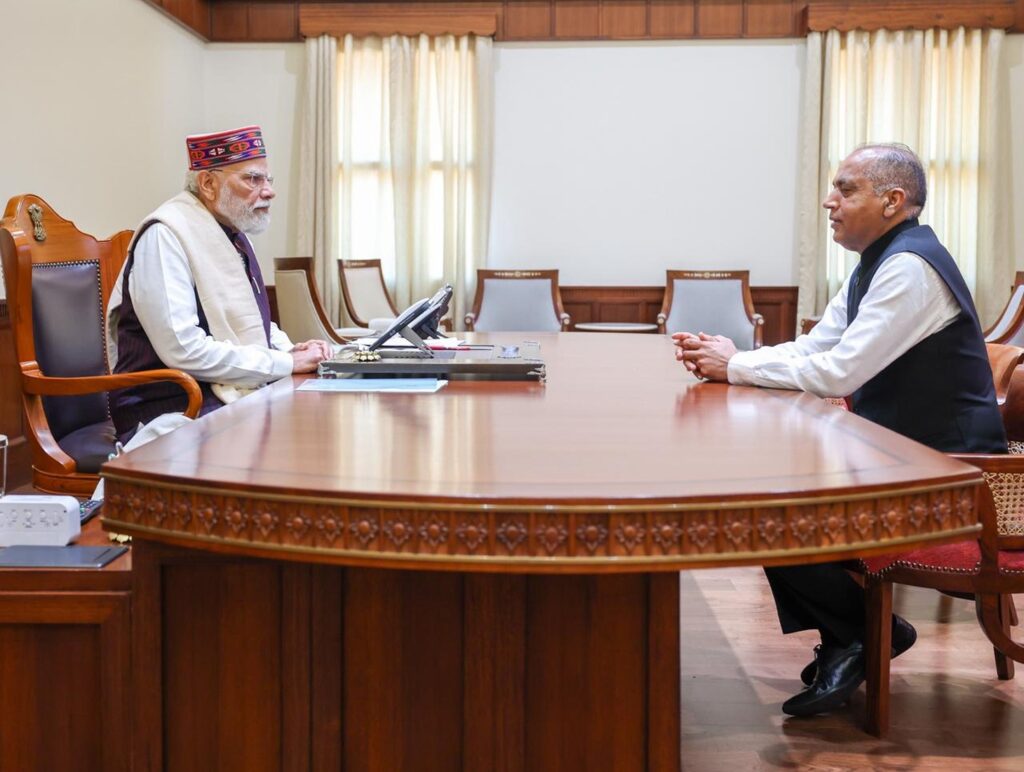
Former Himachal Pradesh Chief Minister and Leader of the Opposition Jai Ram Thakur on Tuesday met Prime Minister Narendra Modi in New Delhi, congratulating him on what he described as an “historic and inspiring” record in public service while also raising several issues concerning the state’s interests.
While talking to media, Thakur launched a sharp attack on the Congress government in Himachal Pradesh, alleging that the state was facing a serious financial crisis and accusing Chief Minister Sukhvinder Singh Sukhu of taking “ill-considered” decisions that could worsen the situation.
Thakur said the state’s current economic condition was deeply worrying and pointed to recent government decisions as signs of mounting fiscal stress. He claimed that the chief minister had decided to defer 50 percent of his salary for the next six months, while similar cuts or deferments had been proposed for top officials and public representatives, including the chief secretary, director general of police, IAS officers, ministers and MLAs.
He described the move as an indication of a “financial emergency”, saying that if the government was unable to pay full salaries to senior officials and elected representatives, it reflected the fragile state of Himachal Pradesh’s economy.
The BJP leader also criticised the state government’s decision to impose a cess on petrol and diesel in the name of welfare for widows and orphaned children. He said funding the government through such a levy was “unfortunate” and reflected administrative failure.
Thakur further objected to the recent increase in entry tax on vehicles entering Himachal Pradesh, calling the move impractical. He said the Punjab government had also opposed the decision and warned that if Punjab were to impose a similar tax on vehicles coming from Himachal, it would place an additional burden on residents and could hurt tourism, which he described as the backbone of the state’s economy.
Calling the measures “strange and impractical”, Thakur said Himachal needed a concrete strategy to emerge from the crisis. However, he added that the opposition was ready to support constructive discussions and any corrective steps taken in the right direction, provided the government abandoned what he termed anti-people policies and focused on meaningful reforms.
Veteran Kangra leader remembered for outspoken politics and public service Kangra, September 29 Former Himachal…
Two universities in Punjab. Two student protests. Two outbreaks of violence within days of each…
Light snowfall in higher reaches as temperatures dip below normal; clear weather expected from September…
Army personnel engage students and youth on fitness, discipline and career opportunities in armed forces…