








 The North News
Yog Raj Sharma
The North News
Shimla, January 6
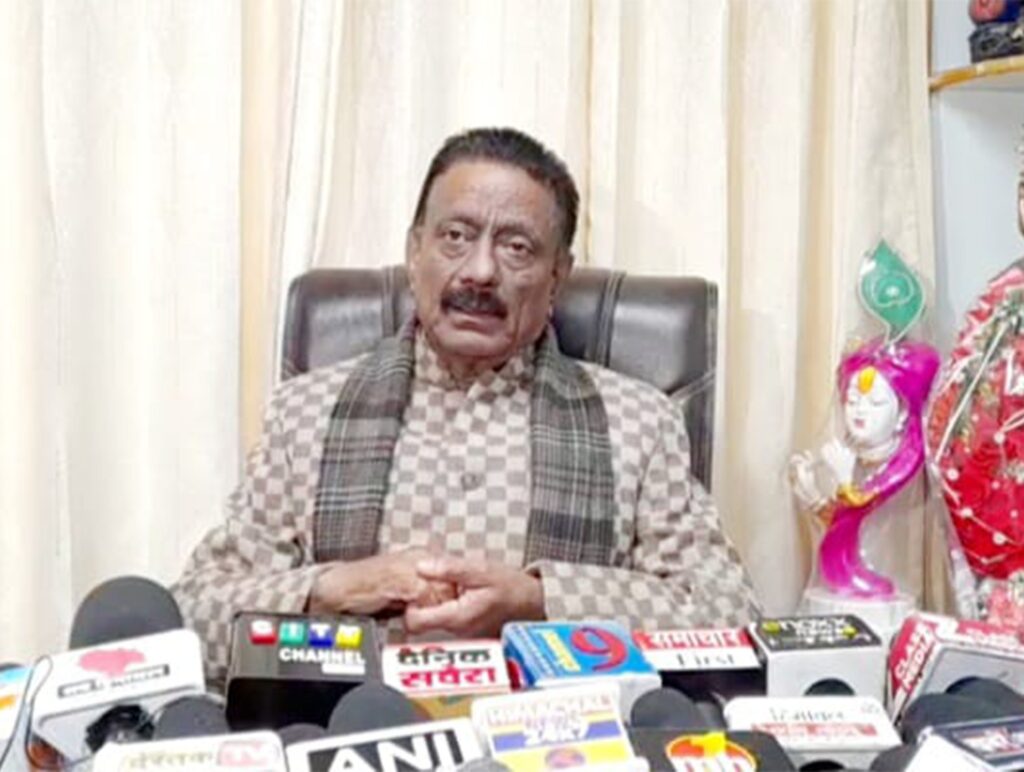
The Congress party has criticised what it describes as a “hostile” approach by the United States towards India, questioning the central government’s silence and accusing it of pursuing a failed foreign policy. Congress national spokesperson and Himachal Pradesh MLA Kuldeep Singh Rathore said global instability had increased due to what he called America’s tariff-driven policies and recent international developments, including events linked to Venezuela. He argued that the US was adopting a strategy of pressure diplomacy, which was having wider geopolitical consequences.
Rathore said comments by US President Donald Trump about India and the Prime Minister reflected inconsistency, adding that New Delhi’s lack of a clear response was worrying. He said describing Modi as a “good man” on the one hand, while simultaneously pressing India to cut Russian oil imports on the other, highlighted what he termed a double standard.
The Congress leader also referred to past conflicts, including the 1971 war, saying India had previously resisted international pressure. He alleged that Washington had historically shown an inclination towards Pakistan during periods of tension with India.
Raising economic concerns, Rathore warned that pressure to reduce import duties under free trade agreements could hurt farmers and orchardists in hill states such as Himachal Pradesh and Uttarakhand. He cited the reduction of apple import duties from New Zealand as an example and said similar demands from the US could deepen the crisis for local growers.
He further alleged that India’s relations with smaller neighbouring countries had weakened under the current government, pointing to concerns over the treatment of minorities in Bangladesh. The Congress spokesperson echoed opposition leader Rahul Gandhi, who has claimed that the Prime Minister was reluctant to confront US pressure.
Rathore urged the central government not to bow to international pressure and said any foreign policy decision must prioritise the interests of farmers and horticulturists in hill states.

Did information allegedly held by Sushant Singh Rajput’s former manager about drug trafficking, child abuse…
Bindal seeks transparent probe into mining, dredging and financial irregularity allegations against the Congress Shimla,…

The three-day B2B exhibition will feature tourism, hospitality, real estate, mobility and sustainable solutions. Manali,…
Mahila Samiti marches to Secretariat against relocation of gynaecology services; SFI, CITU extend support Shimla,…