









Love resists calibration. It does not submit to surveys, nor does it bend to the tidy logic of those who insist it is excessive, impractical or — worse — overrated. There are no parameters for falling in love, no universally accepted scale that determines when devotion becomes folly or longing becomes obsession. Love arrives uninvited, lingers unpredictably and leaves its mark long after it has gone.
That thought first took root for me years ago while watching Sorry Bhai!. In one scene, Chitrangada Singh, playing a teacher, responds to a student who claims that love is overrated — invoking the classic Casablanca as evidence. Her reply lingers: “Love can never be overrated. Either you have never been in love or you are too much in love and it is driving you nuts.”
The line felt playful at first, almost flippant. But it carried the weight of truth. I had been in love and out of it, and I recognized both extremes — the bliss and the disorientation.
An accidental rewatching of Sorry Bhai! stirred an old curiosity. I wanted to see Casablanca in its entirety, untouched by edits or poor reproductions. The search engines failed me. Finally, I paid 750 rupees for an original VCD — an indulgence, perhaps, but a necessary one. Some experiences resist streaming convenience. When Humphrey Bogart’s Rick lets Ingrid Bergman’s Ilsa board the plane, surrendering personal desire to a larger moral cause, it becomes clear: love is not excess. It is sacrifice, restraint and memory braided together.
Indian cinema has its own monuments to that scale of emotion. Mughal-e-Azam stands as a grand testament to love that defies empire and patriarchy. Its tragic beauty belongs in the same league as Casablanca — stories where love is neither sentimental nor fleeting, but epic.
Few figures embodied this epic dimension more fully than Dilip Kumar. His autobiography, The Substance and the Shadow, reads not simply as a memoir but as an excavation of myth. For decades, Dilip Kumar was described as an institution — a performer whose gravitas reshaped the grammar of screen acting in India. Yet the book seeks to restore the man behind the monument.
The opening page offers a couplet steeped in yearning:
Sukoon-e-dil ke liye kuchh to ehtemaam karoon
Zara nazar jo miley phir unhein salaam karoon
Mujhe to hosh nahin aap mashwara dijiyey
Kahan se chedoon fasana kahan tamaam karoon…
Where does one begin the story of love, and where does one end it? The lines suggest that love is not an episode but a continuum.
The book dispels persistent myths, particularly about his relationship with Madhubala. It addresses speculation with restraint, reflecting a man conscious of how narratives are shaped — and distorted — by the press. He writes that their parting was less melodrama than circumstance, less scandal than incompatibility. In doing so, he challenges the romantic myth-making that often engulfs public figures.
Yet the most enduring love story in his life was with Saira Banu. She had admired him since she was 12. He was 44 when he proposed marriage to her during a quiet walk by the sea. “I would like to marry you,” he told her plainly. She was 22 when they wed on October 11, 1966. Their union, scrutinized at first for its age gap, endured for decades — a testament to commitment over calculation. True love, their story suggests, does not consult arithmetic.
Before stardom, however, there was struggle. Born Yusuf Khan in Peshawar to a family engaged in the fruit trade, Dilip Kumar experienced financial hardship during the second world war. To ease the burden, he moved to Pune, working as an assistant manager at the Army Club. He sold sandwiches outside the club to supplement his income. The modest enterprise earned him 5,000 rupees — a significant sum at the time — and, perhaps more importantly, confidence in his ability to adapt.
His entry into films was accidental. Waiting one morning at Churchgate station to meet a psychologist, Dr Masani, who had once lectured on vocational choices at Wilson College, he could not have foreseen that the day would alter his destiny. Dr Masani introduced him to Devika Rani at Bombay Talkies. She offered him 1,250 rupees a month and a new name. Thus Yusuf Khan became Dilip Kumar.
His debut film, Jwar Bhata, was modest, but the trajectory that followed was extraordinary. He would go on to define roles in Devdas, Naya Daur, Ram Aur Shyam, Shakti and many others. His performances were marked by restraint, introspection and emotional precision.
Devika Rani’s lessons proved foundational. A director might accept a shot, she told him, but the actor must decide whether he has truly given his best. The responsibility for excellence rests inward. It was advice that shaped his craft and perhaps his life. Film, he later observed, depends on coordination — between actor and director, director and cameraman, editor and artiste. Communication is the invisible architecture of cinema.
He also wrote about instinct. The mind, governed by logic, often rebels against the artificiality of performance. An actor must strengthen his instincts, he argued, because the boundary between real and unreal cannot always be resolved through reason alone. The mind may protest, calling it nonsense. The instinct persuades it otherwise.
The break with Madhubala, he noted, was complicated by familial pressures and public speculation. He expressed regret for her professional compromises and lamented the inaccuracies propagated by journalists. Even then, he refrained from bitterness. His tone remained measured — as if he understood that love, once concluded, should not be weaponized in retrospect.
What emerges from The Substance and the Shadow is not simply a chronicle of films but a philosophy of endurance. When circumstances grew difficult, he adjusted course rather than surrendering. His message to younger generations is clear: never give up. Reinvention is preferable to retreat.
And so the argument circles back. Love cannot be overrated because it shapes our choices, our art and our resilience. Whether in Casablanca’s foggy farewell, in the imperial defiance of Mughal-e-Azam, in the unsettling intimacy of Animal or in the steadfast companionship of Dilip Kumar and Saira Banu, love remains the central narrative. It may elevate or undo us. It may drive us a little mad. But it cannot be dismissed.
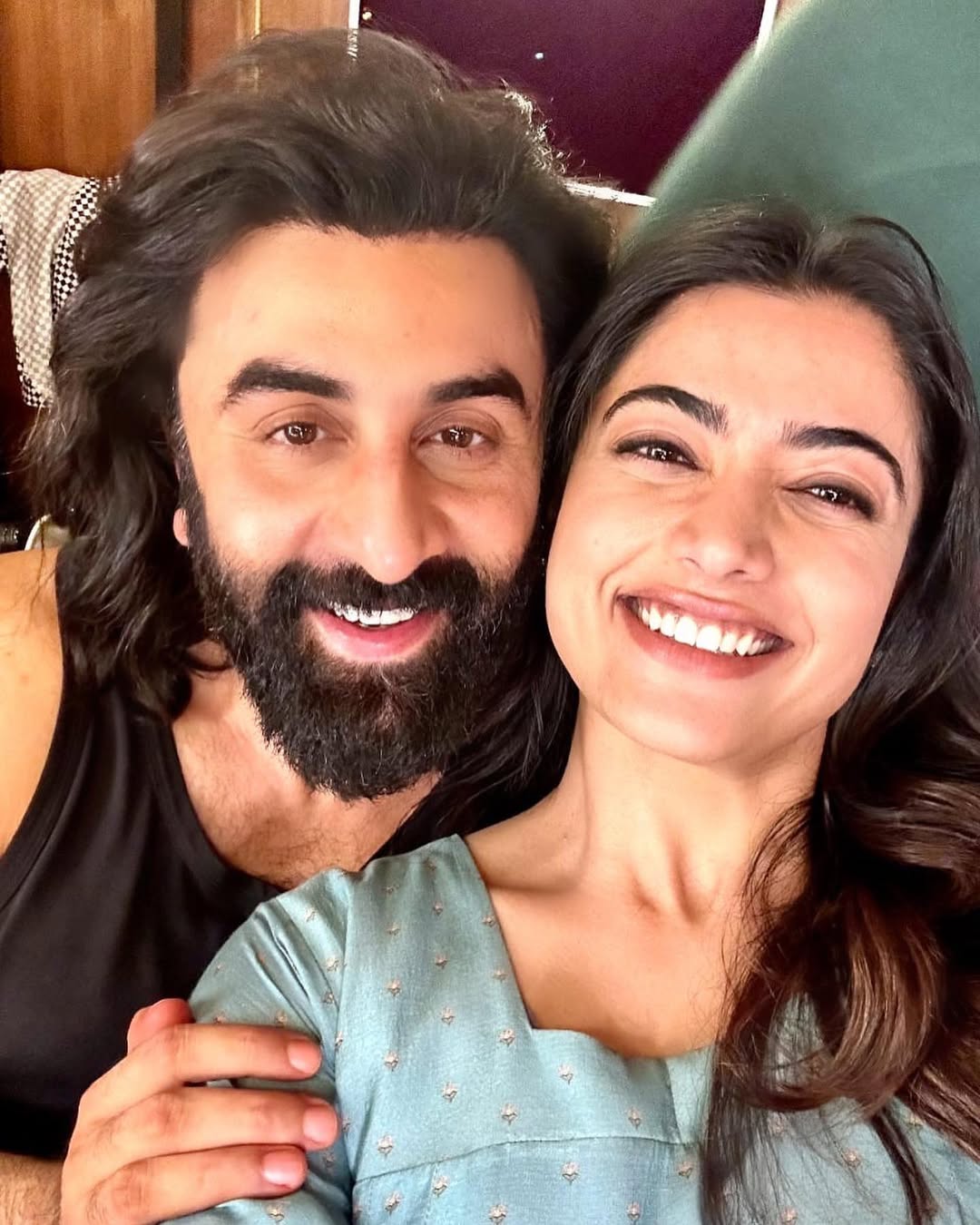
In recent years, Hindi cinema has attempted to capture this unruly force in new idioms. Animal presents a relationship that is far from tender convention. Through the volatile pairing of Ranbir Kapoor and Rashmika Mandanna, the film explores a love that is possessive, fractured and morally ambiguous.
Now, after years of living with love — sometimes gently, sometimes recklessly — and watching it unfold in the lives of others, I am certain of one thing: love can never be overrated. It refuses arithmetic. It resists calibration. It does not bow to logic or to the tidy categories we try to impose upon it. Love arrives without appointment, unsettles what we believed was certain and lingers long after circumstances have shifted.
On screen, as in life, it reveals its many faces — obsessive and morally fraught, restrained and sacrificial, epic and enduring. Yet in every form it insists on its significance. Love may wound, bewilder or even unmake us, but it cannot be trivialised. If anything, it remains the one force that continues to define us most profoundly.